










HAND & WRIST
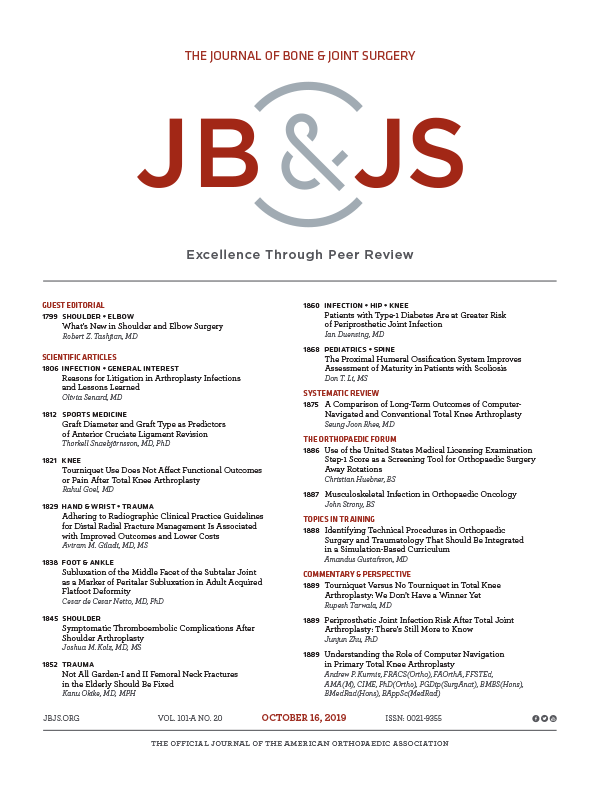
Functional outcomes for unstable distal radial fractures treated with open reduction and internal fixation or closed reduction and percutaneous fixation. A prospective randomized trial
 This report has been verified
by one or more authors of the
original publication.
This report has been verified
by one or more authors of the
original publication.
 تم تحديد هذه الدراسة على أنها ذات تأثير كبير محتمل.
يُقدّر مقياس التأثير العالي الذي يعتمد على الذكاء الاصطناعي من OE التأثير المحتمل لورقة بحثية ما من خلال دمج الإشارات من كل من المجلة التي نُشرت فيها والمحتوى العلمي للمقالة نفسها.
تم تطوير نموذج OE High Impact باستخدام أحدث تقنيات معالجة اللغة الطبيعية، ويتنبأ نموذج OE High Impact بدقة أكبر بأداء الاقتباس المستقبلي للدراسة أكثر من معامل تأثير المجلة وحده.
وهذا يتيح التعرف المبكر على الأبحاث ذات المغزى السريري ويساعد القراء على التركيز على المقالات التي من المرجح أن تشكل الممارسة المستقبلية.
تم تحديد هذه الدراسة على أنها ذات تأثير كبير محتمل.
يُقدّر مقياس التأثير العالي الذي يعتمد على الذكاء الاصطناعي من OE التأثير المحتمل لورقة بحثية ما من خلال دمج الإشارات من كل من المجلة التي نُشرت فيها والمحتوى العلمي للمقالة نفسها.
تم تطوير نموذج OE High Impact باستخدام أحدث تقنيات معالجة اللغة الطبيعية، ويتنبأ نموذج OE High Impact بدقة أكبر بأداء الاقتباس المستقبلي للدراسة أكثر من معامل تأثير المجلة وحده.
وهذا يتيح التعرف المبكر على الأبحاث ذات المغزى السريري ويساعد القراء على التركيز على المقالات التي من المرجح أن تشكل الممارسة المستقبلية.
OrthoEvidence Journal (OE Journal) - ACE Report
OE Journal. 2013;1(6):48 J Bone Joint Surg Am. 2009 Aug;91(8):1837-46.45 patients with displaced unstable fracture of the distal radius were randomized to receive open reduction and internal fixation or closed reduction and pin fixation. This study assessed if ORIF provided better early clinical outcomes compared to closed reduction with pin fixation. The results from this study indicated that ORIF provided better early postoperative outcomes in terms of ROM, strength, and DASH scores. At one year follow-up, both methods resulted in similar functional outcomes.
Was the allocation sequence adequately generated?
Was allocation adequately concealed?
Blinding Treatment Providers: Was knowledge of the allocated interventions adequately prevented?
Blinding Outcome Assessors: Was knowledge of the allocated interventions adequately prevented?
Blinding Patients: Was knowledge of the allocated interventions adequately prevented?
Was loss to follow-up (missing outcome data) infrequent?
Are reports of the study free of suggestion of selective outcome reporting?
Were outcomes objective, patient-important and assessed in a manner to limit bias (ie. duplicate assessors, Independent assessors)?
Was the sample size sufficiently large to assure a balance of prognosis and sufficiently large number of outcome events?
Was investigator expertise/experience with both treatment and control techniques likely the same (ie.were criteria for surgeon participation/expertise provided)?
نعم = 1
غير مؤكد = 0.5
غير ذي صلة = 0
لا = 0
يقيّم تقييم معايير الإبلاغ الشفافية التي يبلغ بها المؤلفون عن الخصائص المنهجية والتجريبية للتجربة في المنشور. ينقسم التقييم إلى خمس فئات معروضة أدناه.
3/4
Aleatorización
3/4
Medidas de resultado
4/4
Inclusión/Exclusión
4/4
Descripción del tratamiento
4/4
Estadística
Detsky AS, Naylor CD, O'Rourke K, McGeer AJ, L'Abbé KA. J Clin Epidemiol. 1992;45:255-65
مؤشر الهشاشة هو أداة تساعد في تفسير النتائج المهمة، وتوفر مقياسًا لقوة النتيجة. ويمثل مؤشر الهشاشة عدد الأحداث المتتالية التي يجب إضافتها إلى نتيجة ثنائية التفرع لجعل النتيجة غير مهمة. يمثل الرقم الصغير نتيجة أضعف ويمثل الرقم الكبير نتيجة أقوى.
لماذا كانت هناك حاجة لهذه الدراسة الآن؟
Distal radius fractures are the most common fracture of the upper extremity. Anatomic reduction with stable fixation has long been the treatment of choice for displaced, unstable fractures. Closed reduction with percutaneous pin fixation and/or external fixation has historically been the most common treatment for unstable injuries. However, open reduction and internal fixation has gained popularity, with emergence of volar locking plate technology. Internal fixation may allow immediate range of motion of the wrist. Few randomized trials exist to determine if this method is superior, with emphasis on early functional recovery.
ما هو سؤال البحث الرئيسي؟
In patients undergoing reduction for a distal radial fracture, will open reduction and internal fixation with a volar plate lead to better outcomes when evaluated against closed reduction with percutaneous pin fixation, upto one year?
ما هي النتائج المهمة؟
- Patients in the open reduction and internal fixation group had greater ROM and strength in all parameters compared to patients in the control group at the early postoperative time points (significance was achieved in all measurements, except digital motion to palm, at 6 weeks)
- Mean flexion-extension arc was significantly greater for the open reduction and internal fixation group over time (P<0.01)
- At six weeks postoperatively, average DASH score was 27 in the open reduction and internal fixation group and 53 in the closed reduction and percutaneous pin fixation group (p<0.01). At one year, scores became similar in both groups (4 compared with 9; P=0.18).
ما الذي يجب أن أتذكره أكثر؟
Both open reduction and internal fixation with a volar plate and closed reduction with percutaneous pin fixation to treat distal radial fractures resulted in good clinical and radiographical outcomes. Patients managed with a volar plate had better ROM, grip strength, and lower DASH scores in the early postoperative period.
كيف سيؤثر ذلك على رعاية مرضاي؟
This study suggests open reduction and internal fixation with a volar plate, as compared to closed reduction with percutaneous pin fixation, is a superior treatment modality in patients with distal radius fractures. Future methodologically sound studies are required with larger sample sizes to validate such conclusions.

تنويه
هذا المحتوى الموجود في هذه الصفحة هو لأغراض إعلامية فقط وليس الغرض منه أن يكون بديلاً عن المشورة الطبية المتخصصة أو التشخيص أو العلاج. إذا كنت بحاجة إلى علاج طبي، اطلب دائمًا مشورة طبيبك أو اذهب إلى أقرب قسم طوارئ إليك. الآراء والمعتقدات ووجهات النظر التي يعبر عنها الأفراد في المحتوى الموجود في هذه الصفحة لا تعكس آراء ومعتقدات ووجهات نظر أورثوإيفيدنس.


0 من 4 مقالات مجانية شهرية غير مقفلة


