










OSTEOARTHRITIS
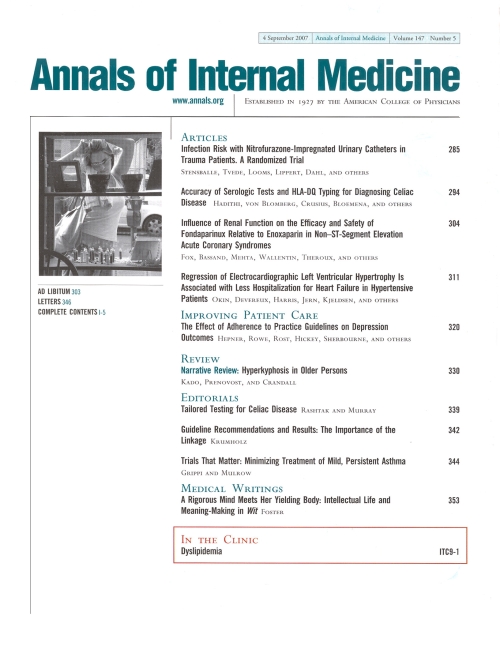
Physical therapy interventions for knee pain secondary to osteoarthritis: A systematic review
 This report has been verified
by one or more authors of the
original publication.
This report has been verified
by one or more authors of the
original publication.
 Diese Studie wurde als potenziell hochrangig eingestuft.
Die KI-gesteuerte High-Impact-Metrik von OE schätzt den Einfluss ein, den eine Arbeit wahrscheinlich haben wird, indem sie Signale sowohl aus der Zeitschrift, in der sie veröffentlicht wurde, als auch aus dem wissenschaftlichen Inhalt des Artikels selbst integriert.
Das mit Hilfe modernster natürlicher Sprachverarbeitung entwickelte OE High Impact-Modell sagt die zukünftige Zitationsleistung einer Studie genauer voraus als der Impact-Faktor einer Zeitschrift allein.
Dies ermöglicht eine frühere Erkennung von klinisch bedeutsamer Forschung und hilft den Lesern, sich auf Artikel zu konzentrieren, die die zukünftige Praxis am ehesten beeinflussen werden.
Diese Studie wurde als potenziell hochrangig eingestuft.
Die KI-gesteuerte High-Impact-Metrik von OE schätzt den Einfluss ein, den eine Arbeit wahrscheinlich haben wird, indem sie Signale sowohl aus der Zeitschrift, in der sie veröffentlicht wurde, als auch aus dem wissenschaftlichen Inhalt des Artikels selbst integriert.
Das mit Hilfe modernster natürlicher Sprachverarbeitung entwickelte OE High Impact-Modell sagt die zukünftige Zitationsleistung einer Studie genauer voraus als der Impact-Faktor einer Zeitschrift allein.
Dies ermöglicht eine frühere Erkennung von klinisch bedeutsamer Forschung und hilft den Lesern, sich auf Artikel zu konzentrieren, die die zukünftige Praxis am ehesten beeinflussen werden.
OrthoEvidence Journal (OE Journal) - ACE Report
OE Journal. 2013;1(11):177 Ann Intern Med. 2012 Nov 6;157(9):632-44. doi: 10.7326/0003-4819-157-9-201211060-00007This meta-analysis and systematic review included 193 studies (84 randomized controlled trials were assessed in the meta-analysis) comparing physical therapy to a control group in patients with knee osteoarthritis (OA). The most effective interventions were ultrasonography, and aerobic, aquatic, strengthening, and proprioception exercise. Education, orthotics, taping, tai chi, and pulsed electromagnetic fields had no clinically significant effect on any of the patient-centered or functional outcomes of interest. Few adverse events occurred in the studies.
Were the search methods used to find evidence (original research) on the primary question or questions stated?
Was the search for evidence reasonably comprehensive?
Were the criteria used for deciding which studies to include in the overview reported?
Was the bias in the selection of studies avoided?
Were the criteria used for assessing the validity of the included studies reported?
Was the validity of all of the studies referred to in the text assessed with use of appropriate criteria (either in selecting the studies for inclusion or in analyzing the studies that were cited)?
Were the methods used to combine the findings of the relevant studies (to reach a conclusion) reported?
Were the findings of the relevant studies combined appropriately relative to the primary question that the overview addresses?
Were the conclusions made by the author or authors supported by the data and or analysis reported in the overview?
How would you rate the scientific quality of this evidence?
Ja = 1
Ungewiss = 0.5
Nicht relevant = 0
Nein = 0
Die Bewertung der Berichtskriterien bewertet die Transparenz, mit der die Autoren die methodischen und studienspezifischen Merkmale der Studie in der Veröffentlichung angeben. Die Bewertung ist in fünf Kategorien unterteilt, die im Folgenden vorgestellt werden.
4/4
Introdução
4/4
Acesso aos dados
4/4
Análise dos dados
4/4
Resultados
3/4
Discussão
Detsky AS, Naylor CD, O'Rourke K, McGeer AJ, L'Abbé KA. J Clin Epidemiol. 1992;45:255-65
Der Fragilitätsindex ist ein Instrument, das bei der Interpretation signifikanter Ergebnisse hilft und ein Maß für die Stärke eines Ergebnisses liefert. Der Fragilitätsindex gibt die Anzahl der aufeinanderfolgenden Ereignisse an, die zu einem dichotomen Ergebnis hinzugefügt werden müssen, damit das Ergebnis nicht mehr signifikant ist. Eine kleine Zahl steht für ein schwächeres Ergebnis und eine große Zahl für ein stärkeres Ergebnis.
Warum wurde diese Studie jetzt benötigt?
Although osteoarthritis (OA) is already one of the foremost causes of disability among noninstitutionalized adults today, its prevalence continues to increase as the population ages. Nonsurgical treatments for OA such as physical therapy are prescribed in the hopes of reducing pain and disability, and improving function and quality of life. This meta-analysis and systematic review aimed to be the first to evaluate the effectiveness of different exercise types and nonsurgical interventions in order to determine which physical therapy treatments are best for patients with osteoarthritis of the knee.
Was war die wichtigste Forschungsfrage?
Is physical therapy more effective than a control treatment with respect to patient-centered outcomes, function, and complications in patients with osteoarthritis of the knee?
Was waren die wichtigsten Ergebnisse?
- Education, orthotics, taping, tai chi, and pulsed electromagnetic fields had no clinically significant effect on any of the outcomes of interest
- There was a significant reduction in pain when patients received proprioception exercise (4 studies; SMD, -0.71 [95% CI, -1.31 to 0.11]) or diathermy (5 studies; significant at 1 month only; SMD, -0.53 [CI, -0.96 to -0.10]); the two interventions did not demonstrate significant effects for any other outcomes
- Massage led to a significant improvement in composite function (3 studies; SMD, -0.55 [CI, -0.93 to -0.18])
- Aquatic exercise resulted in significantly reduced disability (3 studies; SMD, -0.28 [CI, -0.51 to -0.05])
- According to 11 studies, aerobic exercise significantly reduced long term pain (SMD, -0.21 [CI, -0.35 to -0.08]; this was not clinically significant), disability (SMD, -0.21 [CI, -0.37 to -0.04]), composite function within 3 months (WOMAC function score -15.4 [CI -24.8 to -5.92]), and gait function over 12 months (walking speed difference -0.11 m/s [CI, -0.17 to -0.05])
- Results from 9 studies demonstrated that strengthening exercise resulted in clinically significant reduction in pain (SMD, 0.68 [CI, -1.23 to -0.14]) and improvement in composite function (SMD, -1.00 [CI, -1.95 to 0.05])
- electrical stimulation significantly improved global assessment scores in two studies and muscle strength at 3 months in two studies (values not provided)
- According to 6 studies, ultrasonography led to clinically significant improvement in pain (SMD, -0.74 [CI, 0.95 to -0.53]), composite function (SMD, -1.14 [CI, 1.85 to -0.42]), and gait function (SMD, -1.48 [CI, 2.08 to -0.89])
Was sollte ich mir besonders merken?
Aerobic, aquatic, strengthening, and proprioception exercise, as well as ultrasonography were shown to be effective in improving patient-centered outcomes and/or function.
Wie wird sich dies auf die Behandlung meiner Patienten auswirken?
This study demonstrated with low-strength evidence that aerobic and aquatic exercise improved disability and that aerobic exercise, strengthening exercise, and ultrasonography reduced pain and improved function. However, further investigation is required based on the limited evidence for individualized treatment decisions.

HAFTUNGSAUSSCHLUSS
Der Inhalt dieser Seite dient nur zu Informationszwecken und ist nicht als Ersatz für professionelle medizinische Beratung, Diagnose oder Behandlung gedacht. Wenn Sie eine medizinische Behandlung benötigen, wenden Sie sich immer an Ihren Arzt oder suchen Sie die nächstgelegene Notaufnahme auf. Die Meinungen, Überzeugungen und Standpunkte, die von den Personen auf dieser Seite geäußert werden, spiegeln nicht die Meinungen, Überzeugungen und Standpunkte von OrthoEvidence wider.
0 von 4 monatliche KOSTENLOSE Artikel freigeschaltet



