




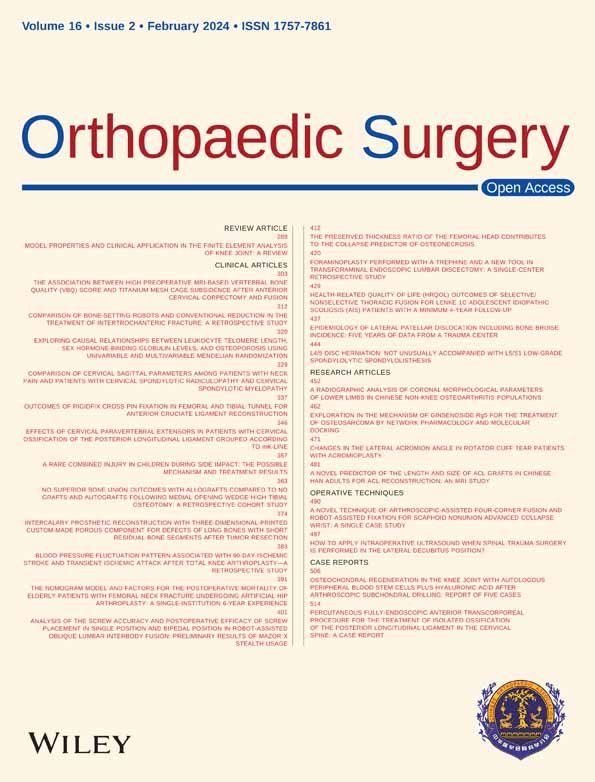
Robot-assisted pedicle screw insertion improves surgical outcomes vs freehand method in OLIF surgery
Clinical Effects of Oblique Lateral Interbody Fusion by Conventional Open versus Percutaneous Robot-Assisted Minimally Invasive Pedicle Screw Placement in Elderly Patients.
Orthop Surg. 2020 Feb;12(1):86-93.Eighty patients presenting with spinal degenerative disease and scheduled for an oblique lumbar interbody fusion procedure were randomized to receive robot-assisted pedicle screw insertion or conventional freehand pedicle screw insertion. Outcomes of interest included screw accuracy, operative time, low back and leg pain on a Visual Analog Scale (VAS), the Oswestry Disability Index (ODI) scores, blood loss, screw insertion revision rate, drainage volume and the incidence of surgical site infection. Results revealed significantly favourable screw accuracy, total and posterior operative duration, low back pain immediately post-operation, and intra-operative blood loss in the robot-assisted group compared to the conventional freehand group. Post-operative drainage volume was significantly higher in the robot-assisted group.
افتح تقرير ACE الكامل
لديك إمكانية الوصول إلى المزيد من المقالات المجانية هذا الشهر، انقر أدناه لفتح هذا ACE Reports
افتح الآنتقييمات نقدية لأحدث التجارب المعشاة ذات الشواهد عالية التأثير والمراجعات المنهجية في جراحة العظام
الوصول إلى محتوى المدونة الصوتية OrthoEvidence، بما في ذلك التعاون مع مجلة جراحة العظام والمفاصل، ومقابلات مع جراحين معترف بهم دوليًا، ومناقشات المائدة المستديرة حول أخبار وموضوعات جراحة العظام
الاشتراك في النشرة الإخبارية The Pulse، وهي نشرة إخبارية مبنية على الأدلة مرتين أسبوعيًا مصممة لمساعدتك في اتخاذ قرارات سريرية أفضل
إمكانية الوصول الحصري إلى مقالات المحتوى الأصلي، بما في ذلك المراجعات المنهجية الداخلية، ومقالات عن طرق البحث الصحي وموضوعات جراحة العظام الساخنة
أو قم بالترقية اليوم واحصل على إمكانية الوصول إلى جميع محتويات OrthoEvidence مقابل 1.99 دولارًا أمريكيًا في الأسبوع.
هل لديك حساب بالفعل؟ تسجيل الدخول



0 من 4 مقالات مجانية شهرية غير مقفلة


