






RESEARCH | Oct 27, 2025
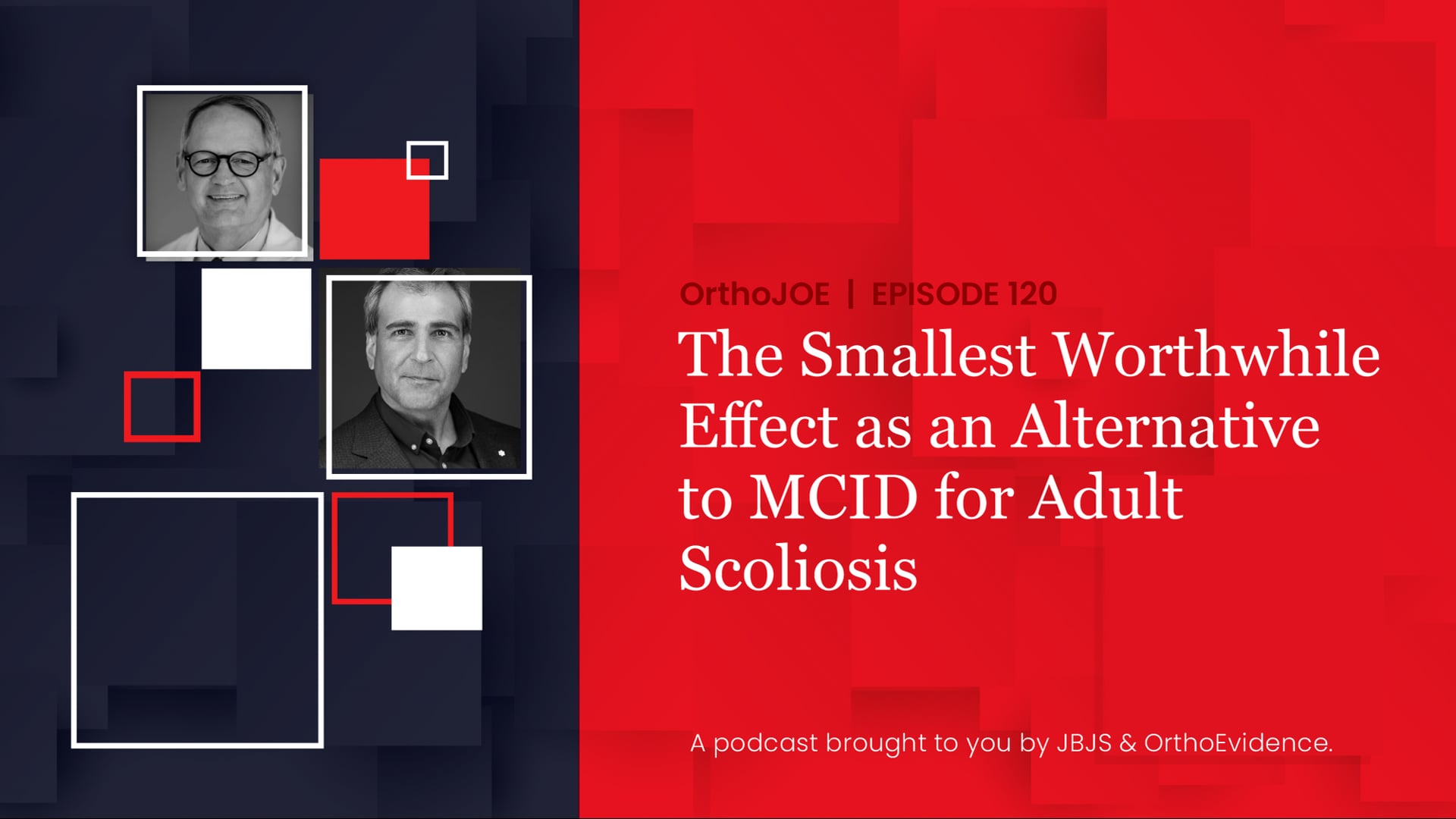
The Smallest Worthwhile Effect as an Alternative to MCID for Adult Scoliosis.
Unlock this Podcast
You have access to 4 more FREE articles this month.
Click below to unlock and view this Videos
Unlock Now
Critical appraisals of the latest, high-impact randomized controlled trials and systematic reviews in orthopaedics
Access to OrthoEvidence podcast content, including collaborations with the Journal of Bone and Joint Surgery, interviews with internationally recognized surgeons, and roundtable discussions on orthopaedic news and topics
Subscription to The Pulse, a twice-weekly evidence-based newsletter designed to help you make better clinical decisions
Exclusive access to original content articles, including in-house systematic reviews, and articles on health research methods and hot orthopaedic topics
Or upgrade today and gain access to all OrthoEvidencecontent for as little as $1.99 per week.
Already have an account? Log in
Are you affiliated with one of our partner associations?
Click here to gain complimentary access as part your association member benefits!

Marc Swiontkowski
MD, FAOA
Professor, University of Minnesota
View More
The episode opens with reflections on early mornings, coffee rituals, and fall sports before shifting to a detailed discussion on patient-reported outcome measures. The hosts examine a new study introducing the “smallest worthwhile effect” (SWE) as an alternative to traditional MCID thresholds in adult idiopathic scoliosis surgery. They outline how SWE incorporates patient-anchored benefits, risks, and costs, contrasting this with anchor-based and distribution-based MCID methods and highlighting the challenges of interpreting group-level thresholds for individual patients. The conversation broadens into methodological rigor, sample-size limitations, and the growing complexity of statistical modeling in orthopaedic research, emphasizing the importance of expert review, balanced editorial decisions, and the evolution of evidence-based practice across decades.

DISCLAIMER
This content found on this page is for informational purposes only and is not intended to be a substitute for professional medical advice, diagnosis, or treatment. If you require medical treatment, always seek the advice of your physician or go to your nearest emergency department. The opinions, beliefs, and viewpoints expressed by the individuals on the content found on this page do not reflect the opinions, beliefs, and viewpoints of OrthoEvidence.
0 of 4 monthly FREE articles unlocked



