






PRACTICE | May 11, 2023
Management of Proximal Humeral Fractures in Adults .
Unlock this Podcast
You have access to 4 more FREE articles this month.
Click below to unlock and view this Videos
Unlock Now
Critical appraisals of the latest, high-impact randomized controlled trials and systematic reviews in orthopaedics
Access to OrthoEvidence podcast content, including collaborations with the Journal of Bone and Joint Surgery, interviews with internationally recognized surgeons, and roundtable discussions on orthopaedic news and topics
Subscription to The Pulse, a twice-weekly evidence-based newsletter designed to help you make better clinical decisions
Exclusive access to original content articles, including in-house systematic reviews, and articles on health research methods and hot orthopaedic topics
Or upgrade today and gain access to all OrthoEvidencecontent for as little as $1.99 per week.
Already have an account? Log in
Are you affiliated with one of our partner associations?
Click here to gain complimentary access as part your association member benefits!

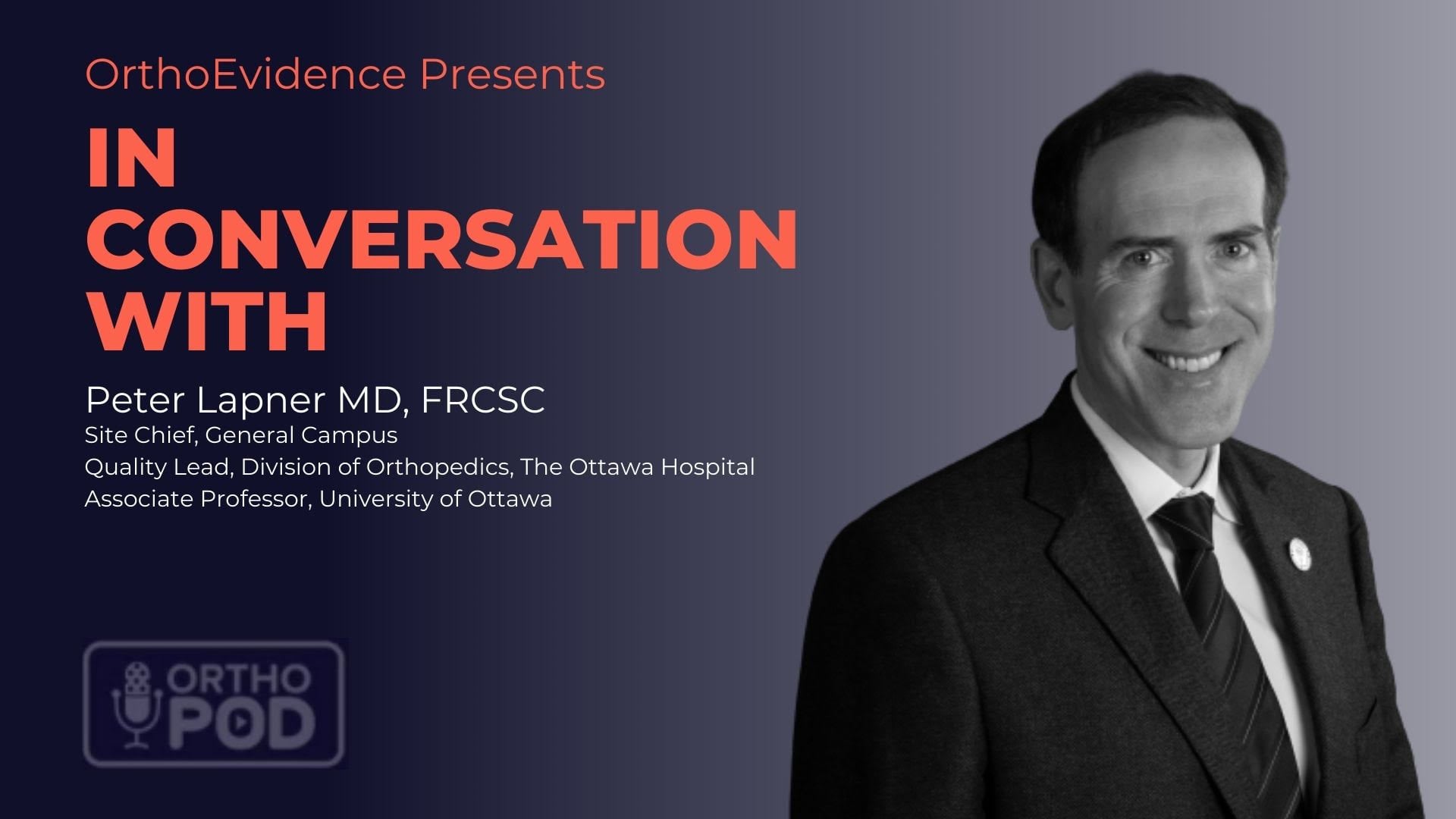
Peter Lapner
FRCSC
Associate Professor, University of Ottawa
View MoreThis discussion highlights persistent variability in managing proximal humeral fractures and the need for consistent, evidence-based care. The meta-analysis found no functional or pain advantage of surgery over non-operative treatment, while surgical patients—especially those treated with locked plates—faced markedly higher reoperation risks. Reverse shoulder arthroplasty showed superior outcomes to both non-operative care and hemiarthroplasty in older adults, suggesting a promising but still evolving role. Ongoing multicenter studies aim to clarify treatment pathways for both younger patients needing fixation and older patients who may benefit most from arthroplasty.

DISCLAIMER
This content found on this page is for informational purposes only and is not intended to be a substitute for professional medical advice, diagnosis, or treatment. If you require medical treatment, always seek the advice of your physician or go to your nearest emergency department. The opinions, beliefs, and viewpoints expressed by the individuals on the content found on this page do not reflect the opinions, beliefs, and viewpoints of OrthoEvidence.
0 of 4 monthly FREE articles unlocked



