






Share


Download


Cite


+ Favorites
Share
Download
Cite
+ Favorites
INNOVATION
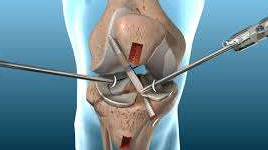
Bridge-Enhanced Anterior Cruciate Ligament Repair (BEAR): New Promise for ACL Repair ?
OrthoEvidence Journal (OE Journal) - OE Original
OE Journal. 2025;13(24):1Anterior Cruciate Ligament (ACL) repair versus reconstruction–which is best for surgically indicated patients with ACL tears? For the last few decades at least, the answer has largely been reconstruction. It comes as no surprise, after all, ACL reconstruction has a much larger evidence base and proven track record. Ultimately, reconstructing the ACL results in a stable tissue less prone to retear. Yet, even gold standards have room to improve. ACL reconstructions, for example, often require autograft harvesting which can mean patients are left with donor site morbidity and pain – and longer recovery times. (1-3) The non-native tissue also lacks the biological properties of the native ACL which could inhibit the recovery of proprioceptive capabilities. (1-3) The procedure also requires larger, more invasive bone tunnels which can put patients at risk of developing early onset osteoarthritis. (1-3) All things that could be avoided, or minimized, through conservative management or ACL repair. This discussion is further complicated by other factors such as tear type, age, activity level, physical therapy protocol, and a relatively new array of alternative surgical procedures – which approach benefits select patients most? In this OE Original, we explore some of the evidence comparing ACL repair to reconstruction and discuss one new approach to ACL repair, Bridge-Enhanced Anterior Cruciate Ligament Repair (BEAR), that could reignite this debate once more.
Already have an account? Log in
Part of an association? Click here, you may already have full access!
Unlock the Full original article
You have access to 4 more FREE articles this month.
Click below to unlock and view this original article
Unlock Now
Critical appraisals of the latest, high-impact randomized controlled trials and systematic reviews in orthopaedics
Access to OrthoEvidence podcast content, including collaborations with the Journal of Bone and Joint Surgery, interviews with internationally recognized surgeons, and roundtable discussions on orthopaedic news and topics
Subscription to The Pulse, a twice-weekly evidence-based newsletter designed to help you make better clinical decisions
Exclusive access to original content articles, including in-house systematic reviews, and articles on health research methods and hot orthopaedic topics
Or upgrade today and gain access to all OrthoEvidencecontent for as little as $1.99 per week.
Already have an account? Log in
Are you affiliated with one of our partner associations?
Click here to gain complimentary access as part your association member benefits!


0 of 4 monthly FREE articles unlocked



