










ARTHROPLASTY
Ultrasound and nerve stimulator guided continuous femoral nerve block analgesia after total knee arthroplasty: a multicenter randomized controlled study
OrthoEvidence Journal (OE Journal) - ACE Report
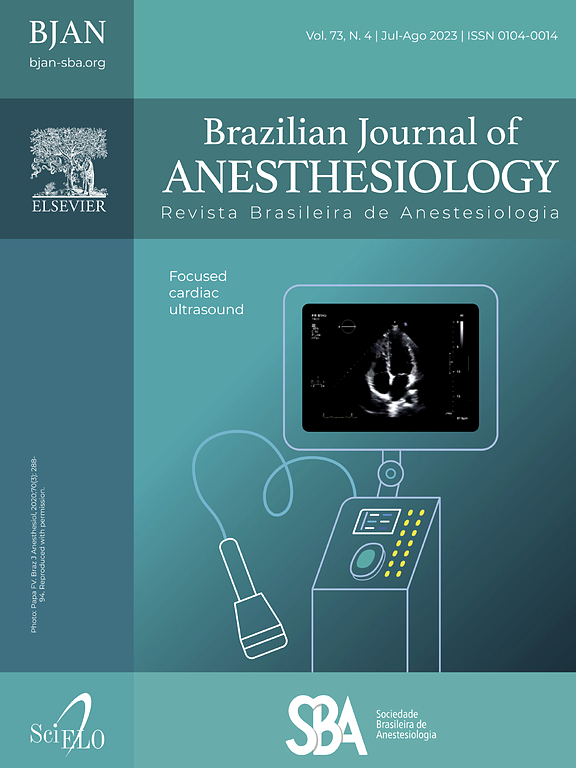
OE Journal. 2015;3(6):11 Braz J Anesthesiol. 2015 Jan-Feb;65(1):14-20.46 patients scheduled for total knee arthroplasty were randomized to receive either an ultrasound and nerve stimulator guided continuous femoral nerve block (CFNB) analgesia, or patient control epidural analgesia (PCEA). The purpose of the study was to examine the efficacy of continuous femoral nerve block in terms of VAS pain scores, range of motion, level of sedation, further analgesics required, ability to sleep, muscle strength, side effects, time required to resume walking, and time in hospital, as compared to patient control epidural analgesia. Based on the results of this study, continuous femoral nerve block was the more favourable approach with less pain at 6 and 12 hours postoperatively, greater muscle strength, lower use of parecoxib, and less time required to resume walking.
Vollständigen ACE-Bericht freischalten
Sie haben Zugang zu 4 weiteren KOSTENLOSEN Artikeln in diesem Monat.
Klicken Sie unten, um diese ACE Reports freizuschalten und anzusehen
Jetzt freischalten
Kritische Beurteilungen der neuesten, hochwirksamen randomisierten kontrollierten Studien und systematischen Übersichten in der Orthopädie
Zugang zu OrthoEvidence-Podcast-Inhalten, einschließlich Kooperationen mit dem Journal of Bone and Joint Surgery, Interviews mit international anerkannten Chirurgen und Diskussionsrunden zu orthopädischen Neuigkeiten und Themen
Abonnement von The Pulse, einem zweimal wöchentlich erscheinenden evidenzbasierten Newsletter, der Ihnen helfen soll, bessere klinische Entscheidungen zu treffen
Exklusiver Zugang zu Originalartikeln, einschließlich eigener systematischer Übersichten, sowie zu Artikeln über Methoden der Gesundheitsforschung und aktuelle orthopädische Themen
Oder upgraden Sie noch heute und erhalten Sie Zugang zu allen OrthoEvidence-Inhalten für nur $1,99 pro Woche.
Sie haben bereits ein Konto? Einloggen
Gehören Sie zu einem unserer Partnerverbände?
Klicken Sie hier, um im Rahmen Ihrer Verbandsmitgliedschaft kostenlosen Zugang zu erhalten!



0 von 4 monatliche KOSTENLOSE Artikel freigeschaltet



