










ARTHROPLASTY
Similar TKA designs with differences in clinical outcome: A randomized, controlled trial of 77 knees with a mean follow-up of 6 years
OrthoEvidence Journal (OE Journal) - ACE Report
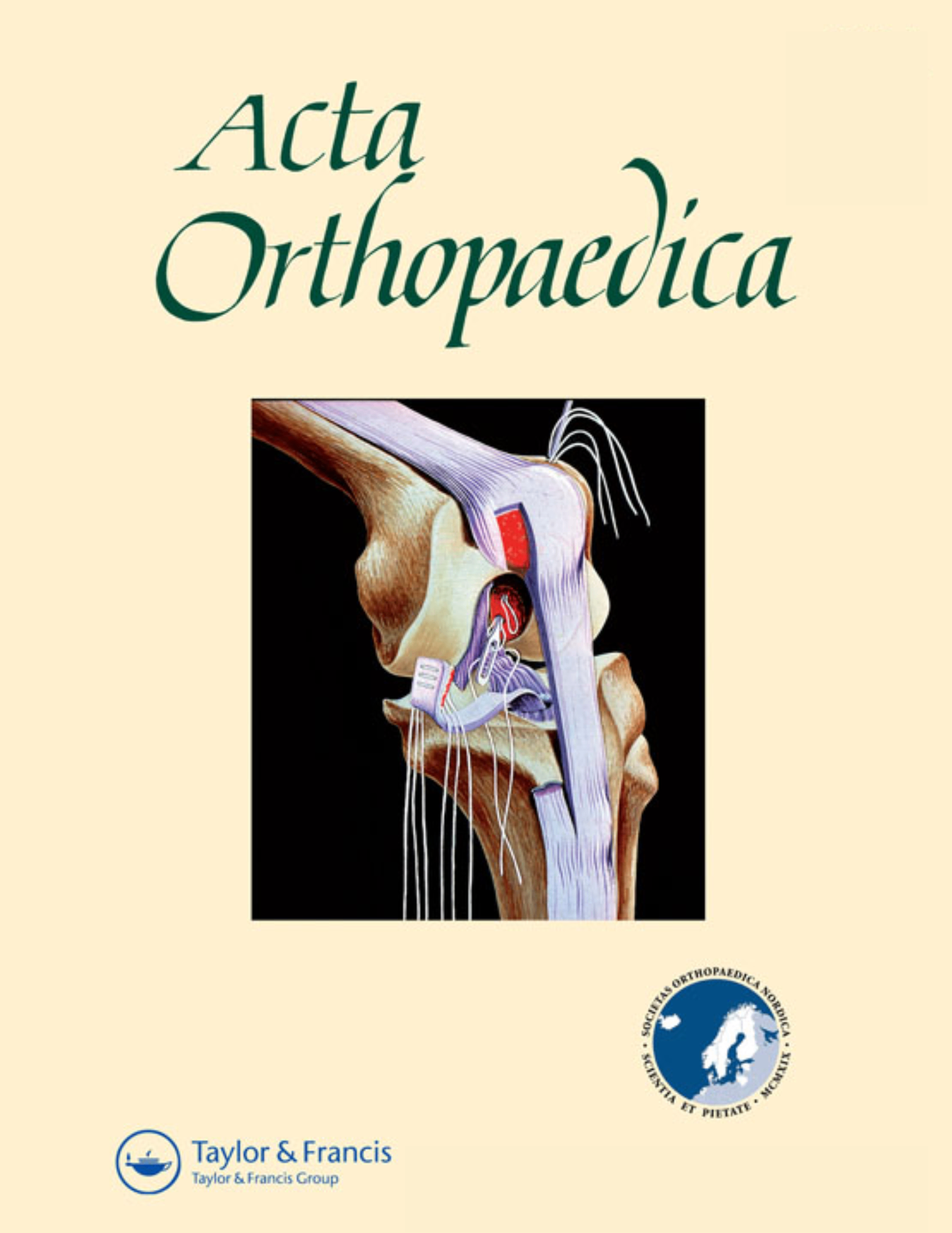
OE Journal. 2013;1(2):17 Acta Orthop. 2011 Dec;82(6):685-91. Epub 2011 Nov 982 patients (90 knees) with either osteo- or rheumatoid arthritis requiring total knee arthroplasty (TKA) were randomized to receive the continuum knee system prosthesis (CKS) or the press-fit condylar prosthesis (PFC) to determine if differences were present in clinical outcomes. A mean follow-up of 5.6 years indicated that use of the PFC prosthesis resulted in superior Knee Society scores (KSS), a decreased revision rate, and better implant survival when compared to the CKS prosthesis.
Was the allocation sequence adequately generated?
Was allocation adequately concealed?
Blinding Treatment Providers: Was knowledge of the allocated interventions adequately prevented?
Blinding Outcome Assessors: Was knowledge of the allocated interventions adequately prevented?
Blinding Patients: Was knowledge of the allocated interventions adequately prevented?
Was loss to follow-up (missing outcome data) infrequent?
Are reports of the study free of suggestion of selective outcome reporting?
Were outcomes objective, patient-important and assessed in a manner to limit bias (ie. duplicate assessors, Independent assessors)?
Was the sample size sufficiently large to assure a balance of prognosis and sufficiently large number of outcome events?
Was investigator expertise/experience with both treatment and control techniques likely the same (ie.were criteria for surgeon participation/expertise provided)?
Sim = 1
Incerto = 0,5
Não relevante = 0
Não = 0
A Avaliação dos Critérios de Relato avalia a transparência com que os autores relatam as caraterísticas metodológicas e do ensaio na publicação. A avaliação está dividida em cinco categorias que são apresentadas de seguida.
3/4
Randomization
3/4
Outcome Measurements
4/4
Inclusion / Exclusion
4/4
Therapy Description
4/4
Statistics
Detsky AS, Naylor CD, O'Rourke K, McGeer AJ, L'Abbé KA. J Clin Epidemiol. 1992;45:255-65
O Índice de Fragilidade é uma ferramenta que auxilia na interpretação de achados significativos, fornecendo uma medida de força para um resultado. O Índice de Fragilidade representa o número de eventos consecutivos que precisam de ser adicionados a um resultado dicotómico para que o resultado deixe de ser significativo. Um número pequeno representa um resultado mais fraco e um número grande representa um resultado mais forte.
Porque é que este estudo era necessário agora?
The development and introduction of new prostheses for total knee arthroplasty (TKA) is an ongoing process with the ultimate goal of improving survival rates, range of motion, and the anatomical reconstruction of the joint. The use of a continuum knee system prosthesis (CKS) has recently been advocated as a good alternative to the standard press-fit condylar prosthesis (PFC). However, a recent retrospective analysis reported that TKA using the CKS prosthesis tended to produce worse results, indicating the need for a randomized trial to compare the effectiveness of both the CKS and PFC prostheses.
Qual era a principal questão de investigação?
Did the minor differences in design between the continuum knee system (CKS) prosthesis and the press-fit condylar (PFC) prosthesis result in different clinical outcomes of patients undergoing total knee arthroplasty, measured over a 6 year follow-up period?
Quais foram os resultados importantes?
- At final follow up, a significant difference was observed between groups in favour of the PFC prosthesis group, with respect to the KSS primary outcome measure (p=0.04).
- The PFC group showed a trend towards superior results in terms of the KSS scores, WOMAC score, range of motion, patient satisfaction and pain compared to the CKS group.
- At the final follow up period, the KSS knee subscore and VAS satisfaction values were in favour of the PFC treatment group (p=0.04 for both outcomes).
- 1 revision occurred in the PFC group compared to 6 revisions in the CKS group (p=0.1).
- The survival analysis (with re-operation as the endpoint) showed there was better survival in patients that received the PFC prosthesis: 97% (95% CI 92-100) for the PFC prosthesis and 79% (95% CI 66-92) for CKS prosthesis (p=0.02).
De que é que me devo lembrar mais?
Use of the PFC prosthesis resulted in superior KSS scores, decreased revision rate and better survival in comparison to the CKS prosthesis group at a mean of 5.6 years.
Como é que isto afectará o tratamento dos meus doentes?
This study demonstrates that TKA using the PFC prosthesis may result in superior clinical outcomes (KSS) and greater patient satisfaction when compared to the CKS prosthesis. These results should be taken under consideration when contemplating the use of the CKS prosthesis.

AVISO LEGAL
O conteúdo desta página destina-se apenas a fins informativos e não pretende substituir o aconselhamento, diagnóstico ou tratamento médico profissional. Se necessitar de tratamento médico, procure sempre o conselho do seu médico ou dirija-se ao serviço de urgência mais próximo. As opiniões, crenças e pontos de vista expressos pelos indivíduos no conteúdo encontrado nesta página não reflectem as opiniões, crenças e pontos de vista da OrthoEvidence.
0 de 4 artigos mensais GRATUITOS desbloqueados



