










SHOULDER & ELBOW
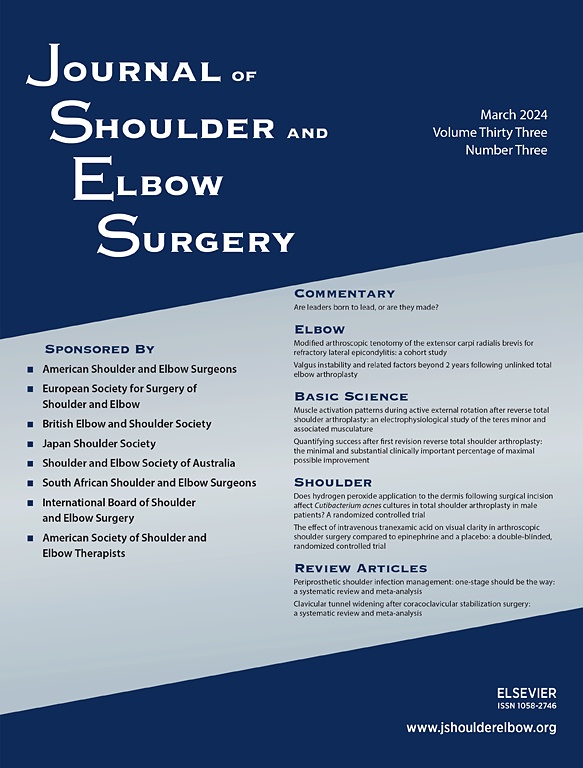
The Greenhouse technique provides lower retear rate and similar outcomes in rotator cuff repair: a prospective randomized controlled trial.
OrthoEvidence Journal (OE Journal) - ACE Report
OE Journal. 2026;14(10):55 J Shoulder Elbow Surg. 2026 01-Feb;():. 10.1016/j.jse.2025.05.030Study Summary
126 patients with reparable unilateral full-thickness rotator cuff tears were randomized to receive arthroscopic rotator cuff repair (ARCR) using the Greenhouse technique combined with microfracture or traditional single-row repair. The outcomes of interest were achievement of the Minimal Clinically Important Difference (MCID) in the American Shoulder and Elbow Surgeons Standardized Shoulder Assessment Form (ASES) score, ASES score, Constant-Murley score, University of California, Los Angeles (UCLA) score, Simple Shoulder Test score, visual analog scale (VAS) pain score, shoulder range of motion (ROM), tendon integrity assessed by magnetic resonance imaging (MRI), retear rate based on Sugaya classification, bone tunnel healing on computed tomography (CT), patient acceptable symptom state (PASS), and substantial clinical benefit (SCB). Outcomes were assessed preoperatively and at 24 months postoperatively, with CT assessment at 3 and 6 months. Overall, the results of the study revealed that both techniques produced substantial improvements in pain, function, and ROM. However, the Greenhouse technique demonstrated a significantly lower retear rate compared with traditional single-row repair while maintaining comparable clinical outcomes. These findings suggest that the Greenhouse technique may improve tendon healing integrity without compromising short-term functional recovery after ARCR.
Unlock the Full ACE Report
You have access to 4 more FREE articles this month.
Click below to unlock and view this ACE Reports
Unlock Now
Critical appraisals of the latest, high-impact randomized controlled trials and systematic reviews in orthopaedics
Access to OrthoEvidence podcast content, including collaborations with the Journal of Bone and Joint Surgery, interviews with internationally recognized surgeons, and roundtable discussions on orthopaedic news and topics
Subscription to The Pulse, a twice-weekly evidence-based newsletter designed to help you make better clinical decisions
Exclusive access to original content articles, including in-house systematic reviews, and articles on health research methods and hot orthopaedic topics
Or upgrade today and gain access to all OrthoEvidencecontent for as little as $1.99 per week.
Already have an account? Log in
Are you affiliated with one of our partner associations?
Click here to gain complimentary access as part your association member benefits!


0 of 4 monthly FREE articles unlocked



