










ARTHROPLASTY
High-volume infiltration analgesia in bilateral hip arthroplasty: A randomized, double-blind placebo-controlled trial
 This report has been verified
by one or more authors of the
original publication.
This report has been verified
by one or more authors of the
original publication.
OrthoEvidence Journal (OE Journal) - ACE Report
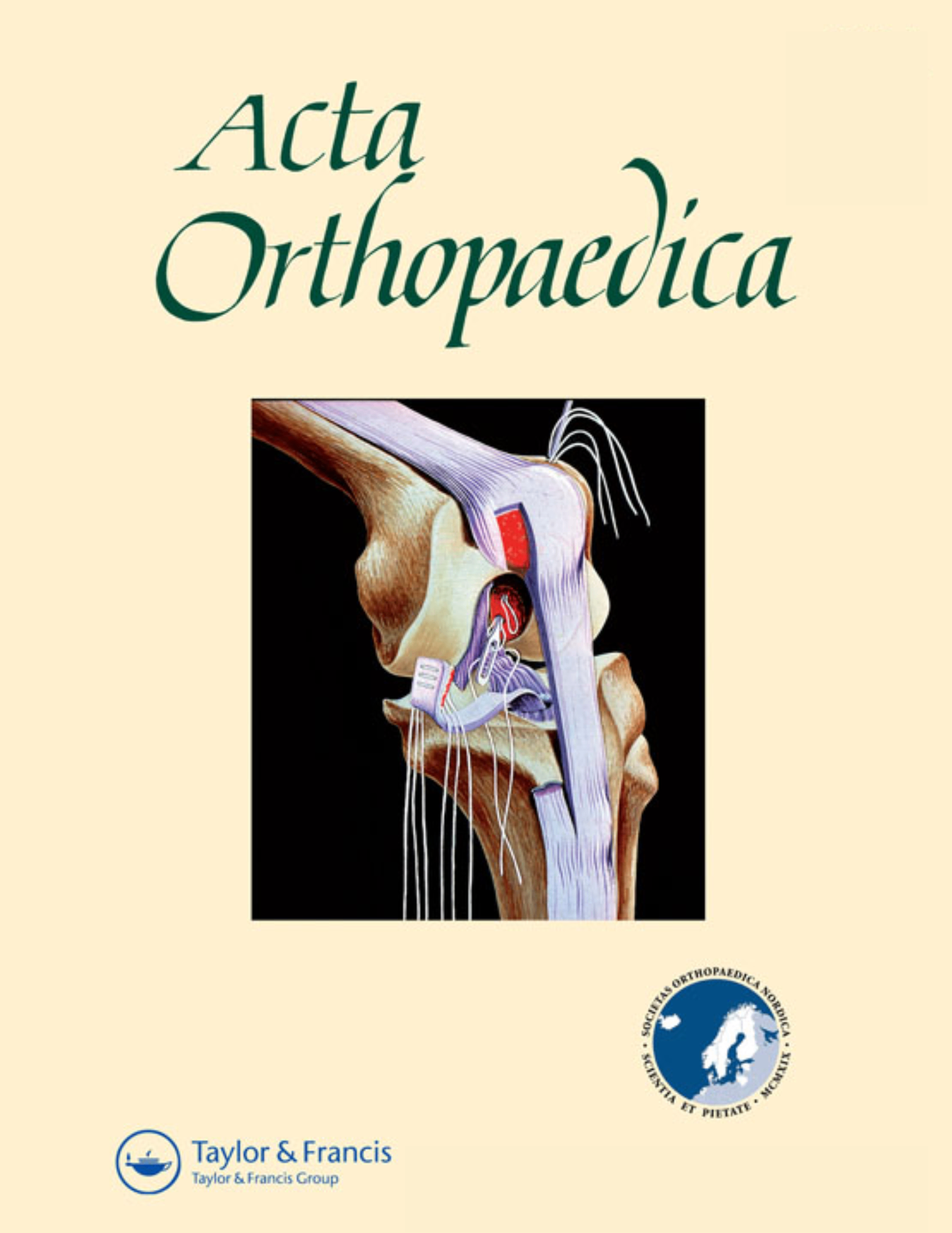
OE Journal. 2013;1(2):21 Acta Orthop. 2011 Aug;82(4):423-6. Epub 2011 Jul 1312 patients undergoing bilateral total hip arthroplasty (THA) were randomized to receive a high-volume infiltration of analgesia, administered intraoperatively to one hip, and a placebo saline solution to the other hip. Patients also received a pre-operative oral multimodal analgesic regimen. The primary outcome was postoperative pain. Results indicated that the high-volume analgesic intervention may not produce a clinically relevant analgesic effect post-operatively in patients undergoing bilateral THA compared to the saline group. These results indicate that a pre-operative oral multimodal analgesic regimen may provide sufficient pain relief for THA.
Was the allocation sequence adequately generated?
Was allocation adequately concealed?
Blinding Treatment Providers: Was knowledge of the allocated interventions adequately prevented?
Blinding Outcome Assessors: Was knowledge of the allocated interventions adequately prevented?
Blinding Patients: Was knowledge of the allocated interventions adequately prevented?
Was loss to follow-up (missing outcome data) infrequent?
Are reports of the study free of suggestion of selective outcome reporting?
Were outcomes objective, patient-important and assessed in a manner to limit bias (ie. duplicate assessors, Independent assessors)?
Was the sample size sufficiently large to assure a balance of prognosis and sufficiently large number of outcome events?
Was investigator expertise/experience with both treatment and control techniques likely the same (ie.were criteria for surgeon participation/expertise provided)?
Sim = 1
Incerto = 0,5
Não relevante = 0
Não = 0
A Avaliação dos Critérios de Relato avalia a transparência com que os autores relatam as caraterísticas metodológicas e do ensaio na publicação. A avaliação está dividida em cinco categorias que são apresentadas de seguida.
4/4
Randomization
3/4
Outcome Measurements
2/4
Inclusion / Exclusion
4/4
Therapy Description
3/4
Statistics
Detsky AS, Naylor CD, O'Rourke K, McGeer AJ, L'Abbé KA. J Clin Epidemiol. 1992;45:255-65
O Índice de Fragilidade é uma ferramenta que auxilia na interpretação de achados significativos, fornecendo uma medida de força para um resultado. O Índice de Fragilidade representa o número de eventos consecutivos que precisam de ser adicionados a um resultado dicotómico para que o resultado deixe de ser significativo. Um número pequeno representa um resultado mais fraco e um número grande representa um resultado mais forte.
Porque é que este estudo era necessário agora?
Local analgesia (intraoperative infiltration) has been reported to be effective in total knee arthroplasty, but there are limited studies and data regarding total hip arthroplasty trials. Postoperative pain after hip arthroplasty may be effectively managed with high-volume analgesia infiltration. Previous studies have examined this hypothesis, but there is uncertainty regarding the results due to methodological limitations. This double-blind placebo-controlled study examines the outcomes with high-volume analgesia infiltration compared to a placebo in bilateral hip arthroplasty.
Qual era a principal questão de investigação?
What are the outcomes in postoperative pain when patients undergoing bilateral total hip arthroplasty (THA) receive a high-volume infiltration of analgesia (170 mL ropivacaine 0.2% with epinephrine at 1:100,000) with supplementary injections postoperatively, compared to a saline placebo when examined over the course of the first 48 hours postoperatively?
Quais foram os resultados importantes?
- Patients reported similar VAS score for the intervention hip (ropivacaine and epinephrine) and the placebo hip (saline) at rest and at 45 deg hip flexion (p>0.05)
- Significantly less pain was reported in the saline placebo hip at rest, 32 hr postoperatively (p=0.03)
- The median hospital stay between the two groups was 7 days (Range: 2-7 days), and the mean duration of surgery was 178 (range 76-325) minutes.
- At 4, 8, 24, 32, and 48 h postoperatively, patients received a morphine administration of 6.5 (4-12) mg, 14 (11-26) mg, 32 (17-53) mg, 36 (19-61) mg, and 43 (20-70) mg, respectively.
- No complications requiring intervention were reported during the study period.
De que é que me devo lembrar mais?
Patients in both the intervention (Ropivacaine) and placebo (saline) group had comparably low pain scores. An intraarticular high-volume (170 mL) ropivacaine (0.2%) with epinephrine (1:100,000) treatment, followed by repeated postoperative injections, may not result in clinically effective analgesia effect in patients undergoing total hip arthroplasty, when combined with a multimodal oral analgesia taken pre-operatively.
Como é que isto afectará o tratamento dos meus doentes?
Patients receiving a high-volume intraoperative injection of ropivacaine 0.2% perioperatively, followed by repeated postoperative injections, may not find any clinically relevant analgesic effect when treatment is combined with mutimodal oral analgesic regimen taken pre-operatively.

AVISO LEGAL
O conteúdo desta página destina-se apenas a fins informativos e não pretende substituir o aconselhamento, diagnóstico ou tratamento médico profissional. Se necessitar de tratamento médico, procure sempre o conselho do seu médico ou dirija-se ao serviço de urgência mais próximo. As opiniões, crenças e pontos de vista expressos pelos indivíduos no conteúdo encontrado nesta página não reflectem as opiniões, crenças e pontos de vista da OrthoEvidence.
0 de 4 artigos mensais GRATUITOS desbloqueados



