










SPORTS MEDICINE
Suture Repair versus Arrow Repair for Symptomatic Meniscus Tears of the Knee: A Systematic Review
 This report has been verified
by one or more authors of the
original publication.
This report has been verified
by one or more authors of the
original publication.
OrthoEvidence Journal (OE Journal) - ACE Report
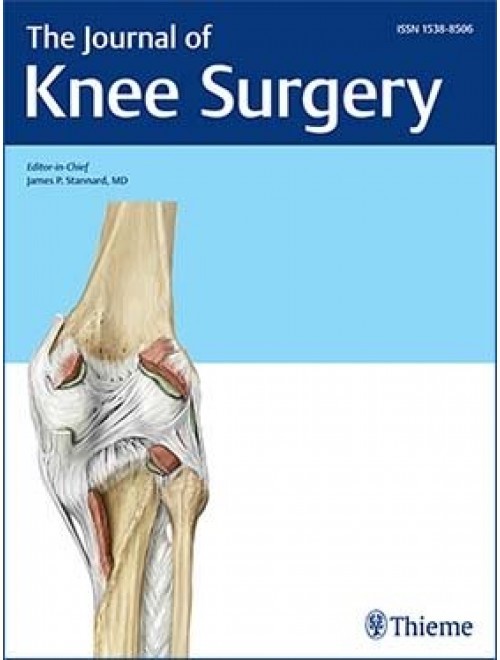
OE Journal. 2013;1(4):58 J Knee Surg. 2012 Nov;25(5):397-402. doi: 10.1055/s-0032-1313752. Epub 2012 May 15Exclusive Author Interview
This systematic review included 4 studies (2 randomized controlled trials and 2 comparative observational studies) that compared arrow repair and suture repair for patients with symptomatic meniscus tears of the knee. Results indicated that there was no difference between the two repair techniques for the mean retear and healing rate, knee rating scores, and time to re-operation. However, the quality of evidence included in this review was not optimal and firm conclusions regarding the effectiveness of arrow repair compared to suture repair can not be made.
Were the search methods used to find evidence (original research) on the primary question or questions stated?
Was the search for evidence reasonably comprehensive?
Were the criteria used for deciding which studies to include in the overview reported?
Was the bias in the selection of studies avoided?
Were the criteria used for assessing the validity of the included studies reported?
Was the validity of all of the studies referred to in the text assessed with use of appropriate criteria (either in selecting the studies for inclusion or in analyzing the studies that were cited)?
Were the methods used to combine the findings of the relevant studies (to reach a conclusion) reported?
Were the findings of the relevant studies combined appropriately relative to the primary question that the overview addresses?
Were the conclusions made by the author or authors supported by the data and or analysis reported in the overview?
How would you rate the scientific quality of this evidence?
Ja = 1
Ungewiss = 0.5
Nicht relevant = 0
Nein = 0
Die Bewertung der Berichtskriterien bewertet die Transparenz, mit der die Autoren die methodischen und studienspezifischen Merkmale der Studie in der Veröffentlichung angeben. Die Bewertung ist in fünf Kategorien unterteilt, die im Folgenden vorgestellt werden.
4/4
Introducción
3/4
Acceso a los datos
3/4
Análisis de los datos
1/4
Resultados
2/4
Discusión
Detsky AS, Naylor CD, O'Rourke K, McGeer AJ, L'Abbé KA. J Clin Epidemiol. 1992;45:255-65
Der Fragilitätsindex ist ein Instrument, das bei der Interpretation signifikanter Ergebnisse hilft und ein Maß für die Stärke eines Ergebnisses liefert. Der Fragilitätsindex gibt die Anzahl der aufeinanderfolgenden Ereignisse an, die zu einem dichotomen Ergebnis hinzugefügt werden müssen, damit das Ergebnis nicht mehr signifikant ist. Eine kleine Zahl steht für ein schwächeres Ergebnis und eine große Zahl für ein stärkeres Ergebnis.
Warum wurde diese Studie jetzt benötigt?
If possible, it is crucial for a patient with a tear in the meniscus to receive repair, as removal of the meniscus is associated with the onset of detrimental changes, such as knee osteoarthritis. Suture repair, a technique in which the edges of the torn meniscus are sutured, has been considered the gold standard repair method for meniscus tears for some time. However, some surgeons now employ the newer arrow repair technique instead of suture repair, and it is currently uncertain as to which technique is most effective with regards to clinical outcomes. This systematic review, therefore, aimed to gather data from various trials in order to determine which meniscal repair technique is superior in patients with meniscus tears.
Was war die wichtigste Forschungsfrage?
Is arrow repair more effective than suture repair with regards to the rate of retear and healing in patients with meniscus tears of the knee?
Was waren die wichtigsten Ergebnisse?
- 1 randomized controlled trial (RCT) indicated that there was no difference between the two techniques for the rate of failure (p=0.92)
- According to another RCT, the two techniques did not differ with respect to the healing rate (p=0.11); at repeat arthroscopy, full or partial healing of the menisci was seen in 30 patients in the arrow group and 24 patients in the suture group
- Based on the Hospital for Special Surgery Knee Rating System used in one observational study, satisfactory results (excellent or good results) were found in 17 patients of the suture group and 22 patients of the arrow group (the study indicated that there was no clinical difference between the two groups)
- According to the second observational study, there was no difference between the two groups for the mean time to re-operation (p=0.85)
Was sollte ich mir besonders merken?
There was no difference between the arrow and suture repair techniques with respect to healing and re-tear rates, knee rating scores, and mean time to re-operation.
Wie wird sich dies auf die Behandlung meiner Patienten auswirken?
Firm conclusions regarding the optimal treatment for patients with meniscus tears of the knee can not be made due to the low quality of the studies used in this review. Further research with fewer methodological flaws and larger sample sizes are needed to compare arrow and suture repair in order to form definitive conclusions.

HAFTUNGSAUSSCHLUSS
Der Inhalt dieser Seite dient nur zu Informationszwecken und ist nicht als Ersatz für professionelle medizinische Beratung, Diagnose oder Behandlung gedacht. Wenn Sie eine medizinische Behandlung benötigen, wenden Sie sich immer an Ihren Arzt oder suchen Sie die nächstgelegene Notaufnahme auf. Die Meinungen, Überzeugungen und Standpunkte, die von den Personen auf dieser Seite geäußert werden, spiegeln nicht die Meinungen, Überzeugungen und Standpunkte von OrthoEvidence wider.
0 von 4 monatliche KOSTENLOSE Artikel freigeschaltet



