










FOOT & ANKLE
A Multicentre Randomized Controlled Trial Comparing Plating with Intramedullary Nailing for Extra-articular Distal Tibial Fractures
 Este informe ha sido verificado
por uno o más autores de la
publicación original.
Este informe ha sido verificado
por uno o más autores de la
publicación original.
OrthoEvidence Journal (OE Journal) - ACE Report
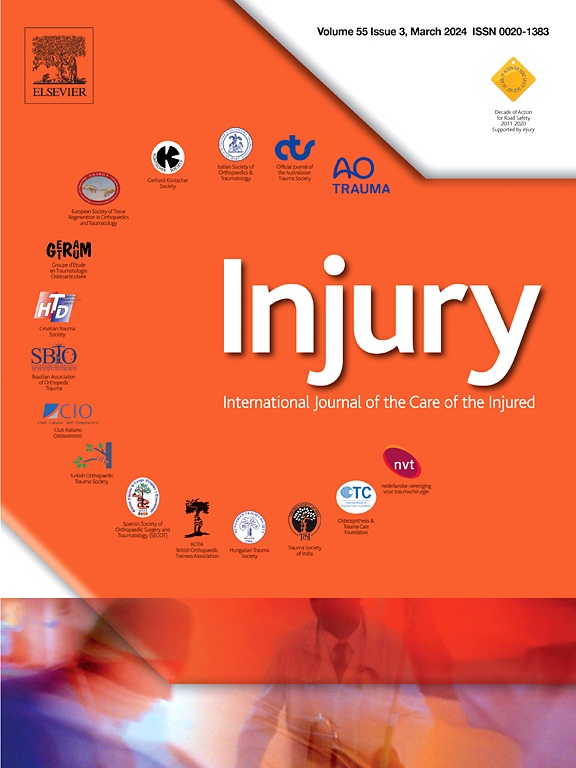
OE Journal. 2021;9(3):7 Injury . 2021 Jan;52(1):19-25Resumen del estudio
Four hundred and ninety patients with extra-articular distal tibial fractures were randomized to intramedullary nailing (IMN; n=245) or plate fixation (n=245) treatments. The primary outcome of interest was the disability rating index (DRI) at 12-months follow-up. Secondary outcomes include the following: the Olerud-Molander Ankle Score (OMAS), Short Form-12 (SF-12) questionnaire, and the DRI, evaluated at 3, 6, and 9 months follow-up. Other outcomes measured included incidence of complications (i.e. deep vein thrombosis [DVT], delayed union, superficial infection, malunion, nonunion, and deep infection). As well, time to return to work and weight bearing was also evaluated at final follow-up. Results revealed that the DRI score at 6-months follow-up was statistically significantly in favour of the plate fixation compared to the IMN group (p=0.008) but not at 3, 9, and 12-months follow-up (p>0.05 for all). Moreover, SF-12 and the Olerud-Molander Ankle scores were not statistically significantly different between the 2 groups at all timepoints (p>0.05 for all). The incidence of delayed union was statistically significantly in favour of the IMN group (p=0.023) while the incidence of malunion was statistically significantly in favour of the plate fixation group (p=0.006). All other outcomes were not statistically significantly different between the IMN and plate fixation group (p>0.05 for all).
Desbloquear el informe ACE completo
Tiene acceso a 4 más artículos GRATUITOS este mes.
Haga clic a continuación para desbloquear y ver este ACE Reports
Desbloquear ahora
Evaluaciones críticas de los últimos ensayos controlados aleatorizados de gran impacto y revisiones sistemáticas en ortopedia
Acceso al contenido del podcast OrthoEvidence, que incluye colaboraciones con el Journal of Bone and Joint Surgery, entrevistas con cirujanos reconocidos internacionalmente y mesas redondas sobre noticias y temas ortopédicos
Suscripción a The Pulse, un boletín quincenal basado en la evidencia y diseñado para ayudarle a tomar mejores decisiones clínicas
Acceso exclusivo a artículos de contenido original, incluidas revisiones sistemáticas propias, y artículos sobre métodos de investigación sanitaria y temas ortopédicos de actualidad
O actualícese hoy mismo y obtenga acceso a todo el contenido de OrthoEvidencepor tan sólo 1,99 $ a la semana.
¿Ya tiene una cuenta? Conectarse
¿Está afiliado a una de nuestras asociaciones colaboradoras?
¡Haga clic aquí para obtener acceso gratuito como parte de los beneficios de miembro de su asociación!


Suscríbase a "El Pulso"
Ortopedia basada en la evidencia directamente a su bandeja de entrada. SUSCRIBIRSE
0 de 4 artículos mensuales GRATIS desbloqueados



