


ACE Report Cover
Similar Long-Term Clinical Outcomes with BPTB and QTP Autografts in ACL Reconstruction
Translate this  ACE Report Translate this  ACE Report Translate this  ACE Report
Lingua
Download Download Download
Scaricare
Cite this Report Cite this Report Cite this Report
Citare
Add to Favorites Add to Favorites Add to Favorites Remove from Favorites Remove from Favorites Remove from Favorites
+ Preferiti
Translate this  ACE Report Translate this  ACE Report Translate this  ACE Report
Lingua
Download Download Download
Scaricare
Cite this Report Cite this Report Cite this Report
Citare
Add to Favorites Add to Favorites Add to Favorites Remove from Favorites Remove from Favorites Remove from Favorites
+ Preferiti
SPORTS MEDICINE
Quadriceps tendon vs. patellar tendon autograft for ACL reconstruction using a hardware-free press-fit fixation technique: comparable stability, function and return-to-sport level but less donor site morbidity in athletes after 10 years.

OrthoEvidence Journal (OE Journal) - ACE Report

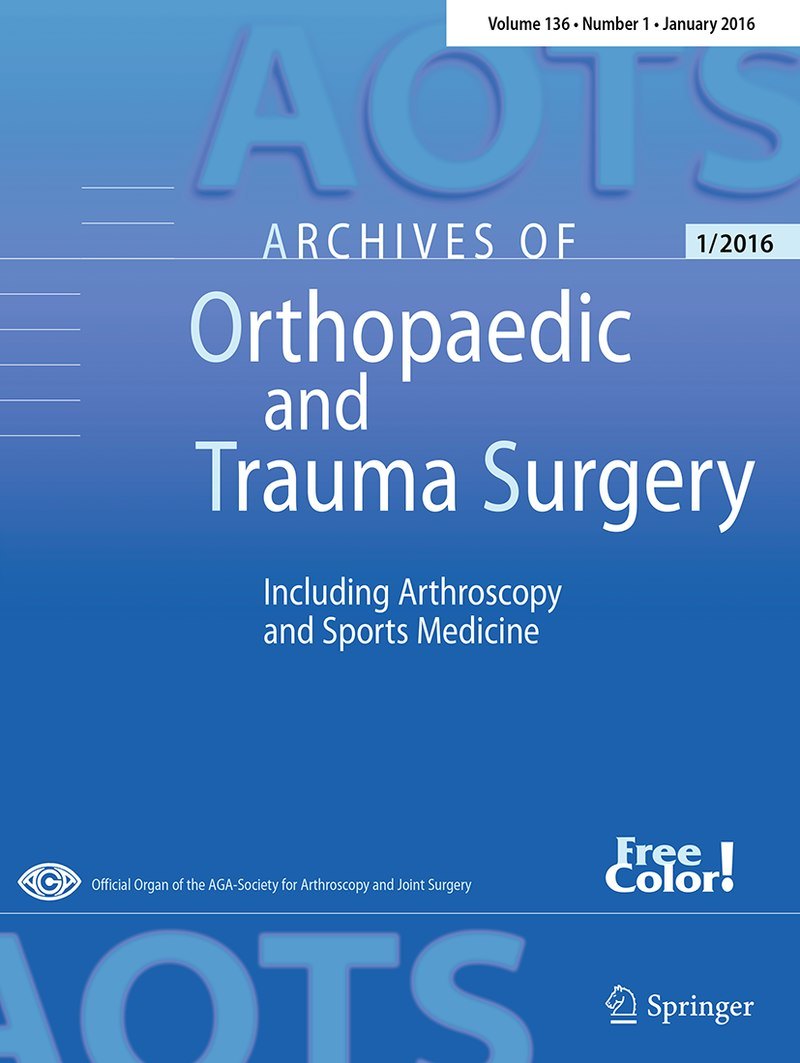
OE Journal. 2020;8(23):27 Archives of Orthopaedic and Trauma Surgery (2020) 140:1465–1474.
Autori che hanno contribuito

A Barie T Sprinckstub J Huber A Jaber

Riassunto dello studio

Sixty athletes with primary anterior cruciate ligament (ACL) tears were randomized to receive an ACL reconstruction with the use of a quadriceps tendon patellar bone (QTB) autograft or a bone patellar tendon bone (BPTB) autograft. Outcomes of interest included the Lysholm knee score, Tegner score, International Knee Documentation Committee (IKDC) score, the KT-1000 arthrometer for knee stability, patient satisfaction on a Visual Analog Scale (VAS), and pain during kneeling and squatting. Outcomes were assessed at 1 year and 10 years post-operation. Results demonstrated similar Lysholm Knee scores, Tegner scores ,and KT-1000 anterior translation stability at both 1 and 10 years post-operation in both the QTB and BPTB groups (p>0.05 for all). Furthermore, IKDC scores and VAS patient satisfaction scores were not statistically significantly different between the two groups at 10 years post-operation (p>0.05 for both). However, pain during kneeling and squatting was significantly greater in the BPTB group compared to the QTB group at both 1 and 10 years post-operation.

Sblocca il Rapporto ACE completo

Ha accesso a 4 altri articoli GRATUITI questo mese.
Clicchi qui sotto per sbloccare e visualizzare questo ACE Reports
Sblocca ora

Valutazioni critiche dei più recenti studi randomizzati controllati ad alto impatto e revisioni sistematiche in ortopedia.

Accesso ai contenuti del podcast OrthoEvidence, comprese le collaborazioni con il Journal of Bone and Joint Surgery, le interviste con chirurghi di fama internazionale e le tavole rotonde sulle novità e gli argomenti ortopedici

Abbonamento a The Pulse, una newsletter bisettimanale basata sulle evidenze scientifiche, progettata per aiutarla a prendere decisioni cliniche migliori.

Accesso esclusivo ad articoli di contenuto originale, tra cui revisioni sistematiche interne, e articoli sui metodi di ricerca sanitaria e su argomenti ortopedici scottanti.

Oppure faccia l'upgrade oggi stesso e acceda a tutti i contenuti di OrthoEvidence
a soli 1,99$ a settimana.
È affiliato ad una delle nostre associazioni partner?

Clicchi qui per ottenere l'accesso gratuito tra i vantaggi dei membri della sua associazione!

0 di 4 articoli mensili GRATUITI sbloccati
Ha raggiunto il suo limite di 4 visualizzazioni di articoli gratuiti questo mese

Accesso a OrthoEvidence a soli 1,99 dollari a settimana.

Rimanga in contatto con le ultime prove. Può disdire in qualsiasi momento.
  • Valutazioni critiche dei più recenti studi randomizzati controllati ad alto impatto e delle revisioni sistematiche in ortopedia.
  • Accesso ai contenuti del podcast OrthoEvidence, tra cui collaborazioni con il Journal of Bone and Joint Surgery, interviste con chirurghi di fama internazionale e tavole rotonde su notizie e argomenti ortopedici.
  • Abbonamento a The Pulse, una newsletter bisettimanale basata sulle evidenze scientifiche, progettata per aiutarla a prendere decisioni cliniche migliori.
Upgrade
Close Dialog
Bentornato!
Ha dimenticato la password?
Inizi la sua prova gratuita oggi stesso!

Il suo account sarà affiliato a
e includerà l'accesso gratuito a OrthoEvidence


O
Ha dimenticato la password?

O
Controlli la sua e-mail

Se esiste un account con l'indirizzo e-mail fornito, le verrà inviata un'e-mail di reimpostazione della password. Se non vede l'e-mail, controlli la cartella spam o posta indesiderata.

Per ulteriore assistenza, contatti il nostro team di supporto.

Effettui il login per abilitare questa funzione

Per accedere a questa funzione, deve essere collegato ad un account OrthoEvidence attivo. Effettui il login o crei un account di prova GRATUITO.

Tradurre il Rapporto ACE

OrthoEvidence utilizza un servizio di traduzione di terze parti per rendere i contenuti accessibili in più lingue. Si prega di notare che, sebbene venga fatto ogni sforzo per garantire l'accuratezza, le traduzioni potrebbero non essere sempre perfette.

Come citare questo documento ACE Report

OrthoEvidence. Similar Long-Term Clinical Outcomes with BPTB and QTP Autografts in ACL Reconstruction. OE Journal. 2020;8(23):27. Available from: https://myorthoevidence.com/AceReport/Show/similar-long-term-clinical-outcomes-with-bptb-and-qtp-autografts-in-acl-reconstruction

Copiare la citazione
Effettui il login per abilitare questa funzione

Per accedere a questa funzione, deve essere collegato ad un account OrthoEvidence attivo. Effettui il login o crei un account di prova GRATUITO.

Funzionalità per i membri Premium

Per accedere a questa funzione, deve essere collegato ad un account OrthoEvidence Premium.

Condividi questo articolo ACE Report



