










SHOULDER & ELBOW
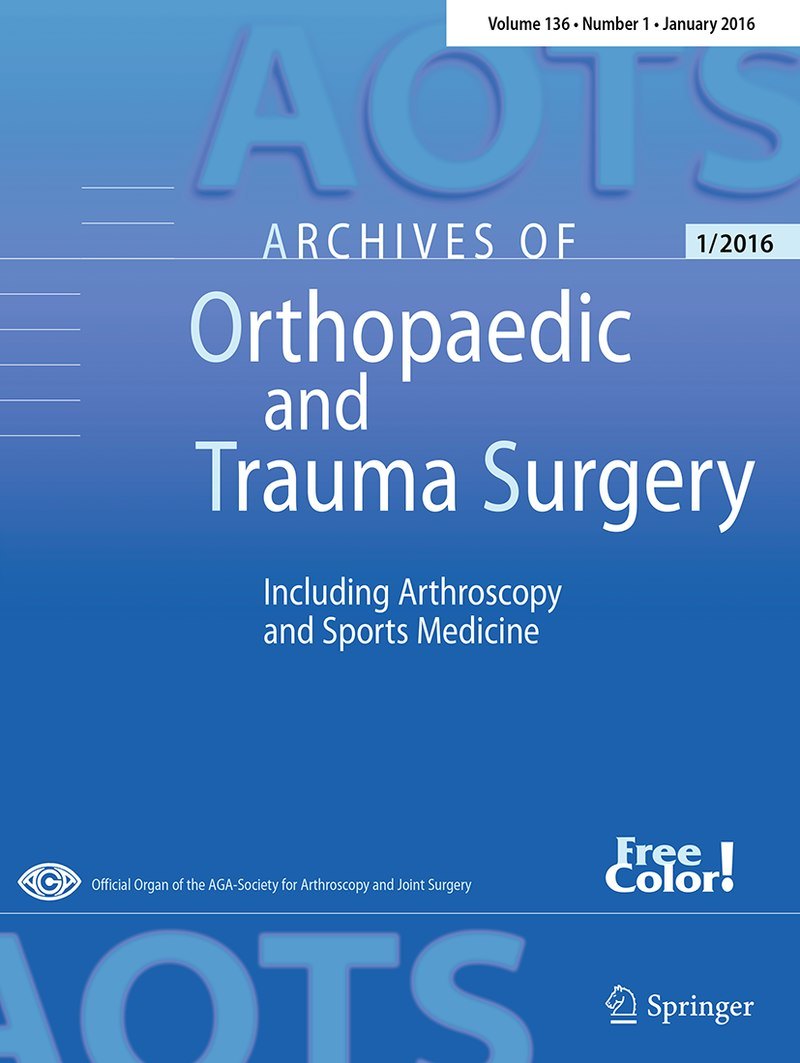
Arthroscopic repair of partial-thickness articular surface rotator cuff tears: single-row transtendon technique versus double-row suture bridge (transosseous equivalent) fixation: results from a prospective randomized study.
OrthoEvidence Journal (OE Journal) - ACE Report
OE Journal. 2020;8(19):14 Arch Orthop Trauma Surg. 2020 Aug;140(8):1065-1071Study Summary
Fifty patients who had scheduled for arthroscopic repair of a partial-thickness articular-sided rotator cuff tear of >50% thickness were randomized to receive a single-row (n=25) or double-row (n=25) suture bridge fixation. Outcomes of interest included American Shoulder and Elbow Surgeons Score (ASES), Constant Shoulder scores, pain on a Visual Analogue Scale (VAS), and the incidence of re-tear. No statistically significant differences in all outcomes were observed between the two groups at final follow-up, as well as VAS pain at 6-months follow-up. VAS pain, ASES, and constant shoulder scores did, however, improve with time (p<0.001) in both treatment arms.
Unlock the Full ACE Report
You have access to 4 more FREE articles this month.
Click below to unlock and view this ACE Reports
Unlock Now
Critical appraisals of the latest, high-impact randomized controlled trials and systematic reviews in orthopaedics
Access to OrthoEvidence podcast content, including collaborations with the Journal of Bone and Joint Surgery, interviews with internationally recognized surgeons, and roundtable discussions on orthopaedic news and topics
Subscription to The Pulse, a twice-weekly evidence-based newsletter designed to help you make better clinical decisions
Exclusive access to original content articles, including in-house systematic reviews, and articles on health research methods and hot orthopaedic topics
Or upgrade today and gain access to all OrthoEvidencecontent for as little as $1.99 per week.
Already have an account? Log in
Are you affiliated with one of our partner associations?
Click here to gain complimentary access as part your association member benefits!



0 of 4 monthly FREE articles unlocked



