










SHOULDER & ELBOW
Clinical improvement and resorption of calcifications in calcific tendinitis of the shoulder after shock wave therapy at 6 months' follow-up: a systematic review and meta-analysis
 This report has been verified
by one or more authors of the
original publication.
This report has been verified
by one or more authors of the
original publication.
OrthoEvidence Journal (OE Journal) - ACE Report
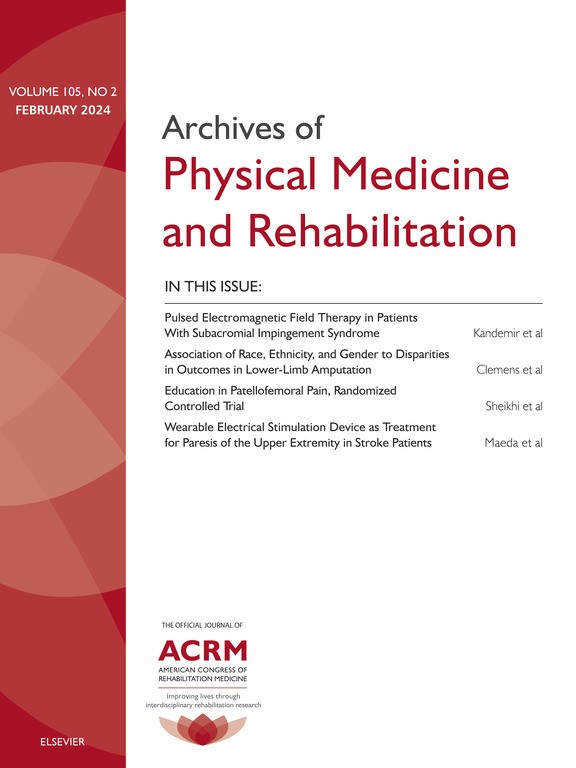
OE Journal. 2014;2(1):18 Arch Phys Med Rehabil. 2013 Sep;94(9):1699-706Six randomized control trials involving 460 patients were included in this meta-analysis and systematic review to determine the effectiveness of shock wave therapy on calcific tendinitis of the shoulder. Pain, disability and calcium reabsorption can be improved with shock wave therapy in patients suffering from calcific tendonitis of the shoulder according to the findings of this meta-analysis and systematic review. This study also suggests that high-energy levels have superior outcomes when compared to low-energy shock wave therapy.
Were the search methods used to find evidence (original research) on the primary question or questions stated?
Was the search for evidence reasonably comprehensive?
Were the criteria used for deciding which studies to include in the overview reported?
Was the bias in the selection of studies avoided?
Were the criteria used for assessing the validity of the included studies reported?
Was the validity of all of the studies referred to in the text assessed with use of appropriate criteria (either in selecting the studies for inclusion or in analyzing the studies that were cited)?
Were the methods used to combine the findings of the relevant studies (to reach a conclusion) reported?
Were the findings of the relevant studies combined appropriately relative to the primary question that the overview addresses?
Were the conclusions made by the author or authors supported by the data and or analysis reported in the overview?
How would you rate the scientific quality of this evidence?
はい = 1
不確実=0.5
無関係 = 0
いいえ = 0
報告基準評価では、著者が出版物内で試験の方法論的特徴や試験特性を報告する際の透明性を評価します。評価は以下の5つのカテゴリーに分類されます。
4/4
Introduction
4/4
Accessing Data
4/4
Analysing Data
3/4
Results
2/4
Discussion
Detsky AS, Naylor CD, O'Rourke K, McGeer AJ, L'Abbé KA. J Clin Epidemiol. 1992;45:255-65
Fragility Indexは、重要な所見の解釈を助けるツールで、結果の強さの尺度を提供します。Fragility Indexは、その所見が有意でなくなるために、二項対立の結果に追加する必要がある連続した事象の数を表します。数値が小さいほど弱い所見を表し、数値が大きいほど強い所見を表します。
なぜ今この研究が必要なのですか?
Surgery is used as a last resort treatment for calcific tendinitis of the shoulder (CTS) due to large costs and a lengthy leave of absence required from work. A variety of conservative treatment methods for calcific tendinitis have been created, with one of the most widely debated being shock wave therapy. Shock wave therapy has been shown to relieve pain, improve clinical symptoms and reduce calcifications. The ideal level of energy required to dissipate calcifications and overall effectiveness of shock was therapy is unclear, and so this study was brought forward to clarify these unknowns.
主な研究課題は何ですか?
Is shock wave therapy effective at treating calcific tendinitis of the shoulder?
重要な知見は?
- 4 studies in a fixed-effects model confirmed radiologic rate of resorption of calcific deposits at 6 months’ follow-up suggested that shock wave therapy is superior to no treatment or placebo for total resorption of calcium (RR of 27.19; 95% CI 7.20-102.67) without significant heterogeneity (p= 0.552). Three pooled studies in a fixed effects model analyzed partial reabsorption, (RR of 16.22; 95% CI 3.33-79.01). Estimates were not heterogeneous across studies (p=0.845).
- Tashjian et al determined the minimal difference of 1.4, in a ten point visual analog scale (VAS), to signify clinical importance. In the 3 studies that used VAS as an outcome measure, and at six weeks, the average change in pain was deemed clinically relevant by Tashjian et al’s standards.
- In the study by Hsu et al, the Constant-Murley score assessing physical evaluation and the patients’ subjective evaluation, an improvement of 25.5 points was observed in the treatment group compared to a decrease of 1.9 points in the control group after 6 months. The study by Hearden et al, an increase of 11% in the Constant-Murley score was found in 45% of treated patients opposed to the comparison group in which no change was noted. Gerdesmeyer et al also found improvements in the Constant-Murley score between both high (score of 31.0) and low energy (15.0) shock waves and the sham group (6.6) at 6 months. In the study by Cosentino et al, the mean improvement found in the Contant-Murley score of the shock wave group at six months was 69% compared to no significant improvement in the control group.
- Cacchio et al used the University of California Los Angeles Shoulder Rating Scale and noticed a significant improvement in mean function in the experimental group
- Hearnden et al’s study observed no signs of calcific deposits at 6 months in 54.5% of patients receiving SWT, while Cacchio noticed 86.6% total absorption and 13.4% partial absorption 1 week following treatment, a finding that was maintained at the 6 month follow-up. Rompe et al recorded a complete disappearance of calcium deposits more frequently in patients with type II calcifications according to Gartner and Simons’ classification. The study by Hsu et al reported a total resorption rate of 21.2% and a partial resorption rate of 33.3% in the experimental group; whereas the study by Cosentino reported a total resorption rate of 31.4% and a partial resorption rate of 40%.
- Peters et al observed high energy therapy (.44mJ/mm2) is more effective than low-energy therapy (.15mJ/mm2) in dissolving calcifications at 6 months; no residual calcifications and no recurrence of pain was observed in the high-energy group, whereas in the low energy group, all subjects showed residual deposits, and 87% of patients experienced a recurrence of pain.
- Gerdesmeyer compared high-energy (.32mJ/mm2) and low energy (.08mJ/mm2) shock wave therapy and patients experienced a better response to high energy therapy with a rate of 60% of complete disappearance of calcific deposits at 6 months’ follow-up and 86% at 12 months’ follow-up, whereas in the low-energy treatment group the rate of dissolution was 21% at 6 months and 25% at 12 months.
最も覚えておくべきことは?
The change in pain with shock wave therapy was reported as clinically relevant in all 3 studies that assessed pain with a visual analog scale. Shock wave therapy improved the Constant-Murley score in 4 studies whereas the sham patients experienced no change. Significant improvements were noticed in the University of California Shoulder Rating Scale with shock wave therapy in one study. Calcium reabsorption rates were higher with shock wave therapy compared to the control group. High energy therapy was deemed more effective in reducing calcific deposits compared to low energy therapy.
それが私の患者ケアにどのように影響するか?
Patients suffering from calcific tendinitis of the shoulder can benefit from the use of shock wave therapy. Shock wave therapy provided superior pain relief, improved function and higher calcium reabsorption than the sham or placebo groups. Also, it was found that high energy shock wave therapy leads to greater improved effects than low energy therapy.

免責事項
このページに記載されている内容は、情報提供のみを目的としたものであり、専門的な医療アドバイス、診断、治療の代わりとなるものではありません。治療が必要な場合は、必ず医師の診断を仰ぐか、最寄りの救急外来を受診してください。このページに記載されている内容に関して個人が表明した意見、信念、見解は、OrthoEvidenceの意見、信念、見解を反映するものではありません。
0の4 月間無料記事のロック解除



