










ARTHROPLASTY
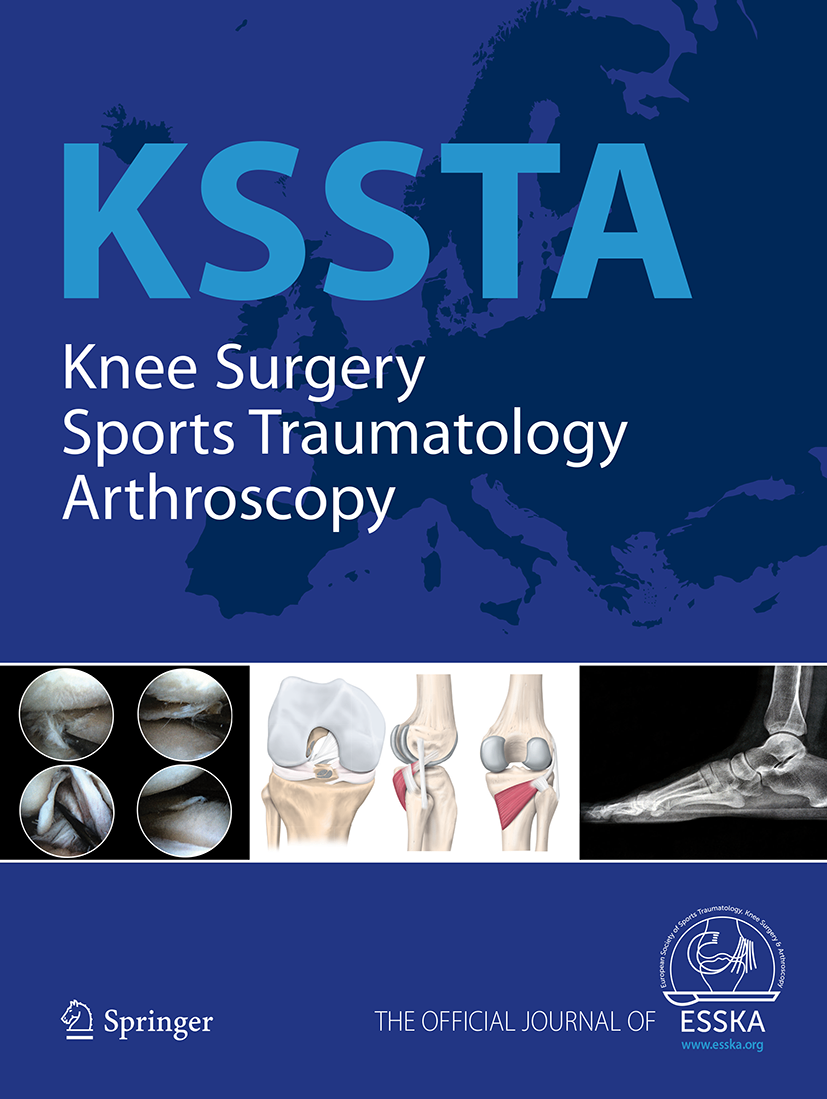
Prospective, randomised controlled trial comparing robotic arm-assisted bi-unicompartmental knee arthroplasty to total knee arthroplasty.
 This study has been identified as potentially high impact.
OE's AI-driven High Impact metric estimates the influence a paper is likely to have by integrating signals from both the journal in which it is published and the scientific content of the article itself.
Developed using state-of-the-art natural language processing, the OE High Impact model more accurately predicts a study's future citation performance than journal impact factor alone.
This enables earlier recognition of clinically meaningful research and helps readers focus on articles most likely to shape future practice.
This study has been identified as potentially high impact.
OE's AI-driven High Impact metric estimates the influence a paper is likely to have by integrating signals from both the journal in which it is published and the scientific content of the article itself.
Developed using state-of-the-art natural language processing, the OE High Impact model more accurately predicts a study's future citation performance than journal impact factor alone.
This enables earlier recognition of clinically meaningful research and helps readers focus on articles most likely to shape future practice.
OrthoEvidence Journal (OE Journal) - ACE Report
OE Journal. 2025;13(17):4 Knee Surg Sports Traumatol Arthrosc . 2025 Jul;33(7):2571-2580.Study Summary
Sixty patients with medial and lateral knee osteoarthritis were randomized to receive either robotic arm–assisted bi‐unicompartmental knee arthroplasty (bi‐UKA, n=27) or conventional total knee arthroplasty (TKA, n=33). The primary outcome was achievement of a biphasic sagittal knee moment pattern during gait. Secondary outcomes included Oxford Knee Score, New Knee Society Score (NKSS), Forgotten Joint Score, EQ-5D, pain and stiffness VAS, satisfaction, range of motion, and complications. Outcomes were assessed up to 2 years. Overall, the results revealed no significant differences between groups in biphasic gait, patient‐reported outcomes, or complication rates, although NKSS total and clinical subscores favored TKA. The study concludes that robotic bi‐UKA and TKA offer comparable short-term safety and clinical outcomes, but long-term follow-up is required to determine potential advantages of cruciate‐sparing bi‐UKA.
Unlock the Full ACE Report
You have access to 4 more FREE articles this month.
Click below to unlock and view this ACE Reports
Unlock Now
Critical appraisals of the latest, high-impact randomized controlled trials and systematic reviews in orthopaedics
Access to OrthoEvidence podcast content, including collaborations with the Journal of Bone and Joint Surgery, interviews with internationally recognized surgeons, and roundtable discussions on orthopaedic news and topics
Subscription to The Pulse, a twice-weekly evidence-based newsletter designed to help you make better clinical decisions
Exclusive access to original content articles, including in-house systematic reviews, and articles on health research methods and hot orthopaedic topics
Or upgrade today and gain access to all OrthoEvidencecontent for as little as $1.99 per week.
Already have an account? Log in
Are you affiliated with one of our partner associations?
Click here to gain complimentary access as part your association member benefits!



0 of 4 monthly FREE articles unlocked



