










PHYSICAL THERAPY & REHAB
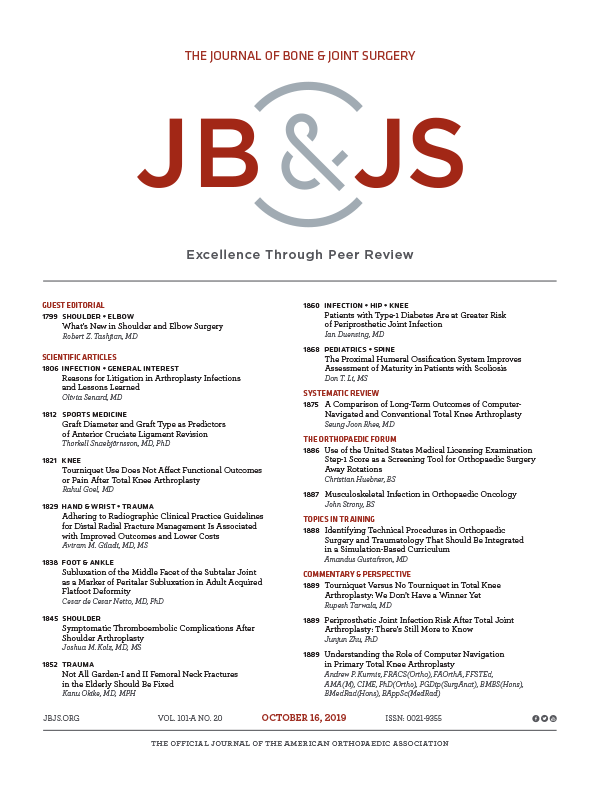
Effectiveness of Anterior Cruciate Ligament Injury Prevention Training Programs
 This report has been verified
by one or more authors of the
original publication.
This report has been verified
by one or more authors of the
original publication.
 Este estudo foi identificado como tendo um impacto potencialmente elevado.
A métrica de Alto Impacto da OE, baseada em IA, estima a influência que um artigo poderá ter, integrando sinais da revista em que foi publicado e do conteúdo científico do próprio artigo.
Desenvolvido com recurso ao mais avançado processamento de linguagem natural, o modelo High Impact da OE prevê com maior precisão o desempenho futuro de um estudo em termos de citações do que o fator de impacto da revista por si só.
Isto permite o reconhecimento precoce de investigação clinicamente significativa e ajuda os leitores a concentrarem-se nos artigos com maior probabilidade de moldar a prática futura.
Este estudo foi identificado como tendo um impacto potencialmente elevado.
A métrica de Alto Impacto da OE, baseada em IA, estima a influência que um artigo poderá ter, integrando sinais da revista em que foi publicado e do conteúdo científico do próprio artigo.
Desenvolvido com recurso ao mais avançado processamento de linguagem natural, o modelo High Impact da OE prevê com maior precisão o desempenho futuro de um estudo em termos de citações do que o fator de impacto da revista por si só.
Isto permite o reconhecimento precoce de investigação clinicamente significativa e ajuda os leitores a concentrarem-se nos artigos com maior probabilidade de moldar a prática futura.
OrthoEvidence Journal (OE Journal) - ACE Report
OE Journal. 2013;1(12):164 J Bone Joint Surg Am. 2012 May 2;94(9):769-76Exclusive Author Interview
Dr. Sadoghi speaks on ACL injury prevention training programs
This meta-analysis identified 8 controlled studies that examined anterior cruciate ligament (ACL) injury prevention programs. The purpose of this meta-analysis is to examine the effectiveness of ACL prevention programs and to determine if there is evidence for the "best" program, while assessing the quality of the current literature on ACL injury prevention. The pooled results showed that individuals who underwent ACL injury prevention programs had a 62% decrease in the risk of ACL rupture compared to the control group.
Were the search methods used to find evidence (original research) on the primary question or questions stated?
Was the search for evidence reasonably comprehensive?
Were the criteria used for deciding which studies to include in the overview reported?
Was the bias in the selection of studies avoided?
Were the criteria used for assessing the validity of the included studies reported?
Was the validity of all of the studies referred to in the text assessed with use of appropriate criteria (either in selecting the studies for inclusion or in analyzing the studies that were cited)?
Were the methods used to combine the findings of the relevant studies (to reach a conclusion) reported?
Were the findings of the relevant studies combined appropriately relative to the primary question that the overview addresses?
Were the conclusions made by the author or authors supported by the data and or analysis reported in the overview?
How would you rate the scientific quality of this evidence?
Sim = 1
Incerto = 0,5
Não relevante = 0
Não = 0
A Avaliação dos Critérios de Relato avalia a transparência com que os autores relatam as caraterísticas metodológicas e do ensaio na publicação. A avaliação está dividida em cinco categorias que são apresentadas de seguida.
4/4
Introduction
4/4
Accessing Data
4/4
Analysing Data
3/4
Results
3/4
Discussion
Detsky AS, Naylor CD, O'Rourke K, McGeer AJ, L'Abbé KA. J Clin Epidemiol. 1992;45:255-65
O Índice de Fragilidade é uma ferramenta que auxilia na interpretação de achados significativos, fornecendo uma medida de força para um resultado. O Índice de Fragilidade representa o número de eventos consecutivos que precisam de ser adicionados a um resultado dicotómico para que o resultado deixe de ser significativo. Um número pequeno representa um resultado mais fraco e um número grande representa um resultado mais forte.
Porque é que este estudo era necessário agora?
ACL tears are serious injuries that occur frequently in the United States and can incur millions of dollars annually. Having this injury may also predispose patients to osteoarthritis, leading to more pain and a reduced quality of life. Approximately 80% of ACL tears occur in non-contact situations, which suggests that preventative efforts may reduce ACL injuries. This meta-analysis identified 8 prospective, controlled studies on prevention programs for ACL injuries and examined whether ACL prevention programs actually reduce the risk of injury, and if there is a "best" program, and the validity of the findings.
Qual era a principal questão de investigação?
Does the use of ACL injury prevention programs reduce the risk of ACL injuries and is there a optimal prevention program?
Quais foram os resultados importantes?
- The pooled risk ratio was 0.38 (95%CI, 0.20 to 0.72) which represented a 62% decrease in the risk of ACL rupture for the prevention group (P=0.003)
- The pooled risk ratio, when stratified by sex, was 0.48 for female athletes (95%CI, 0.26-0.89) and 0.15 for male athletes (95%CI, 0.08 to 0.28)
- In evaluating study quality, the mean Jadad score for the studies included was 1 point (95%CI, 0.43 to 1.57 points)
- Heterogeneity was significant between the studies used (p=0.011) with an I-squared index of 64.0%
- A "best" training program was unable to be determined due to the heterogeneity of the included studies
De que é que me devo lembrar mais?
The results from this meta-analysis supports the use of ACL injury prevention programs, as it suggests a risk reduction of 52% in female athlete population and a risk reduction of 85% in the male athlete population. Quality of the studies involved were evaluated by the Jadad scoring system and was given a mean score of one point. An optimal prevention program was not determined due to the heterogeneity of the studies included.
Como é que isto afectará o tratamento dos meus doentes?
The results from this meta-analysis indicate that male and female athletes may find risk reduction in ACL injuries by participating in ACL injury prevention programs. Further studies are required to determine a specific type of prevention program that provides the most effective results.

AVISO LEGAL
O conteúdo desta página destina-se apenas a fins informativos e não pretende substituir o aconselhamento, diagnóstico ou tratamento médico profissional. Se necessitar de tratamento médico, procure sempre o conselho do seu médico ou dirija-se ao serviço de urgência mais próximo. As opiniões, crenças e pontos de vista expressos pelos indivíduos no conteúdo encontrado nesta página não reflectem as opiniões, crenças e pontos de vista da OrthoEvidence.
0 de 4 artigos mensais GRATUITOS desbloqueados



