




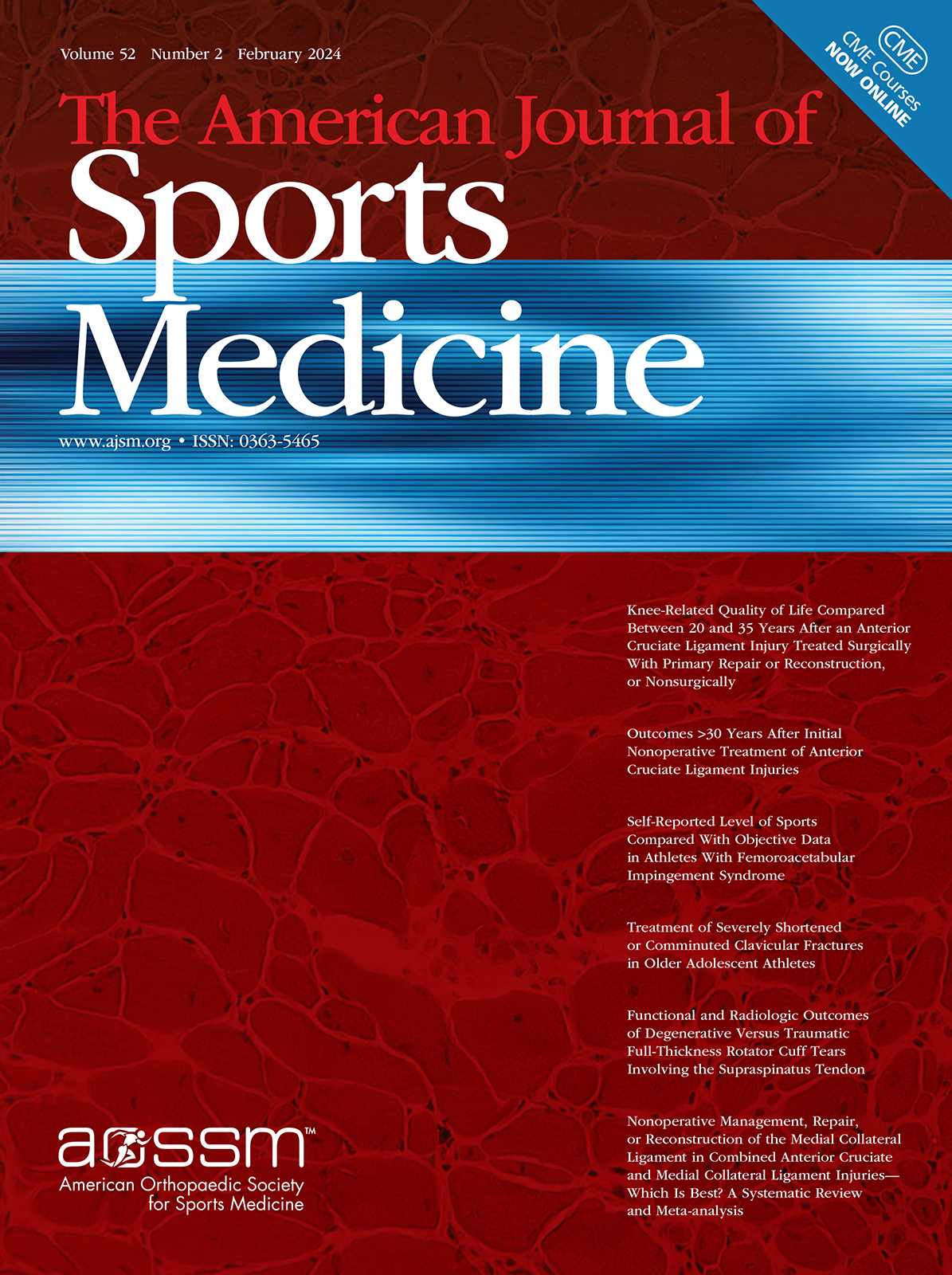






SPORTS MEDICINE
Reduced Knee Flexion Strength 18 Years After ACL Reconstruction With Hamstring Tendon Versus Patellar Tendon.
 تم تحديد هذه الدراسة على أنها ذات تأثير كبير محتمل.
يقدّر مقياس التأثير العالي الذي يعتمد على الذكاء الاصطناعي من OE التأثير المحتمل لورقة بحثية ما من خلال دمج إشارات من كل من المجلة التي نُشرت فيها والمحتوى العلمي للمقالة نفسها.
تم تطوير نموذج OE High Impact باستخدام أحدث تقنيات معالجة اللغة الطبيعية، ويتنبأ نموذج OE High Impact بدقة أكبر بأداء الاقتباس المستقبلي للدراسة أكثر من معامل تأثير المجلة وحده.
وهذا يتيح التعرف المبكر على الأبحاث ذات المغزى السريري ويساعد القراء على التركيز على المقالات التي من المرجح أن تشكل الممارسة المستقبلية.
تم تحديد هذه الدراسة على أنها ذات تأثير كبير محتمل.
يقدّر مقياس التأثير العالي الذي يعتمد على الذكاء الاصطناعي من OE التأثير المحتمل لورقة بحثية ما من خلال دمج إشارات من كل من المجلة التي نُشرت فيها والمحتوى العلمي للمقالة نفسها.
تم تطوير نموذج OE High Impact باستخدام أحدث تقنيات معالجة اللغة الطبيعية، ويتنبأ نموذج OE High Impact بدقة أكبر بأداء الاقتباس المستقبلي للدراسة أكثر من معامل تأثير المجلة وحده.
وهذا يتيح التعرف المبكر على الأبحاث ذات المغزى السريري ويساعد القراء على التركيز على المقالات التي من المرجح أن تشكل الممارسة المستقبلية.
OrthoEvidence Journal (OE Journal) - ACE Report
OE Journal. 2025;13(14):38 Am J Sports Med. 2024 01-Sep;():. 10.1177/03635465241271524ملخص الدراسة
One-hundred-fourteen patients with isolated ACL rupture were randomized to receive a bone–patellar tendon–bone (BPTB) graft (n = 58) or a hamstring graft (n = 56). The primary outcome was side-to-side anterior laxity measured with the KT-1000 arthrometer. Secondary outcomes included isokinetic knee-extension/flexion strength, Lachman and pivot-shift tests, KOOS, Tegner and Lysholm scores, and Kellgren–Lawrence (KL) osteoarthritis grade. Outcomes were assessed up to a mean of 19 years (range 18–20). Overall, the study revealed no significant between-group difference in KT-1000 laxity. However, hamstring-graft knees showed a 10.7 % lower peak flexion torque and 17.2 % lower total flexion work at 60 deg/s. Patient-reported scores, clinical laxity tests, and KL OA grades were similar. These findings suggest comparable long-term stability but a persistent hamstring-strength deficit with hamstring autografts.
افتح تقرير ACE الكامل
لديك إمكانية الوصول إلى المزيد من المقالات المجانية هذا الشهر، انقر أدناه لفتح هذا ACE Reports
افتح الآنتقييمات نقدية لأحدث التجارب المعشاة ذات الشواهد عالية التأثير والمراجعات المنهجية في جراحة العظام
الوصول إلى محتوى المدونة الصوتية OrthoEvidence، بما في ذلك التعاون مع مجلة جراحة العظام والمفاصل، ومقابلات مع جراحين معترف بهم دوليًا، ومناقشات المائدة المستديرة حول أخبار وموضوعات جراحة العظام
الاشتراك في النشرة الإخبارية The Pulse، وهي نشرة إخبارية مبنية على الأدلة مرتين أسبوعيًا مصممة لمساعدتك في اتخاذ قرارات سريرية أفضل
إمكانية الوصول الحصري إلى مقالات المحتوى الأصلي، بما في ذلك المراجعات المنهجية الداخلية، ومقالات عن طرق البحث الصحي وموضوعات جراحة العظام الساخنة
أو قم بالترقية اليوم واحصل على إمكانية الوصول إلى جميع محتويات OrthoEvidence مقابل 1.99 دولارًا أمريكيًا في الأسبوع.
هل لديك حساب بالفعل؟ تسجيل الدخول
هل أنت منتسب إلى إحدى الجمعيات الشريكة لنا؟
انقر هنا لتحصل على وصول مجاني كجزء من مزايا عضوية جمعيتك!


0 من 4 مقالات مجانية شهرية غير مقفلة



