










PHYSICAL THERAPY & REHAB
Physiotherapist-directed rehabilitation exercises in the outpatient or home setting improve strength, gait speed and cadence after elective total hip replacement: a systematic review
 This report has been verified
by one or more authors of the
original publication.
This report has been verified
by one or more authors of the
original publication.
OrthoEvidence Journal (OE Journal) - ACE Report
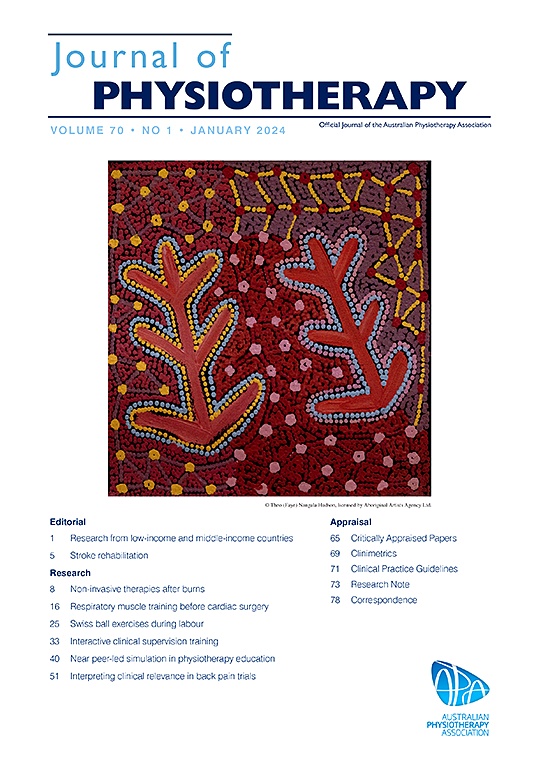
OE Journal. 2014;2(7):21 J Physiother. 2013 Dec;59(4):219-26. doi: 10.1016/S1836-9553(13)70198-X5 randomized trials evaluating the effect of post-discharge rehabilitation exercises following a total hip arthroplasty (THA) were included in this review. The purposes of this meta-analysis/systematic review were to (1) examine the effectiveness of physical therapy exercises following THA and (2) determine whether supervised and home-based exercise regimens are comparable with respect to strength, gait, function, and quality of life. Results indicated that the prescription of exercise following THA resulted in significantly better hip abductor strength, gait speed, and cadence, but not hip flexor, hip extensor, or knee extensor strength. There were no significant differences between supervised or home-based exercise interventions with respect to gait speed, cadence, and functional outcomes, except for the Timed Up and Go Test, which favoured the supervised group.
Were the search methods used to find evidence (original research) on the primary question or questions stated?
Was the search for evidence reasonably comprehensive?
Were the criteria used for deciding which studies to include in the overview reported?
Was the bias in the selection of studies avoided?
Were the criteria used for assessing the validity of the included studies reported?
Was the validity of all of the studies referred to in the text assessed with use of appropriate criteria (either in selecting the studies for inclusion or in analyzing the studies that were cited)?
Were the methods used to combine the findings of the relevant studies (to reach a conclusion) reported?
Were the findings of the relevant studies combined appropriately relative to the primary question that the overview addresses?
Were the conclusions made by the author or authors supported by the data and or analysis reported in the overview?
How would you rate the scientific quality of this evidence?
نعم = 1
غير مؤكد = 0.5
غير ذي صلة = 0
لا = 0
يقيّم تقييم معايير الإبلاغ الشفافية التي يبلغ بها المؤلفون عن الخصائص المنهجية والتجريبية للتجربة في المنشور. ينقسم التقييم إلى خمس فئات معروضة أدناه.
4/4
Introducción
3/4
Acceso a los datos
3/4
Análisis de los datos
3/4
Resultados
3/4
Discusión
Detsky AS, Naylor CD, O'Rourke K, McGeer AJ, L'Abbé KA. J Clin Epidemiol. 1992;45:255-65
مؤشر الهشاشة هو أداة تساعد في تفسير النتائج المهمة، وتوفر مقياسًا لقوة النتيجة. ويمثل مؤشر الهشاشة عدد الأحداث المتتالية التي يجب إضافتها إلى نتيجة ثنائية التفرع لجعل النتيجة غير مهمة. يمثل الرقم الصغير نتيجة أضعف ويمثل الرقم الكبير نتيجة أقوى.
لماذا كانت هناك حاجة لهذه الدراسة الآن؟
As the population ages, the number of patients undergoing total hip arthroplasty (THA) is steadily increasing. Exercise prescription for rehabilitation following a THA is variable, and is based more so on clinical experience, rather than concrete, methodologically-sound evidence. One systematic review examining the effectiveness of physical therapy following THA concluded that, based on studies published in 2004 or earlier, there was insufficient evidence to provide solid recommendations on this topic. Therefore, this systematic review/meta-analysis was needed to summarize more recent research regarding the effectiveness of both physiotherapist-guided rehabilitation exercises and home-based exercises performed independently.
ما هو سؤال البحث الرئيسي؟
Are physiotherapist-guided rehabilitation exercises effective in improving strength, gait, function and quality of life in patients who have undergone total hip arthroplasty, and how does this compare to the prescription of home-based exercises performed independently?
ما هي النتائج المهمة؟
- 5 randomized trials were included in this review. Three compared an experimental group to a control group, one compared two experimental groups, and one compared two experimental groups with a control group.
- A meta-analysis of 4 studies (n=137) concluded that rehabilitation exercises after discharge significantly improved hip abductor strength (MD: 16 Nm; 95% CI 10 to 22; p<0.05). Separate analyses found no significant effect of post-discharge exercises on hip flexor strength (3 studies; n=111; MD: 6 Nm; 95% CI -2 to 13), hip extensor strength (3 studies; n=111; MD: 21 Nm; 95% CI -2 to 44), or knee extensor strength (2 studies; n=58; MD: 42 Nm; 95% CI -4 to 89) (all p>0.05).
- Post-discharge exercises significantly improved gait speed (2 studies; n=79; MD: 6 m/min; 95% CI 1 to 11) and cadence (1 study; MD: 20 steps/min; 95% CI 8 to 32) (both p<0.05).
- 2 studies assessed function as an outcome; however, the scale on which function was measured varied between these studies. One study, reporting Harris Hip Scores, found exercise to have a significantly beneficial effect on function; however, the mean between-group estimate was only 0.9 points (95% CI 0.2 to 1.6). Significantly better functional outcomes with post-discharge exercises were also observed in the second study (which used the 12-item Hip Questionnaire) (MD in medians 1.5 points; p=0.01).
- One study compared hip abduction strength between home-based exercises and supervised exercises. This study found that the supervised group improved significantly more (by 5.4 Nm); however, differences in baseline measurements may have influenced this result.
- Pooled results from two studies (n=40) revealed no significant differences in gait speed (MD: 8 m/min; 95% CI -9 to 24) or cadence (MD: 2 steps/min; 95% CI -4 to 8) whether the exercise intervention was supervised or home-based (p>0.05).
- One study compared functional outcomes (both objective and patient-reported) between supervised and home-based exercise interventions. This study found no significant difference in patient-reported function (measured on the WOMAC scale), or in the time to ascend four stairs, lower limb power and the 6-minute walk test (all objective measures) (p>0.05). For the Timed Up and Go Test, significantly better results were observed in the supervised group (MD: 1.8 seconds; 95% CI 0.1 to 3.5).
- Results from one study found that quality of life (measured on the Assessment of Quality of Life questionnaire) was similar between exercises that were supervised or home-based (MD: 0.05; 95% CI -0.15 to 0.25).
ما الذي يجب أن أتذكره أكثر؟
Post-discharge rehabilitation exercises following total hip arthroplasty (THA) resulted in significantly better hip abductor strength, gait speed, and cadence, but not hip flexor, hip extensor, or knee extensor strength. Two studies evaluating functional outcomes on two separate scales both revealed significant improvements in function with post-discharge rehabilitation exercises compared to no intervention. There were no significant differences between supervised or home-based exercise interventions with respect to gait speed, cadence, and most functional outcomes (except the Timed Up and Go Test, which favoured the supervised group). The effect of post-discharge exercise on quality of life, as well as the effect of supervised versus home-based exercises on strength and quality of life, remain unknown.
كيف سيؤثر ذلك على رعاية مرضاي؟
Results from this meta-analysis and systematic review suggest that post-discharge rehabilitation exercises may improve gait and strength in patients who have undergone a total hip arthroplasty (THA). Additional high-quality studies, examining the effect of post-discharge exercise on quality of life, as well as the effect of supervised versus home-based exercises on strength and quality of life, are needed.

تنويه
هذا المحتوى الموجود في هذه الصفحة هو لأغراض إعلامية فقط وليس الغرض منه أن يكون بديلاً عن المشورة الطبية المتخصصة أو التشخيص أو العلاج. إذا كنت بحاجة إلى علاج طبي، اطلب دائمًا مشورة طبيبك أو اذهب إلى أقرب قسم طوارئ إليك. الآراء والمعتقدات ووجهات النظر التي يعبر عنها الأفراد في المحتوى الموجود في هذه الصفحة لا تعكس آراء ومعتقدات ووجهات نظر أورثوإيفيدنس.
0 من 4 مقالات مجانية شهرية غير مقفلة



