










TRAUMA
Comparison of percutaneous compression plate to parallel screws in the treatment of nondisplaced femoral neck fractures in elderly patients: a prospective, randomized study.
OrthoEvidence Journal (OE Journal) - ACE Report
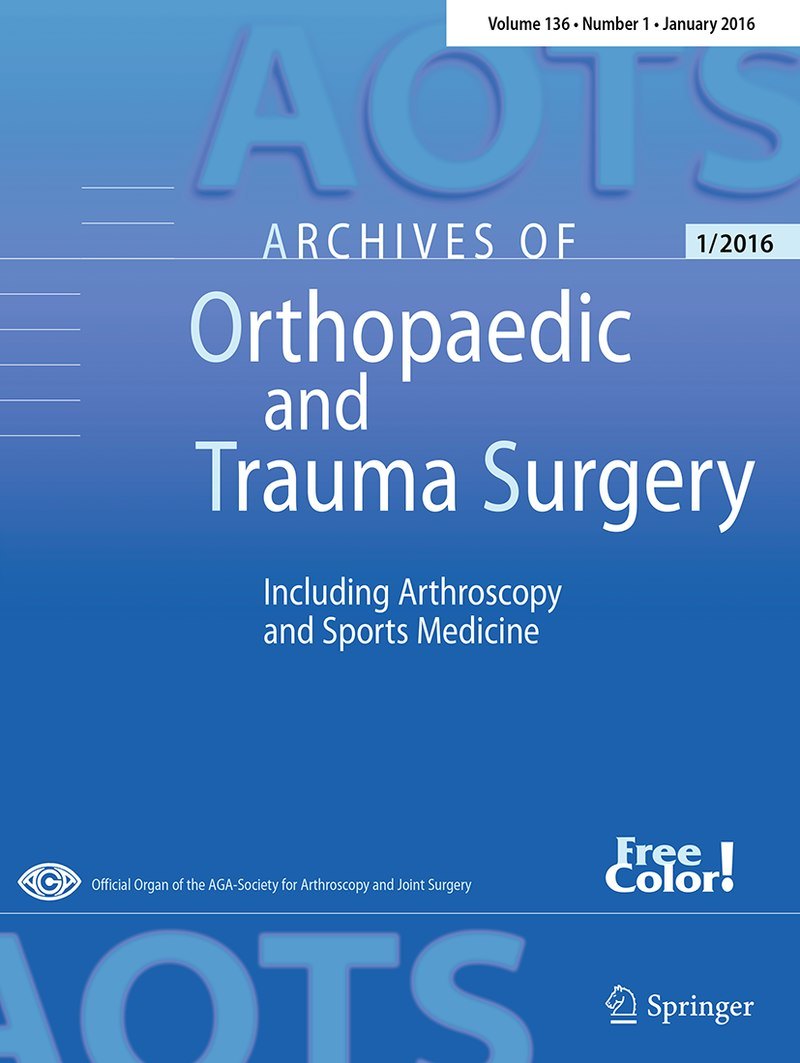
OE Journal. 2024;12(5):22 Arch Orthop Trauma Surg . 2023 Dec;143(12):7063-7071.ملخص الدراسة
Two hundred eighteen patients with non-displaced femoral neck fractures in elderly individuals were randomized to receive internal fixation using either percutaneous compression plate (PCCP; n=97 analyzed) or parallel screws (PS; n=97 analyzed). The primary outcome of interest was the time to full weight-bearing, with secondary outcomes including operative time, intraoperative blood loss, hemoglobin level drop, postoperative hospital stay, reduction quality, fracture healing time, Harris hip score, and postoperative complications. Outcomes were assessed at 6 weeks, 3 months, 6 months, 9 months, and 1 year after surgery. The study reveals that PCCP may be a favourable option for non-displaced femoral neck fractures in elderly patients, providing earlier full weight-bearing, shorter fracture healing time, and a lower implant failure rate.
افتح تقرير ACE الكامل
لديك إمكانية الوصول إلى المزيد من المقالات المجانية هذا الشهر، انقر أدناه لفتح هذا ACE Reports
افتح الآنتقييمات نقدية لأحدث التجارب المعشاة ذات الشواهد عالية التأثير والمراجعات المنهجية في جراحة العظام
الوصول إلى محتوى المدونة الصوتية OrthoEvidence، بما في ذلك التعاون مع مجلة جراحة العظام والمفاصل، ومقابلات مع جراحين معترف بهم دوليًا، ومناقشات المائدة المستديرة حول أخبار وموضوعات جراحة العظام
الاشتراك في النشرة الإخبارية The Pulse، وهي نشرة إخبارية مبنية على الأدلة مرتين أسبوعيًا مصممة لمساعدتك في اتخاذ قرارات سريرية أفضل
إمكانية الوصول الحصري إلى مقالات المحتوى الأصلي، بما في ذلك المراجعات المنهجية الداخلية، ومقالات عن طرق البحث الصحي وموضوعات جراحة العظام الساخنة
أو قم بالترقية اليوم واحصل على إمكانية الوصول إلى جميع محتويات OrthoEvidence مقابل 1.99 دولارًا أمريكيًا في الأسبوع.
هل لديك حساب بالفعل؟ تسجيل الدخول
هل أنت منتسب إلى إحدى الجمعيات الشريكة لنا؟
انقر هنا لتحصل على وصول مجاني كجزء من مزايا عضوية جمعيتك!



0 من 4 مقالات مجانية شهرية غير مقفلة



