










ARTHROPLASTY
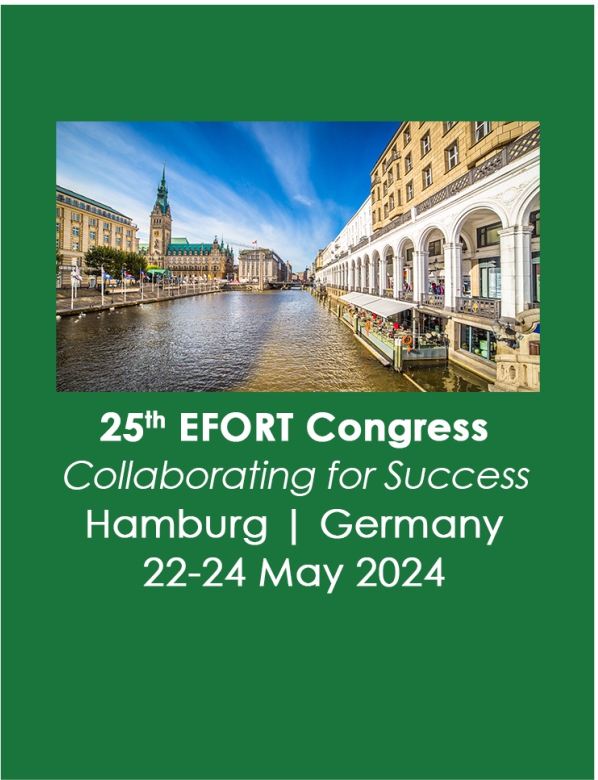
2024 EFORT Annual Meeting: Assessment of improvement in functional outcomes between a novel knee replacement design and conventional designs in 240 knees: a randomized controlled trial
OrthoEvidence Journal (OE Journal) - ACE Report
OE Journal. 2024;12(10):7Two hundred forty patients with primary, Kellgren-Lawrence grade 3-4 knee osteoarthritis were randomized to receive either a novel TKR implant design (Persona CR, n=80) or one of two conventional TKR designs (PFC CR, n=80 and NexGen CR, n=80). The primary outcome of interest was the Oxford Knee Score (OKS). Secondary outcomes included the Forgotten Joint Score (FJS), the 15D, the UCLA activity score, and the visual analog scale (VAS) pain score. Outcomes were assessed at 2–3 months, 1 year, and 2 years. Overall, the results of the study revealed that the OKS improved significantly in all groups, with no clinically relevant differences between the novel and conventional designs at the 2-year follow-up. This suggests that the novel TKR implant design does not provide superior functional outcomes compared to conventional designs.
افتح تقرير ACE الكامل
لديك إمكانية الوصول إلى المزيد من المقالات المجانية هذا الشهر، انقر أدناه لفتح هذا ACE Reports
افتح الآنتقييمات نقدية لأحدث التجارب المعشاة ذات الشواهد عالية التأثير والمراجعات المنهجية في جراحة العظام
الوصول إلى محتوى المدونة الصوتية OrthoEvidence، بما في ذلك التعاون مع مجلة جراحة العظام والمفاصل، ومقابلات مع جراحين معترف بهم دوليًا، ومناقشات المائدة المستديرة حول أخبار وموضوعات جراحة العظام
الاشتراك في النشرة الإخبارية The Pulse، وهي نشرة إخبارية مبنية على الأدلة مرتين أسبوعيًا مصممة لمساعدتك في اتخاذ قرارات سريرية أفضل
إمكانية الوصول الحصري إلى مقالات المحتوى الأصلي، بما في ذلك المراجعات المنهجية الداخلية، ومقالات عن طرق البحث الصحي وموضوعات جراحة العظام الساخنة
أو قم بالترقية اليوم واحصل على إمكانية الوصول إلى جميع محتويات OrthoEvidence مقابل 1.99 دولارًا أمريكيًا في الأسبوع.
هل لديك حساب بالفعل؟ تسجيل الدخول
هل أنت منتسب إلى إحدى الجمعيات الشريكة لنا؟
انقر هنا لتحصل على وصول مجاني كجزء من مزايا عضوية جمعيتك!



0 من 4 مقالات مجانية شهرية غير مقفلة



