




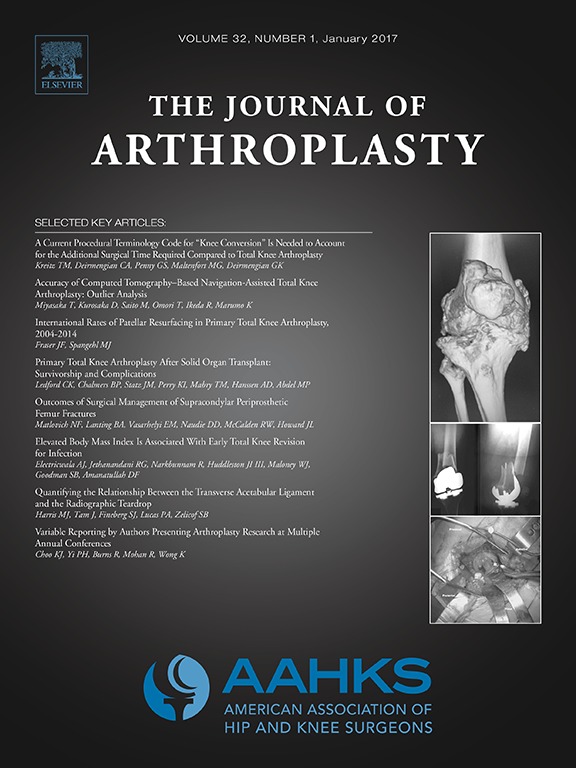






ARTHROPLASTY
Better Flexion but Unaffected Satisfaction After Treatment With Posterior Stabilized Versus Cruciate Retaining Total Knee Arthroplasty - 2-year Results of a Prospective, Randomized Trial.
OrthoEvidence Journal (OE Journal) - ACE Report
OE Journal. 2025;13(12):6 J Arthroplasty . 2024 Feb;39(2):368-373.ملخص الدراسة
One hundred fourty patients with primary or secondary knee osteoarthritis were randomized to receive either a cruciate-retaining (CR) implant (n=72) or a posterior-stabilized (PS) implant (n=68). The primary outcome was knee function, including range of motion (ROM) and flexion. Secondary outcomes included patient-reported outcome measures (PROMs), complication and reoperation rates, and satisfaction. Outcomes were assessed at baseline, 3 months, 1 year, and 2 years postoperatively. Overall, the results of the study revealed that the PS group had better knee flexion and ROM at 1 and 2 years, but no significant differences in PROMs or satisfaction compared to the CR group. These findings suggest that while PS implants may offer improved flexion, this advantage does not translate into perceived clinical benefit.
افتح تقرير ACE الكامل
لديك إمكانية الوصول إلى المزيد من المقالات المجانية هذا الشهر، انقر أدناه لفتح هذا ACE Reports
افتح الآنتقييمات نقدية لأحدث التجارب المعشاة ذات الشواهد عالية التأثير والمراجعات المنهجية في جراحة العظام
الوصول إلى محتوى المدونة الصوتية OrthoEvidence، بما في ذلك التعاون مع مجلة جراحة العظام والمفاصل، ومقابلات مع جراحين معترف بهم دوليًا، ومناقشات المائدة المستديرة حول أخبار وموضوعات جراحة العظام
الاشتراك في النشرة الإخبارية The Pulse، وهي نشرة إخبارية مبنية على الأدلة مرتين أسبوعيًا مصممة لمساعدتك في اتخاذ قرارات سريرية أفضل
إمكانية الوصول الحصري إلى مقالات المحتوى الأصلي، بما في ذلك المراجعات المنهجية الداخلية، ومقالات عن طرق البحث الصحي وموضوعات جراحة العظام الساخنة
أو قم بالترقية اليوم واحصل على إمكانية الوصول إلى جميع محتويات OrthoEvidence مقابل 1.99 دولارًا أمريكيًا في الأسبوع.
هل لديك حساب بالفعل؟ تسجيل الدخول
هل أنت منتسب إلى إحدى الجمعيات الشريكة لنا؟
انقر هنا لتحصل على وصول مجاني كجزء من مزايا عضوية جمعيتك!



0 من 4 مقالات مجانية شهرية غير مقفلة



