










PHYSICAL THERAPY & REHAB
Improvement of upper extremity motor control and function after home-based constraint induced therapy in children with unilateral cerebral palsy: immediate and long-term effects
 This report has been verified
by one or more authors of the
original publication.
This report has been verified
by one or more authors of the
original publication.
OrthoEvidence Journal (OE Journal) - ACE Report
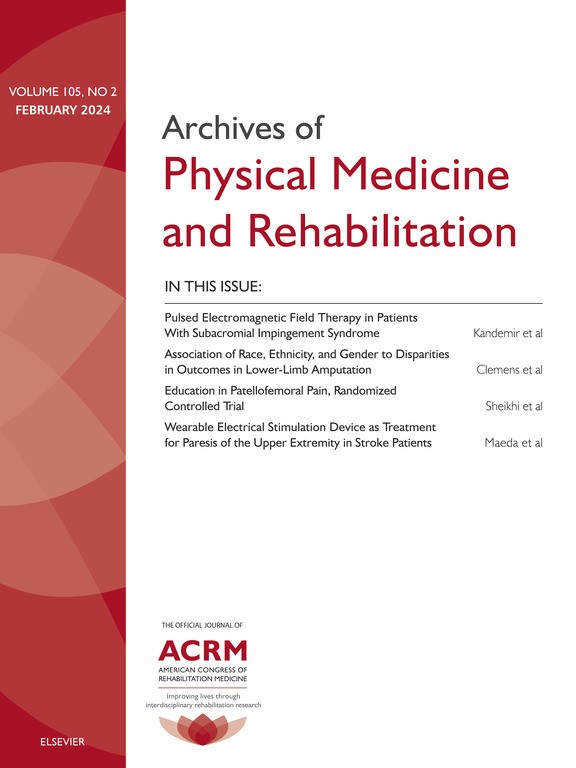
OE Journal. 2014;2(22):20 Arch Phys Med Rehabil. 2014 Aug;95(8):1423-32. doi: 10.1016/j.apmr.2014.03.025. Epub 2014 Apr 14.45 children aged 6-12 years with a diagnosis of congenital unilateral spastic cerebral palsy (CP) were randomized to either receive home-based constraint induced therapy (CIT) or traditional rehabilitation therapy. The purpose of this study was to examine and compare the neuromotor control strategies underlying functional improvement. Results indicated that although PDMS-2 grasping subscale, subtest 8 of the BOTMP, and WeeFIM self-care subscale results improved in both groups from baseline to posttreatment and follow-up at 3 months, results were significantly better in the home-based CIT group (except for BOTMP at posttreatment). Furthermore, patients in the home-based CIT demonstrated better reach-to-grasp kinematics at posttreatment and follow-up evaluations.
افتح تقرير ACE الكامل
لديك إمكانية الوصول إلى المزيد من المقالات المجانية هذا الشهر، انقر أدناه لفتح هذا ACE Reports
افتح الآنتقييمات نقدية لأحدث التجارب المعشاة ذات الشواهد عالية التأثير والمراجعات المنهجية في جراحة العظام
الوصول إلى محتوى المدونة الصوتية OrthoEvidence، بما في ذلك التعاون مع مجلة جراحة العظام والمفاصل، ومقابلات مع جراحين معترف بهم دوليًا، ومناقشات المائدة المستديرة حول أخبار وموضوعات جراحة العظام
الاشتراك في النشرة الإخبارية The Pulse، وهي نشرة إخبارية مبنية على الأدلة مرتين أسبوعيًا مصممة لمساعدتك في اتخاذ قرارات سريرية أفضل
إمكانية الوصول الحصري إلى مقالات المحتوى الأصلي، بما في ذلك المراجعات المنهجية الداخلية، ومقالات عن طرق البحث الصحي وموضوعات جراحة العظام الساخنة
أو قم بالترقية اليوم واحصل على إمكانية الوصول إلى جميع محتويات OrthoEvidence مقابل 1.99 دولارًا أمريكيًا في الأسبوع.
هل لديك حساب بالفعل؟ تسجيل الدخول
هل أنت منتسب إلى إحدى الجمعيات الشريكة لنا؟
انقر هنا لتحصل على وصول مجاني كجزء من مزايا عضوية جمعيتك!



0 من 4 مقالات مجانية شهرية غير مقفلة



