










HAND & WRIST
Comparison of direct and indirect costs of internal fixation and cast treatment in acute scaphoid fractures: A randomized trial involving 52 patients
OrthoEvidence Journal (OE Journal) - ACE Report
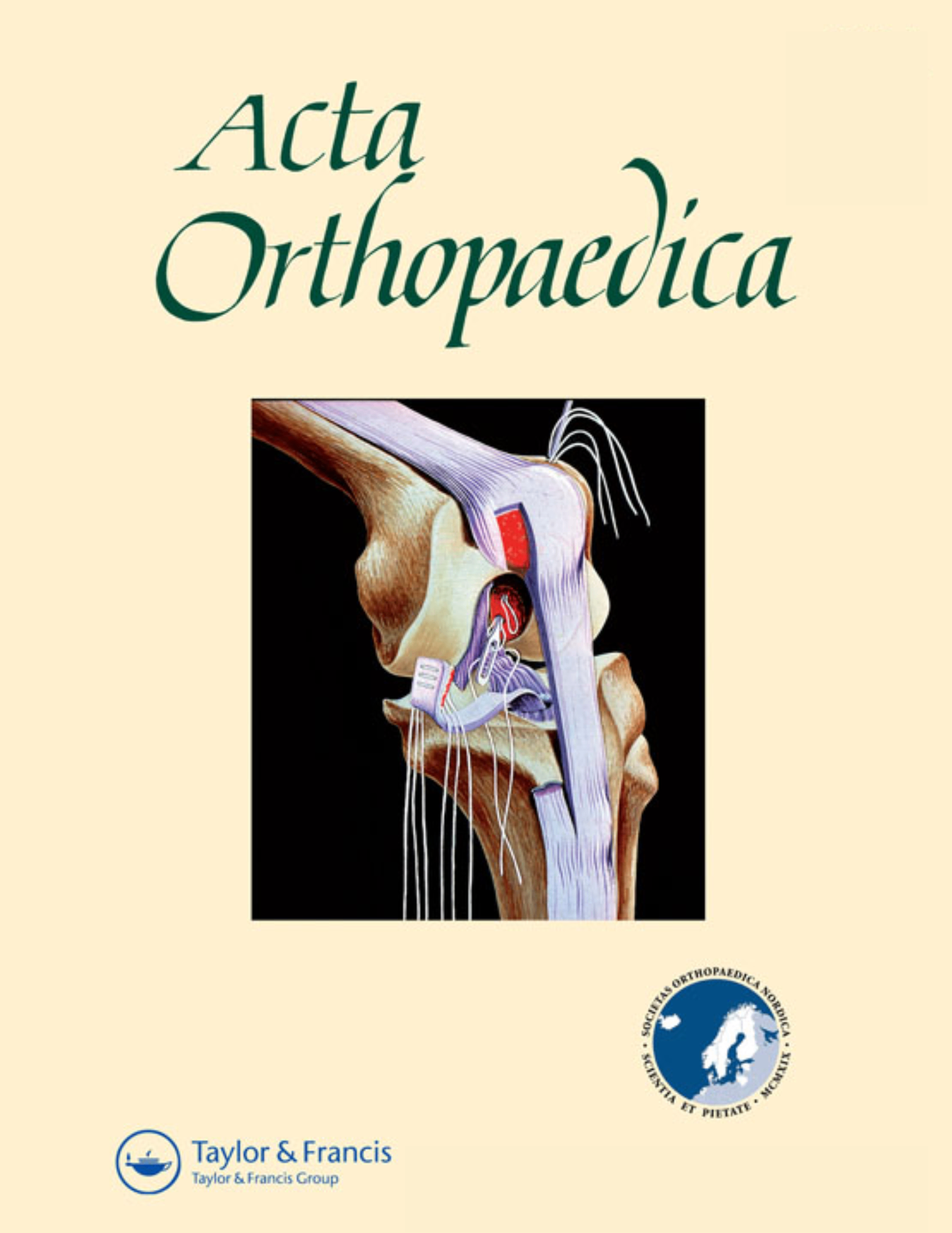
OE Journal. 2013;1(11):160 Acta Orthop. 2007 Oct;78(5):672-952 patients were randomized to receive one of two treatments for acute scaphoid fracture. One group underwent a surgical (internal fixation) procedure while the second group underwent a closed (cast treatment) procedure. The primary outcomes examined were total (indirect and direct) costs of either treatment as well as length of work absences. Results demonstrated that there was a higher total cost incurred from surgical treatment in both manual and non-manual workers. However, closed treatment patients had longer work absences and higher work disability costs.
Was the allocation sequence adequately generated?
Was allocation adequately concealed?
Blinding Treatment Providers: Was knowledge of the allocated interventions adequately prevented?
Blinding Outcome Assessors: Was knowledge of the allocated interventions adequately prevented?
Blinding Patients: Was knowledge of the allocated interventions adequately prevented?
Was loss to follow-up (missing outcome data) infrequent?
Are reports of the study free of suggestion of selective outcome reporting?
Were outcomes objective, patient-important and assessed in a manner to limit bias (ie. duplicate assessors, Independent assessors)?
Was the sample size sufficiently large to assure a balance of prognosis and sufficiently large number of outcome events?
Was investigator expertise/experience with both treatment and control techniques likely the same (ie.were criteria for surgeon participation/expertise provided)?
Sim = 1
Incerto = 0,5
Não relevante = 0
Não = 0
A Avaliação dos Critérios de Relato avalia a transparência com que os autores relatam as caraterísticas metodológicas e do ensaio na publicação. A avaliação está dividida em cinco categorias que são apresentadas de seguida.
4/4
Randomization
3/4
Outcome Measurements
2/4
Inclusion / Exclusion
4/4
Therapy Description
2/4
Statistics
Detsky AS, Naylor CD, O'Rourke K, McGeer AJ, L'Abbé KA. J Clin Epidemiol. 1992;45:255-65
O Índice de Fragilidade é uma ferramenta que auxilia na interpretação de achados significativos, fornecendo uma medida de força para um resultado. O Índice de Fragilidade representa o número de eventos consecutivos que precisam de ser adicionados a um resultado dicotómico para que o resultado deixe de ser significativo. Um número pequeno representa um resultado mais fraco e um número grande representa um resultado mais forte.
Porque é que este estudo era necessário agora?
Acute scaphoid injuries are commonly seen in younger working individuals and the method of treatment is often non-surgical (cast immobilization). This type of treatment can result in long absences from work and incur large financial losses. The most cost-efficient method of treatment (e.g. surgical or non-surgical) for acute scaphoid fractures has not been determined. This study aim to identify the most cost-efficient method of treating patients with an acute scaphoid fracture.
Qual era a principal questão de investigação?
What are the outcomes of direct and indirect costs in performing a surgical (internal fixation) procedure compared to a non-surgical (cast treatment) procedure in patients with an acute scaphoid fracture?
Quais foram os resultados importantes?
- There was a numerically but not statistically significant greater median time for work absence in the cast-treated group compared to the surgery group. (Cast: 74 days, Surgery: 39 days) (p=0.32)
- Workers that performed manual work had a longer work absence compared to workers that were non-manual or self-employed (Manual: Median 84 days, Non-manual: Median 16 days) (p<0.001). Manual workers also had a longer time off work following cast treatment when compared to surgery. (Manual: Median 100 days, Non-manual: Median 61 days) (p=0.03). No difference existed between treatment groups when comparing absence from work for patients who were non-manual workers/self employed (p=0.5).
- The cast group had lower hospital costs compared to the surgery group. (p<0.001) and the total cost was lower in the cast group.
- Manual workers had higher work disability costs and total costs compared to the non-manual workers. (p<0.001)
- Non-manual workers had lower total costs after cast treatment compared to surgery. (p=0.05)
- The surgical group had 3 complications while the non surgical group had 1. 2 of the complications in the surgical group were implant related.
De que é que me devo lembrar mais?
There was a higher total cost incurred from surgical treatment in both manual and non-manual workers. However, closed treatment patients had longer work absences and higher work disability costs when compared to the surgery-treated group.
Como é que isto afectará o tratamento dos meus doentes?
Manual workers receiving non-operative treatment for a scaphoid fracture will have a longer work-absence, lower hospital cost, but higher disability cost than manual workers receiving surgical treatment. Non-manual/self-employed workers undergoing non-operative intervention will have shorter work absence, lower hospital cost, and lower work disability costs when compared to non-manual workers undergoing surgical treatment. The authors of this study suggest that surgical treatment should be considered in situations where cast-treatment will hinder an individual's ability to work.

AVISO LEGAL
O conteúdo desta página destina-se apenas a fins informativos e não pretende substituir o aconselhamento, diagnóstico ou tratamento médico profissional. Se necessitar de tratamento médico, procure sempre o conselho do seu médico ou dirija-se ao serviço de urgência mais próximo. As opiniões, crenças e pontos de vista expressos pelos indivíduos no conteúdo encontrado nesta página não reflectem as opiniões, crenças e pontos de vista da OrthoEvidence.
0 de 4 artigos mensais GRATUITOS desbloqueados



