










SPINE
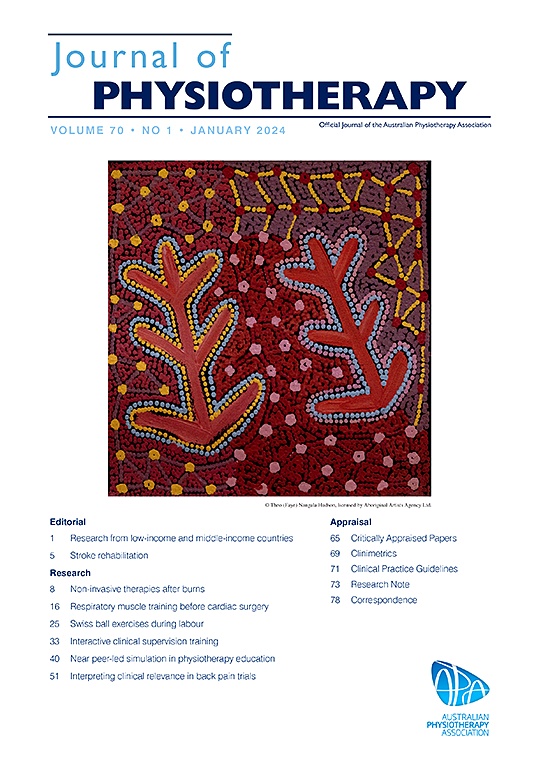
High-intensity and low-intensity Pilates have similar effects on pain and disability in people with chronic non-specific low back pain: a randomised trial.
OrthoEvidence Journal (OE Journal) - ACE Report
OE Journal. 2025;13(11):45 J Physiother. 2025 Apr;71(2):100-107.Resumen del estudio
One hundred and sixty-eight patients with chronic non-specific low back pain were randomised to receive either high-intensity Pilates (n=91) or low-intensity Pilates (n=79), with each group performing one-hour sessions twice weekly for six weeks. The primary outcomes of interest were pain intensity and disability scores at the end of the 6-week intervention. Secondary outcomes included patient-specific functional ability, kinesiophobia, and isometric hip strength at 6 weeks. Outcomes were further assessed at 6 and 12 months. Overall, the results of the study revealed that high- and low-intensity Pilates had similar effects on pain, disability, and other outcomes, with negligible differences between groups throughout the study period. The key finding is that low-intensity Pilates was associated with fewer side effects, suggesting it may be the preferred approach for managing chronic non-specific low back pain.
Desbloquear el informe ACE completo
Tiene acceso a 4 más artículos GRATUITOS este mes.
Haga clic a continuación para desbloquear y ver este ACE Reports
Desbloquear ahora
Evaluaciones críticas de los últimos ensayos controlados aleatorizados de gran impacto y revisiones sistemáticas en ortopedia
Acceso al contenido del podcast OrthoEvidence, que incluye colaboraciones con el Journal of Bone and Joint Surgery, entrevistas con cirujanos reconocidos internacionalmente y mesas redondas sobre noticias y temas ortopédicos
Suscripción a The Pulse, un boletín quincenal basado en la evidencia y diseñado para ayudarle a tomar mejores decisiones clínicas
Acceso exclusivo a artículos de contenido original, incluidas revisiones sistemáticas propias, y artículos sobre métodos de investigación sanitaria y temas ortopédicos de actualidad
O actualícese hoy mismo y obtenga acceso a todo el contenido de OrthoEvidencepor tan sólo 1,99 $ a la semana.
¿Ya tiene una cuenta? Conectarse
¿Está afiliado a una de nuestras asociaciones colaboradoras?
¡Haga clic aquí para obtener acceso gratuito como parte de los beneficios de miembro de su asociación!


Suscríbase a "El Pulso"
Ortopedia basada en la evidencia directamente a su bandeja de entrada. SUSCRIBIRSE
0 de 4 artículos mensuales GRATIS desbloqueados



