










SHOULDER & ELBOW
External rotation immobilization for primary shoulder dislocation: a randomized controlled trial
 This report has been verified
by one or more authors of the
original publication.
This report has been verified
by one or more authors of the
original publication.
OrthoEvidence Journal (OE Journal) - ACE Report
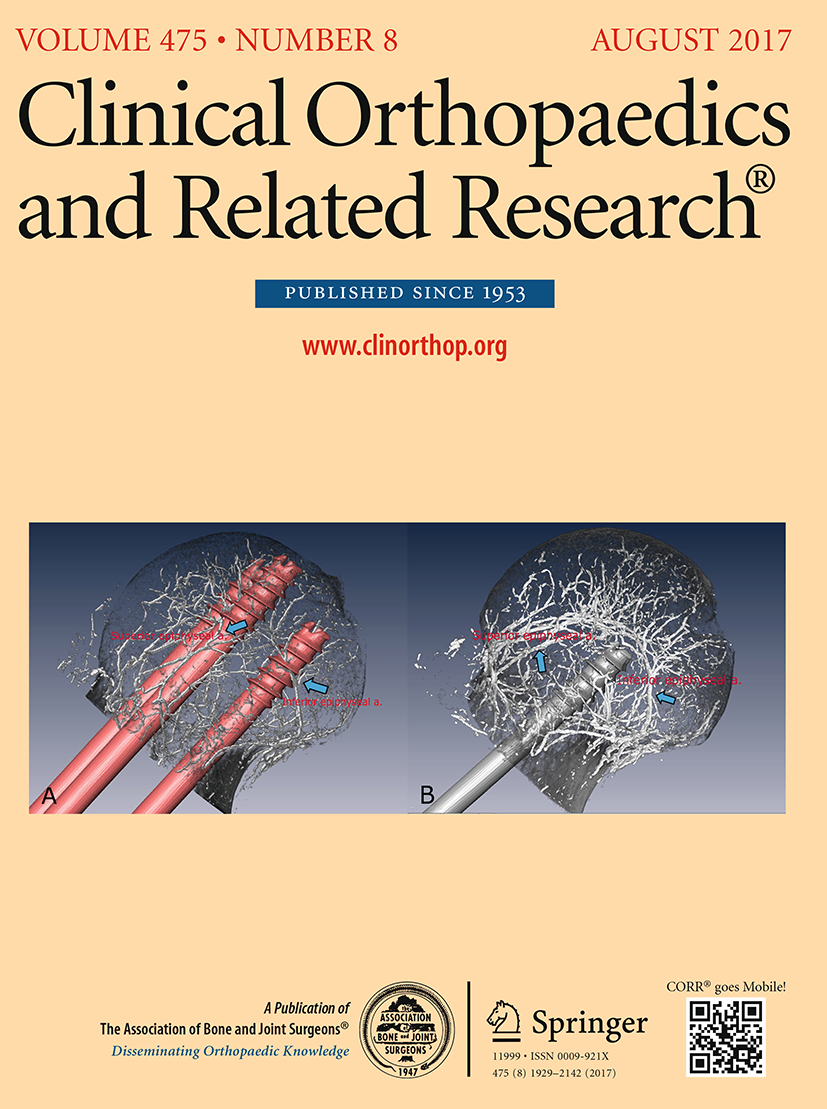
OE Journal. 2014;2(21):35 Clin Orthop Relat Res. 2014 Aug;472(8):2380-6. doi: 10.1007/s11999-013-3432-6.60 patients with a primary anterior glenohumeral dislocation were randomized to either immobilization in external rotation or internal rotation, following reduction. This study aimed to determine whether external immobilization reduced the frequency of recurrent instability as compared to internal immobilization. The results at the minimum 12 months' follow-up indicated that rates of recurrent dislocation, instability, and instability requiring surgical intervention were comparable between groups. Additionally, WOSI scores and ROM (between injured and contralateral side) were similar. Difference in ASES scores between groups achieved borderline significance in favour of external immobilization.
Was the allocation sequence adequately generated?
Was allocation adequately concealed?
Blinding Treatment Providers: Was knowledge of the allocated interventions adequately prevented?
Blinding Outcome Assessors: Was knowledge of the allocated interventions adequately prevented?
Blinding Patients: Was knowledge of the allocated interventions adequately prevented?
Was loss to follow-up (missing outcome data) infrequent?
Are reports of the study free of suggestion of selective outcome reporting?
Were outcomes objective, patient-important and assessed in a manner to limit bias (ie. duplicate assessors, Independent assessors)?
Was the sample size sufficiently large to assure a balance of prognosis and sufficiently large number of outcome events?
Was investigator expertise/experience with both treatment and control techniques likely the same (ie.were criteria for surgeon participation/expertise provided)?
Sim = 1
Incerto = 0,5
Não relevante = 0
Não = 0
A Avaliação dos Critérios de Relato avalia a transparência com que os autores relatam as caraterísticas metodológicas e do ensaio na publicação. A avaliação está dividida em cinco categorias que são apresentadas de seguida.
4/4
Randomizzazione
4/4
Misurazioni degli esiti
3/4
Inclusione / Esclusione
4/4
Descrizione della terapia
4/4
Statistica
Detsky AS, Naylor CD, O'Rourke K, McGeer AJ, L'Abbé KA. J Clin Epidemiol. 1992;45:255-65
O Índice de Fragilidade é uma ferramenta que auxilia na interpretação de achados significativos, fornecendo uma medida de força para um resultado. O Índice de Fragilidade representa o número de eventos consecutivos que precisam de ser adicionados a um resultado dicotómico para que o resultado deixe de ser significativo. Um número pequeno representa um resultado mais fraco e um número grande representa um resultado mais forte.
Porque é que este estudo era necessário agora?
Dislocation of the shoulder is a common injury affecting the glenohumeral joint. In the young and active population, recurrent instability following conservative treatments for dislocated shoulders remains problematic. Patients are typically immobilized with a sling after reduction but the position in which the arm is immobilized is highly debated. Several studies have demonstrated that external rotation immobilization was efficacious in reducing rates of recurrence while contrasting results were indicated in a separate study with a larger population. Therefore, this study was aimed to compare recurrence rates and quality of life outcomes between external and internal immobilization.
Qual era a principal questão de investigação?
Does immobilization in external rotation reduce the frequency of recurrent instability and yield better disease-specific quality-of-life scores, when compared to immobilization in internal rotation, in patients with a primary anterior glenohumeral dislocation assessed at a minimum of 12 months?
Quais foram os resultados importantes?
- Rate of recurrent dislocation at the minimum 12 months' follow-up was 6/27 (or 22%) in the external group and 8/25 (or 32%) in the internal group. No significant difference was observed between groups (p=0.42).
- Rate of recurrent instability at the minimum 12 months' follow-up was also not significantly different between groups. Rates were 10/27 (or 37%) in the external group and 10/25 (or 40%) in the internal group (p=0.82).
- Rate of recurrent instability requiring surgical stabilization was 6/27 (or 22%) and 7/25 (28%) in the external and internal groups respectively. No significant between group difference was observed (p=0.63).
- ASES score activities of daily living at the minimum 12 months' follow-up favoured in the external group (95; SD 5), over the internal group (89; SD 14) (p=0.05).
- WOSI scores did not differ significantly between groups. Scores averaged 87% (SD 14) and 84% (SD 21) in the external and internal groups, respectively (p=0.74).
- ROM (injured side vs. contralateral side) averaged 70 vs. 76 degrees in the external group and 76 vs. 78 degrees in the internal group. This difference between groups did not reach statistical significance (p=0.15 vs. p=0.67).
- Compliance with brace or sling was similar between groups (Brace: 87% [27/31]; Sling: 83% [24/29])
De que é que me devo lembrar mais?
Rate of recurrent dislocation, instability, and instability requiring surgical intervention at the minimum 12 months' follow-up did not differ significantly between internal and external rotation immobilization. WOSI scores and ROM were comparable, with ASES scores achieving borderline significance in favour of external immobilization.
Como é que isto afectará o tratamento dos meus doentes?
The results of this study indicated that immobilization in external rotation following reduction of a primary anterior glenohumeral dislocation did not reduce rates of recurrence as compared to the traditional protocol of immobilization in internal rotation. The small sample size and moderate loss to follow-up in this study, however, indicates a need for further studies.

AVISO LEGAL
O conteúdo desta página destina-se apenas a fins informativos e não pretende substituir o aconselhamento, diagnóstico ou tratamento médico profissional. Se necessitar de tratamento médico, procure sempre o conselho do seu médico ou dirija-se ao serviço de urgência mais próximo. As opiniões, crenças e pontos de vista expressos pelos indivíduos no conteúdo encontrado nesta página não reflectem as opiniões, crenças e pontos de vista da OrthoEvidence.
0 de 4 artigos mensais GRATUITOS desbloqueados



