










OSTEOARTHRITIS
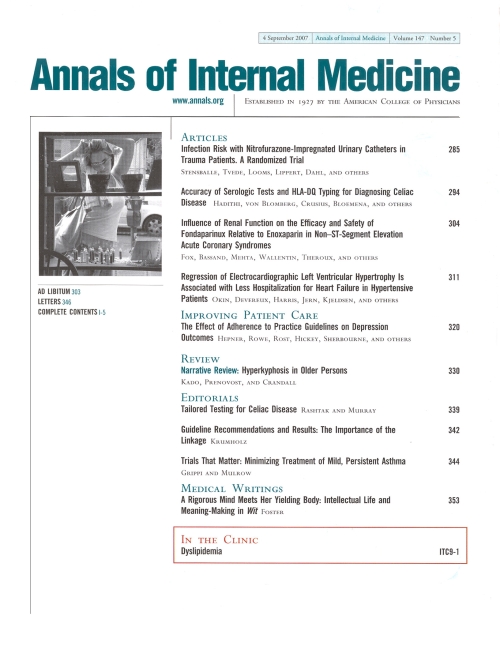
Physical therapy interventions for knee pain secondary to osteoarthritis: A systematic review
 This report has been verified
by one or more authors of the
original publication.
This report has been verified
by one or more authors of the
original publication.
 Questo studio è stato identificato come potenzialmente ad alto impatto.
La metrica High Impact di OE, guidata dall'AI, stima l'influenza che un articolo potrebbe avere integrando i segnali della rivista in cui è stato pubblicato e il contenuto scientifico dell'articolo stesso.
Sviluppato utilizzando un'elaborazione del linguaggio naturale all'avanguardia, il modello High Impact di OE prevede in modo più accurato la futura performance citazionale di uno studio rispetto al solo fattore di impatto della rivista.
Ciò consente di riconoscere prima le ricerche clinicamente significative e aiuta i lettori a concentrarsi sugli articoli che hanno maggiori probabilità di influenzare la pratica futura.
Questo studio è stato identificato come potenzialmente ad alto impatto.
La metrica High Impact di OE, guidata dall'AI, stima l'influenza che un articolo potrebbe avere integrando i segnali della rivista in cui è stato pubblicato e il contenuto scientifico dell'articolo stesso.
Sviluppato utilizzando un'elaborazione del linguaggio naturale all'avanguardia, il modello High Impact di OE prevede in modo più accurato la futura performance citazionale di uno studio rispetto al solo fattore di impatto della rivista.
Ciò consente di riconoscere prima le ricerche clinicamente significative e aiuta i lettori a concentrarsi sugli articoli che hanno maggiori probabilità di influenzare la pratica futura.
OrthoEvidence Journal (OE Journal) - ACE Report
OE Journal. 2013;1(11):177 Ann Intern Med. 2012 Nov 6;157(9):632-44. doi: 10.7326/0003-4819-157-9-201211060-00007This meta-analysis and systematic review included 193 studies (84 randomized controlled trials were assessed in the meta-analysis) comparing physical therapy to a control group in patients with knee osteoarthritis (OA). The most effective interventions were ultrasonography, and aerobic, aquatic, strengthening, and proprioception exercise. Education, orthotics, taping, tai chi, and pulsed electromagnetic fields had no clinically significant effect on any of the patient-centered or functional outcomes of interest. Few adverse events occurred in the studies.
Were the search methods used to find evidence (original research) on the primary question or questions stated?
Was the search for evidence reasonably comprehensive?
Were the criteria used for deciding which studies to include in the overview reported?
Was the bias in the selection of studies avoided?
Were the criteria used for assessing the validity of the included studies reported?
Was the validity of all of the studies referred to in the text assessed with use of appropriate criteria (either in selecting the studies for inclusion or in analyzing the studies that were cited)?
Were the methods used to combine the findings of the relevant studies (to reach a conclusion) reported?
Were the findings of the relevant studies combined appropriately relative to the primary question that the overview addresses?
Were the conclusions made by the author or authors supported by the data and or analysis reported in the overview?
How would you rate the scientific quality of this evidence?
Sì = 1
Incerto = 0,5
Non rilevante = 0
No = 0
La valutazione dei criteri di segnalazione valuta la trasparenza con cui gli autori riportano le caratteristiche metodologiche e sperimentali dello studio all'interno della pubblicazione. La valutazione è suddivisa in cinque categorie che vengono presentate di seguito.
4/4
Introdução
4/4
Acesso aos dados
4/4
Análise dos dados
4/4
Resultados
3/4
Discussão
Detsky AS, Naylor CD, O'Rourke K, McGeer AJ, L'Abbé KA. J Clin Epidemiol. 1992;45:255-65
L'Indice di Fragilità è uno strumento che aiuta l'interpretazione dei risultati significativi, fornendo una misura della forza di un risultato. L'Indice di Fragilità rappresenta il numero di eventi consecutivi che devono essere aggiunti a un risultato dicotomico per rendere il risultato non più significativo. Un numero piccolo rappresenta un risultato più debole, mentre un numero grande rappresenta un risultato più forte.
Perché questo studio era necessario ora?
Although osteoarthritis (OA) is already one of the foremost causes of disability among noninstitutionalized adults today, its prevalence continues to increase as the population ages. Nonsurgical treatments for OA such as physical therapy are prescribed in the hopes of reducing pain and disability, and improving function and quality of life. This meta-analysis and systematic review aimed to be the first to evaluate the effectiveness of different exercise types and nonsurgical interventions in order to determine which physical therapy treatments are best for patients with osteoarthritis of the knee.
Qual era la domanda di ricerca principale?
Is physical therapy more effective than a control treatment with respect to patient-centered outcomes, function, and complications in patients with osteoarthritis of the knee?
Quali erano i risultati importanti?
- Education, orthotics, taping, tai chi, and pulsed electromagnetic fields had no clinically significant effect on any of the outcomes of interest
- There was a significant reduction in pain when patients received proprioception exercise (4 studies; SMD, -0.71 [95% CI, -1.31 to 0.11]) or diathermy (5 studies; significant at 1 month only; SMD, -0.53 [CI, -0.96 to -0.10]); the two interventions did not demonstrate significant effects for any other outcomes
- Massage led to a significant improvement in composite function (3 studies; SMD, -0.55 [CI, -0.93 to -0.18])
- Aquatic exercise resulted in significantly reduced disability (3 studies; SMD, -0.28 [CI, -0.51 to -0.05])
- According to 11 studies, aerobic exercise significantly reduced long term pain (SMD, -0.21 [CI, -0.35 to -0.08]; this was not clinically significant), disability (SMD, -0.21 [CI, -0.37 to -0.04]), composite function within 3 months (WOMAC function score -15.4 [CI -24.8 to -5.92]), and gait function over 12 months (walking speed difference -0.11 m/s [CI, -0.17 to -0.05])
- Results from 9 studies demonstrated that strengthening exercise resulted in clinically significant reduction in pain (SMD, 0.68 [CI, -1.23 to -0.14]) and improvement in composite function (SMD, -1.00 [CI, -1.95 to 0.05])
- electrical stimulation significantly improved global assessment scores in two studies and muscle strength at 3 months in two studies (values not provided)
- According to 6 studies, ultrasonography led to clinically significant improvement in pain (SMD, -0.74 [CI, 0.95 to -0.53]), composite function (SMD, -1.14 [CI, 1.85 to -0.42]), and gait function (SMD, -1.48 [CI, 2.08 to -0.89])
Che cosa devo ricordare di più?
Aerobic, aquatic, strengthening, and proprioception exercise, as well as ultrasonography were shown to be effective in improving patient-centered outcomes and/or function.
Come influenzerà l'assistenza ai miei pazienti?
This study demonstrated with low-strength evidence that aerobic and aquatic exercise improved disability and that aerobic exercise, strengthening exercise, and ultrasonography reduced pain and improved function. However, further investigation is required based on the limited evidence for individualized treatment decisions.

DISCLAIMER
Il contenuto di questa pagina è solo a scopo informativo e non intende sostituire la consulenza, la diagnosi o il trattamento medico professionale. Se ha bisogno di cure mediche, si rivolga sempre al suo medico o al pronto soccorso più vicino. Le opinioni, le convinzioni e i punti di vista espressi dalle persone sui contenuti presenti in questa pagina non riflettono le opinioni, le convinzioni e i punti di vista di OrthoEvidence.
0 di 4 articoli mensili GRATUITI sbloccati



