










ARTHROPLASTY
Effect of deep neuromuscular blockade on serum cytokines and postoperative delirium in elderly patients undergoing total hip replacement: A prospective single-blind randomised controlled trial
OrthoEvidence Journal (OE Journal) - ACE Report
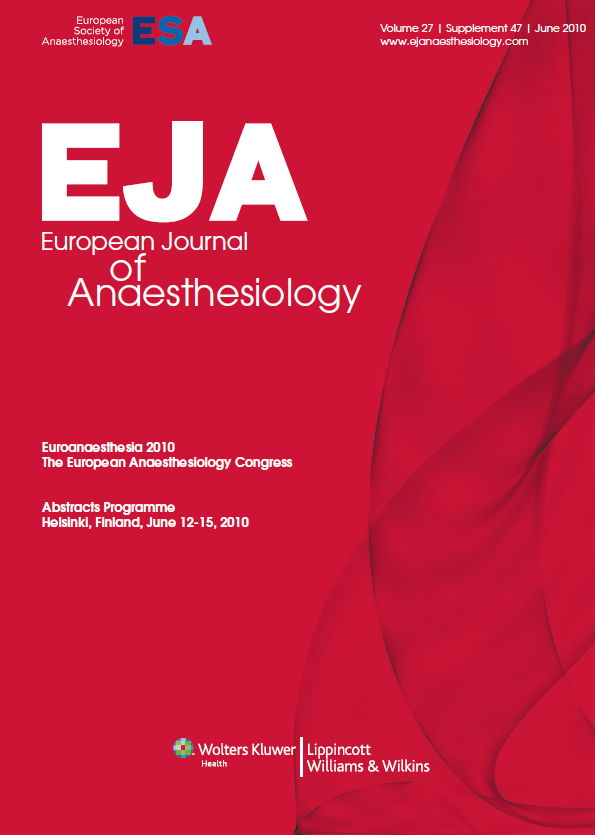
OE Journal. 2021;9(8):8 Eur J Anaesthesiol. 2021 Mar 1;38(Suppl 1): S58-S66Résumé de l'étude
Eighty-two elderly patients with hip fracture scheduled for a total hip replacement under general anesthesia were randomized to receive a deep neuromuscular blockade (n=41) or a moderate neuromuscular blockade (n=41) for the facilitation of tissue manipulation during surgery. Outcomes of interest included inflammatory markers (interleukin [IL]-1b; IL-6; tumour necrosis factor [TNF] alpha; IL-10), incidence of post-operative delirium, post-operative bleeding, pain at rest and during movement on a Visual Analogue Scale (VAS), incidence of post-operative nausea and vomiting, laboratory evaluation (hematocrit; lactate; PF ratio; albumin; creatinine; alanine transaminase; aspartate transaminase; C-reactive protein [CRP]), and the incidence of intensive care unit ICU) admission. Outcome assessment was performed up to 7 days post-operation. Results revealed statistically significantly lower post-operative bleeding up to post-operative day 2 in the deep blockade group compared to the control group (p=0.027). No statistically significant differences in the incidence of post-operative delirium (p=0.129), ICU admission (p=0.314), VAS pain scores at rest and during motion up to 72 hours post-operation (p>0.05 for all), and the incidence of post-operative nausea and vomiting up to 72 hours post-operation (p>0.05 for all) were observed between the two groups. Moreover, hematocrit levels at 24 hours post-operation, PF ratio immediately post-operation, and albumin levels at 48 hours post-operation were statistically significantly higher in the deep blockade group compared to the control group (p<0.05 for all). Moreover, IL-6 levels immediately post-operation and at 6 hours, and creatine phosphokinase levels at 6 and 24 hours post-operation, were statistically significantly lower in the deep blockade group (p<0.05 for all). Otherwise, no statistical significant differences in laboratory values were observed between the two groups (p>0.05 for all).
Débloquez le rapport complet du CAE
Vous avez accès à 4 plus d'articles GRATUITS ce mois-ci.
Cliquez ci-dessous pour déverrouiller et visionner ce ACE Reports
Déverrouillez maintenant
Évaluations critiques des derniers essais contrôlés randomisés à fort impact et des revues systématiques en orthopédie
Accès au contenu des podcasts OrthoEvidence, y compris les collaborations avec le Journal of Bone and Joint Surgery, les entretiens avec des chirurgiens de renommée internationale et les tables rondes sur l'actualité et les sujets orthopédiques.
Abonnement à The Pulse, une lettre d'information bihebdomadaire fondée sur des données probantes, conçue pour vous aider à prendre de meilleures décisions cliniques.
Accès exclusif à des articles au contenu original, y compris des revues systématiques internes et des articles sur les méthodes de recherche en santé et les sujets d'actualité en orthopédie.
Ou mettez votre compte à niveau dès aujourd'hui et accédez à tout le contenu d'OrthoEvidence pour seulement 1,99 $ par semaine.
Vous avez déjà un compte ? Se connecter
Vous êtes affilié à l'une de nos associations partenaires ?
Cliquez ici pour bénéficier d'un accès gratuit dans le cadre des avantages réservés aux membres de votre association !


Abonnez-vous à "Le pouls"
L'orthopédie fondée sur des données probantes directement dans votre boîte de réception. S'ABONNER
0 de 4 articles mensuels GRATUITS débloqués



