










PHYSICAL THERAPY & REHAB
Effect of constraint-induced movement therapy on persons-reported outcomes of health status after stroke: a systematic review and meta-analysis
OrthoEvidence Journal (OE Journal) - ACE Report
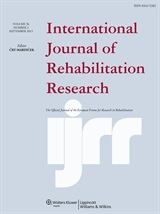
OE Journal. 2021;9(8):20 Int J Rehabil Res. 2021 Mar 1;44(1): 15-23.Zusammenfassung der Studie
Nine studies containing a total of 558 post-stroke patients were included in this meta-analysis comparing constraint-induced movement therapy vs control for the improvement of patient-reported health status and functionality. The pooled outcomes of interest included patient-reported health status of the upper limb and lower limb, motor function of the upper and lower limb, quality and quantity of movement of the upper limb, and activities of daily living of the upper limb. Outcomes were assessed at the post-intervention and follow-up time-points; a sub-group analysis of patients in the subacute and chronic stage was performed for health status of the upper and lower limb at follow up. Results revealed no statistically significant differences in pooled patient-reported health status in the upper limb post-intervention, lower limb post-intervention, lower limb at follow-up, upper and lower limb post-intervention and at follow up, and upper and lower limb at follow up in patients recruited in the subacute and chronic stage (p>0.05 for all). However, pooled motor function post-operation in the upper and lower limb (p=0.02), and quality and quantity of movement in the upper limb post-intervention (p<0.0001 for both) were statistically significantly in favour of the constraint-induced therapy group. Furthermore, no statistical significant difference in the pooled activities of daily living score for the upper limb was observed between the two groups (p=0.42).
Vollständigen ACE-Bericht freischalten
Sie haben Zugang zu 4 weiteren KOSTENLOSEN Artikeln in diesem Monat.
Klicken Sie unten, um diese ACE Reports freizuschalten und anzusehen
Jetzt freischalten
Kritische Beurteilungen der neuesten, hochwirksamen randomisierten kontrollierten Studien und systematischen Übersichten in der Orthopädie
Zugang zu OrthoEvidence-Podcast-Inhalten, einschließlich Kooperationen mit dem Journal of Bone and Joint Surgery, Interviews mit international anerkannten Chirurgen und Diskussionsrunden zu orthopädischen Neuigkeiten und Themen
Abonnement von The Pulse, einem zweimal wöchentlich erscheinenden evidenzbasierten Newsletter, der Ihnen helfen soll, bessere klinische Entscheidungen zu treffen
Exklusiver Zugang zu Originalartikeln, einschließlich eigener systematischer Übersichten, sowie zu Artikeln über Methoden der Gesundheitsforschung und aktuelle orthopädische Themen
Oder upgraden Sie noch heute und erhalten Sie Zugang zu allen OrthoEvidence-Inhalten für nur $1,99 pro Woche.
Sie haben bereits ein Konto? Einloggen
Gehören Sie zu einem unserer Partnerverbände?
Klicken Sie hier, um im Rahmen Ihrer Verbandsmitgliedschaft kostenlosen Zugang zu erhalten!


0 von 4 monatliche KOSTENLOSE Artikel freigeschaltet



