










PHYSICAL THERAPY & REHAB
Effect of whole body vibration (WBV) therapy on bone density and bone quality in osteopenic girls with adolescent idiopathic scoliosis: a randomized, controlled trial
OrthoEvidence Journal (OE Journal) - ACE Report
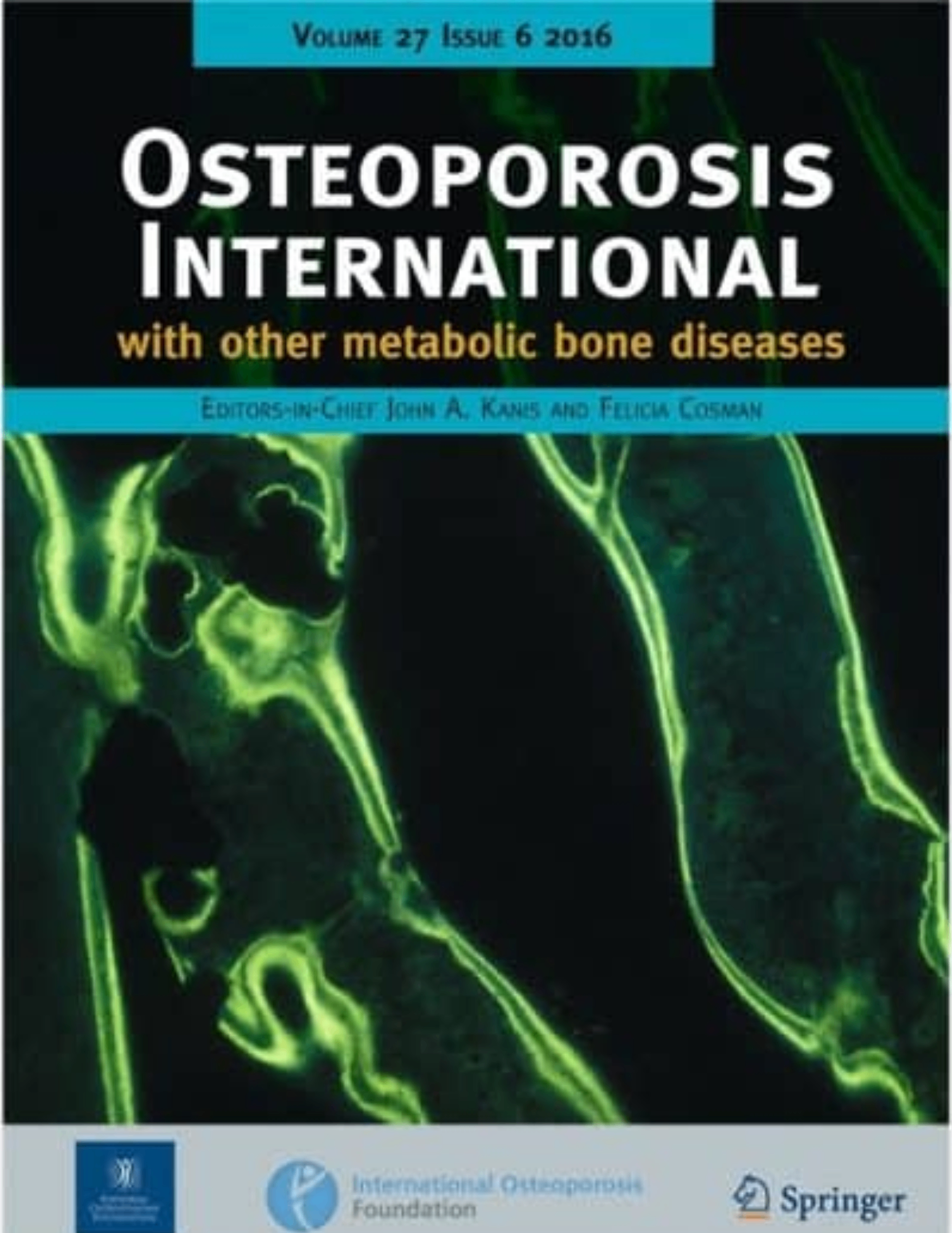
OE Journal. 2013;1(12):176 Osteoporos Int. 2013 May;24(5):1623-36. doi: 10.1007/s00198-012-2144-1. Epub 2012 Sep 26149 osteopenic females (15-25 years of age) with adolescent idiopathic scoliosis (AIS) were randomized to determine the effect of whole body vibration (WBV) therapy on bone mass and quality. Participants were allocated to undergo the therapy for 12 months, or to observation alone. After 12 months of the intervention, a significant increase in femoral neck areal bone mineral density of the dominant leg and bone mineral content of the lumbar spine was observed for the WBV therapy group, although there did not seem to be an effect on bone quality.
Was the allocation sequence adequately generated?
Was allocation adequately concealed?
Blinding Treatment Providers: Was knowledge of the allocated interventions adequately prevented?
Blinding Outcome Assessors: Was knowledge of the allocated interventions adequately prevented?
Blinding Patients: Was knowledge of the allocated interventions adequately prevented?
Was loss to follow-up (missing outcome data) infrequent?
Are reports of the study free of suggestion of selective outcome reporting?
Were outcomes objective, patient-important and assessed in a manner to limit bias (ie. duplicate assessors, Independent assessors)?
Was the sample size sufficiently large to assure a balance of prognosis and sufficiently large number of outcome events?
Was investigator expertise/experience with both treatment and control techniques likely the same (ie.were criteria for surgeon participation/expertise provided)?
نعم = 1
غير مؤكد = 0.5
غير ذي صلة = 0
لا = 0
يقيّم تقييم معايير الإبلاغ الشفافية التي يبلغ بها المؤلفون عن الخصائص المنهجية والتجريبية للتجربة في المنشور. ينقسم التقييم إلى خمس فئات معروضة أدناه.
4/4
Randomization
3/4
Outcome Measurements
4/4
Inclusion / Exclusion
3/4
Therapy Description
4/4
Statistics
Detsky AS, Naylor CD, O'Rourke K, McGeer AJ, L'Abbé KA. J Clin Epidemiol. 1992;45:255-65
مؤشر الهشاشة هو أداة تساعد في تفسير النتائج المهمة، وتوفر مقياسًا لقوة النتيجة. ويمثل مؤشر الهشاشة عدد الأحداث المتتالية التي يجب إضافتها إلى نتيجة ثنائية التفرع لجعل النتيجة غير مهمة. يمثل الرقم الصغير نتيجة أضعف ويمثل الرقم الكبير نتيجة أقوى.
لماذا كانت هناك حاجة لهذه الدراسة الآن؟
Adolescent idiopathic scoliosis (AIS) can be a debilitating spinal deformity, and is commonly underscored by low bone mass and osteopenia. Unfortunately, clinicians are still in search of a safe and effective treatment regimen for the population with this condition. Low-magnitude, high-frequency whole body vibration therapy (WBVT) has been described and demonstrated to have a beneficial effect in osteopenic pediatric patients non-related to AIS. It is unclear if the etiopathogenesis of osteopenia, and subsequently its response to WBVT, varies specifically in the context of AIS Thus, the previous positive findings of WBVT may not be appropriately extrapolated to this population of patients, warranting an investigation.
ما هو سؤال البحث الرئيسي؟
Does WBVT provide osteopenic female patients with AIS with a better outcome compared to no treatment, measured after 12 months of intervention?
ما هي النتائج المهمة؟
- The absolute and percent changes in dominant leg femoral neck aBMD after 12 months were significantly greater in the WBVT group (Absolute: 0.015g/cm2; Percent: 2.15%) than in the control group (Absolute: 0.00084g/cm2; Percent: 0.13%) (Absolute P=0.007 and Percent P=0.006, respectively).
- Absolute change in lumbar spine BMC after 12 months was 1.17 g (+/- 2.049) in the WBVT group, whereas it was measured at 0.47g (+/- 1.88) in the control group. The difference between groups was significant (P=0.050). The difference did not reach statistical significance when percent change was considered (P=0.120).
- All other DXA measurements (absolute and percent changes in dominant femoral neck BMC and nondominant femoral neck BMC and aBMD) were not found to significantly differ between groups (P>0.05).
- There was no difference between groups regarding bone quality parameters (bone morphometry, vBMD, and trabecular bone microarchitecture) following analysis with the Benjamini-Hochberg procedure.
- Following the Benjamini-Hochberg procedure, there was a significant increase in the absolute (P=0.005) and percentage (P=0.005) values for femoral neck aBMD in the dominant leg, as well as the absolute (P=0.024) values for lumbar spine BMC in the WBVT group, compared to the control group.
- Treatment group patients tolerated the WBVT well. There was one case of transient heel discomfort, which resolved without intervention in a few weeks.
- Overall mean compliance to the treatment protocol was 80.5% (+/- 21.2%). 55.7% of patients had a compliance rate of 80% or greater, 32.8% with a compliance rate between 50% and 80%, and 8.2% with a compliance rate below 50%.
ما الذي يجب أن أتذكره أكثر؟
Whole body vibration therapy was associated with a significant increase in femoral neck areal bone mineral density of the dominant leg and bone mineral content of the lumbar spine compared to observation alone in female patients with adolescent idiopathic scoliosis and classified as osteopenic. There was no significant effect of whole body vibration therapy observed for bone quality parameters of the distal tibiae and nondominant distal radius.
كيف سيؤثر ذلك على رعاية مرضاي؟
Whole body vibration therapy may prove to be a useful intervention for treatment of adolescent females with idiopathic scoliosis and low bone mass. However, these findings should be considered preliminary, as this is the first randomized controlled trial investigating WBVT in this exclusive subset of patients. The combination of consistently greater DXA measurements (significant or not) for the treatment protocol and the concern about the possibility of Type II error in the study calls for further evaluation of the efficacy of WBVT in a larger sample of patients.

تنويه
هذا المحتوى الموجود في هذه الصفحة هو لأغراض إعلامية فقط وليس الغرض منه أن يكون بديلاً عن المشورة الطبية المتخصصة أو التشخيص أو العلاج. إذا كنت بحاجة إلى علاج طبي، اطلب دائمًا مشورة طبيبك أو اذهب إلى أقرب قسم طوارئ إليك. الآراء والمعتقدات ووجهات النظر التي يعبر عنها الأفراد في المحتوى الموجود في هذه الصفحة لا تعكس آراء ومعتقدات ووجهات نظر أورثوإيفيدنس.
0 من 4 مقالات مجانية شهرية غير مقفلة



