










SHOULDER & ELBOW
No difference in long-term development of rotator cuff rupture and muscle volumes in impingement patients with or without decompression
OrthoEvidence Journal (OE Journal) - ACE Report
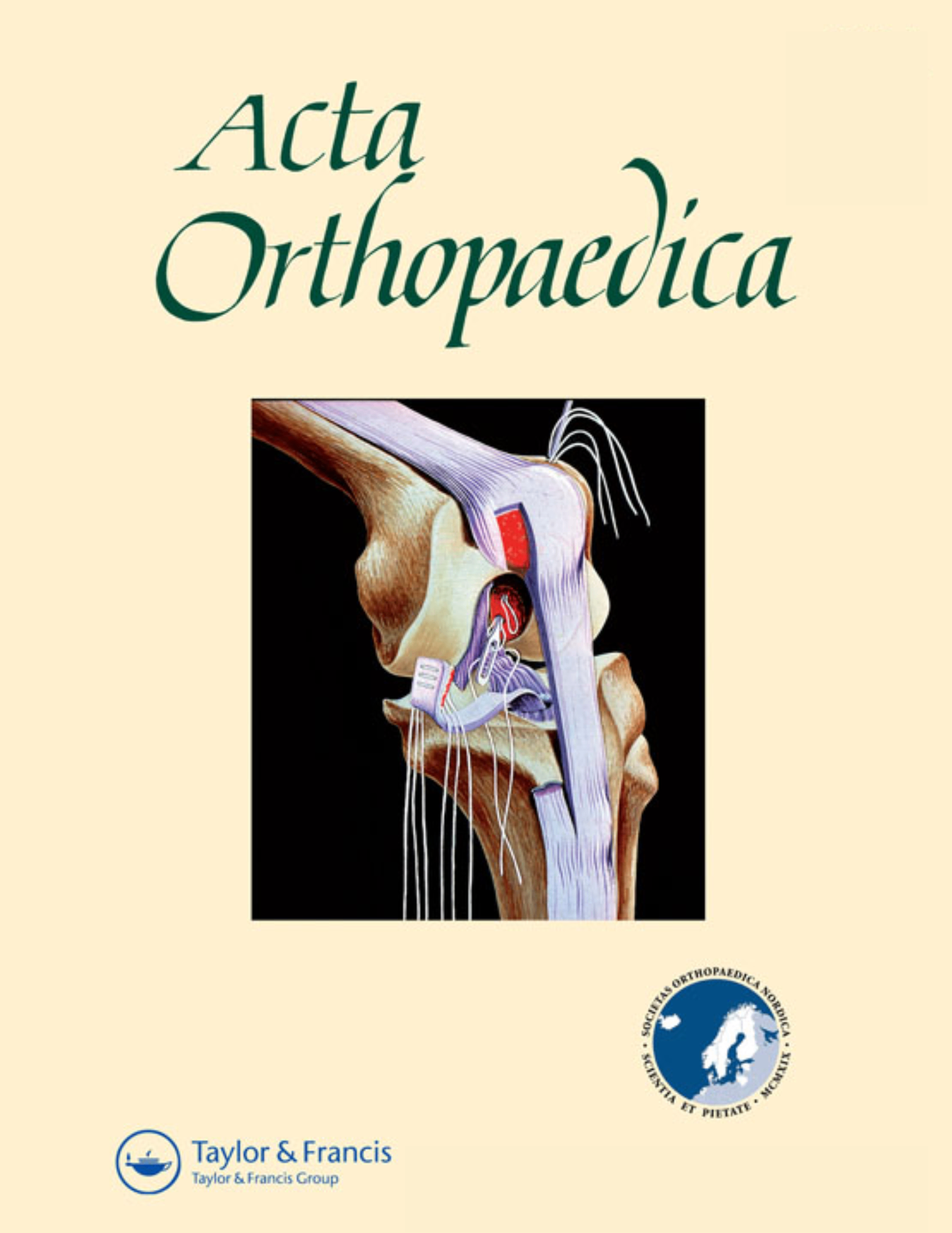
OE Journal. 2016;4(20):13 Acta Orthop. 2016 Aug;87(4):351-5140 patients with shoulder impingement syndrome were randomized to undergo arthroscopic acromioplasty followed by a home-based exercise therapy program, or an exercise therapy program alone. The purpose of this study was to evaluate if there were any significant differences between groups in the incidence of MRI-assessed rotator cuff tear, or muscle volume and fatty degeneration of the supraspinatus, infraspinatus, and subscapularis muscles, over a 5-year follow-up. The results demonstrated no significant difference in any of the listed outcomes.
Was the allocation sequence adequately generated?
Was allocation adequately concealed?
Blinding Treatment Providers: Was knowledge of the allocated interventions adequately prevented?
Blinding Outcome Assessors: Was knowledge of the allocated interventions adequately prevented?
Blinding Patients: Was knowledge of the allocated interventions adequately prevented?
Was loss to follow-up (missing outcome data) infrequent?
Are reports of the study free of suggestion of selective outcome reporting?
Were outcomes objective, patient-important and assessed in a manner to limit bias (ie. duplicate assessors, Independent assessors)?
Was the sample size sufficiently large to assure a balance of prognosis and sufficiently large number of outcome events?
Was investigator expertise/experience with both treatment and control techniques likely the same (ie.were criteria for surgeon participation/expertise provided)?
نعم = 1
غير مؤكد = 0.5
غير ذي صلة = 0
لا = 0
يقيّم تقييم معايير الإبلاغ الشفافية التي يبلغ بها المؤلفون عن الخصائص المنهجية والتجريبية للتجربة في المنشور. ينقسم التقييم إلى خمس فئات معروضة أدناه.
1/4
Randomization
3/4
Outcome Measurements
2/4
Inclusion / Exclusion
0/4
Therapy Description
2/4
Statistics
Detsky AS, Naylor CD, O'Rourke K, McGeer AJ, L'Abbé KA. J Clin Epidemiol. 1992;45:255-65
مؤشر الهشاشة هو أداة تساعد في تفسير النتائج المهمة، وتوفر مقياسًا لقوة النتيجة. ويمثل مؤشر الهشاشة عدد الأحداث المتتالية التي يجب إضافتها إلى نتيجة ثنائية التفرع لجعل النتيجة غير مهمة. يمثل الرقم الصغير نتيجة أضعف ويمثل الرقم الكبير نتيجة أقوى.
لماذا كانت هناك حاجة لهذه الدراسة الآن؟
The use of acromioplasty is a contentious issue in the management shoulder impingement syndrome. The most recent evidence has demonstrated little difference in overall outcome in the short-term compared to structured exercise programs. A possible long-term, protective effect of acromioplasty on rotator cuff tendons has been suggested, though this effect has not been previously studied in a randomized controlled trial.
ما هو سؤال البحث الرئيسي؟
In patients with shoulder impingement syndrome, does arthroscopic acromioplasty significantly affect the rate of eventual rotator cuff tear on imaging, or volumes of the rotator cuff muscles, when compared to a structured exercise program alone over a 5-year follow-up?
ما هي النتائج المهمة؟
- Full-thickness rotator cuff tears identified via MRI after 5 years were observed in 8 patients who had undergone arthroscopic acromioplasty and 7 patients who had performed exercise therapy alone.
- There were no significant differences between the arthroscopic acromioplasty group and the exercise therapy group in muscle volume decrease after 5 years, either for the supraspinatus (-7% vs. -4%, respectively; p=0.6), the infraspinatus (p=0.9), or the subscapularis (p=0.5).
- Fatty degeneration of any degree (stages 1-4) was observed in 65% of patients who underwent arthroscopic acromioplasty and 54% of patients who had performed exercise therapy alone (p=0.3).
ما الذي يجب أن أتذكره أكثر؟
In the management of patients with grade II shoulder impingement syndrome, there were no significant differences between arthroscopic acromioplasty plus postoperative exercise therapy and exercise therapy alone when considering the development of full-thickness rotator cuff tear or muscle volume & fatty degeneration of the supraspinatus, infraspinatus, and subscapularis muscles after 5 years.
كيف سيؤثر ذلك على رعاية مرضاي؟
The results of this study suggest that arthroscopic acromioplasty plus home-based exercise therapy does not reduce the rate of rotator cuff ruptures over a 5 year period compared to exercise therapy alone in patients with shoulder impingement syndrome. These results, in combination with data from earlier follow-up, which demonstrated no significant differences between groups in patient-reported symptomatic improvement, suggest that arthroscopic acromioplasty may not be justified in these patients.

تنويه
هذا المحتوى الموجود في هذه الصفحة هو لأغراض إعلامية فقط وليس الغرض منه أن يكون بديلاً عن المشورة الطبية المتخصصة أو التشخيص أو العلاج. إذا كنت بحاجة إلى علاج طبي، اطلب دائمًا مشورة طبيبك أو اذهب إلى أقرب قسم طوارئ إليك. الآراء والمعتقدات ووجهات النظر التي يعبر عنها الأفراد في المحتوى الموجود في هذه الصفحة لا تعكس آراء ومعتقدات ووجهات نظر أورثوإيفيدنس.
0 من 4 مقالات مجانية شهرية غير مقفلة



