










ARTHROPLASTY
Doubtful effect of continuous intraarticular analgesia after total knee arthroplasty
OrthoEvidence Journal (OE Journal) - ACE Report
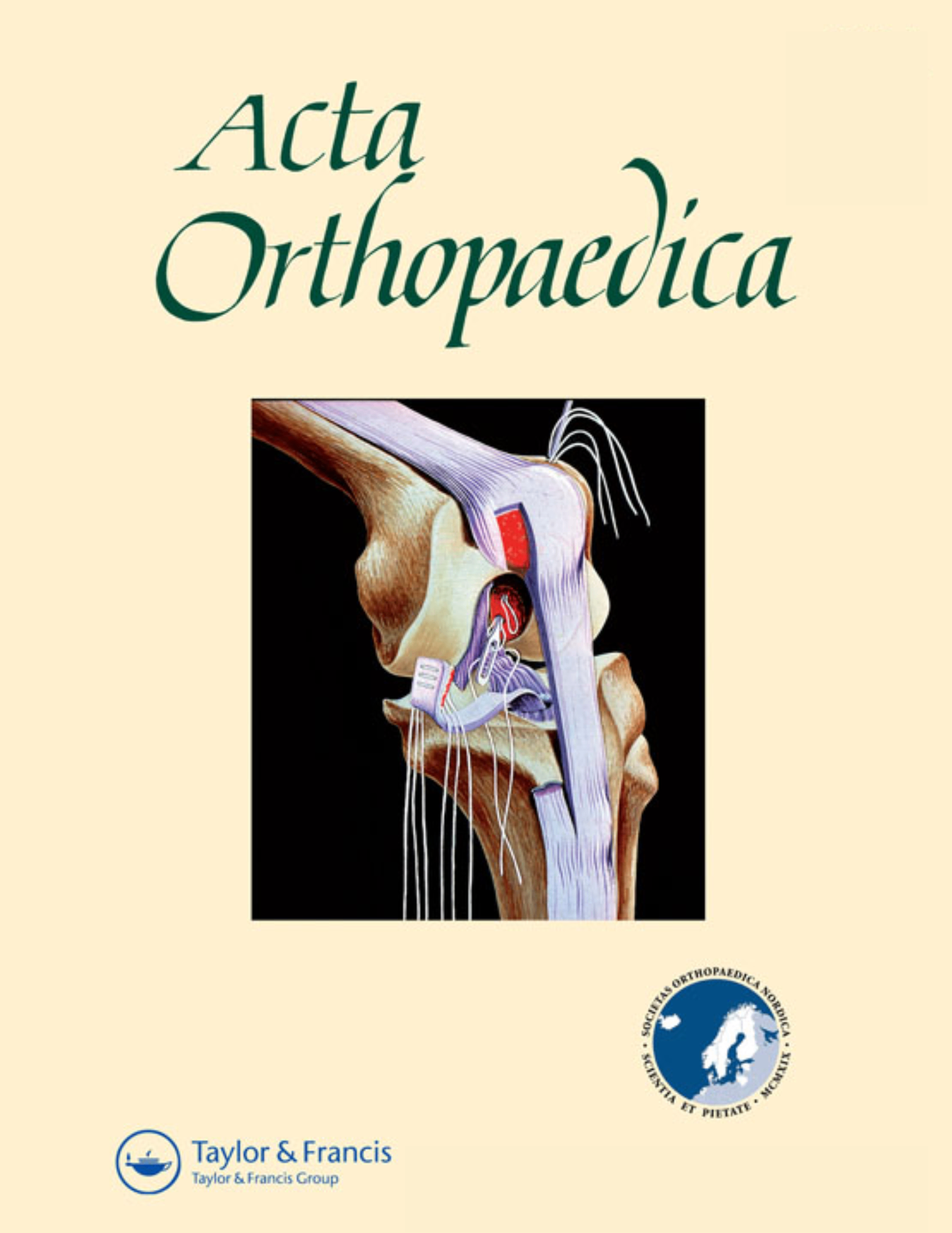
OE Journal. 2015;3(18):4 Acta Orthop. 2015 Jun;86(3):373-7200 patients undergoing total knee arthroplasty (TKA) were randomized to receive either 7.5mg/mL of ropivacaine or 9mg/mL of saline via a continuous intraarticular infusion pump for 48 hours postoperative. The purpose of this study was to determine the effectiveness of a continuous intraarticular infusion of ropivacaine in prolonging the effect of local infiltration analgesia (LIA). With the exception of lower pain in the first postoperative day, results demonstrated no significant differences in postoperative pain, requirement of additional analgesia, or functional recovery between groups.
Was the allocation sequence adequately generated?
Was allocation adequately concealed?
Blinding Treatment Providers: Was knowledge of the allocated interventions adequately prevented?
Blinding Outcome Assessors: Was knowledge of the allocated interventions adequately prevented?
Blinding Patients: Was knowledge of the allocated interventions adequately prevented?
Was loss to follow-up (missing outcome data) infrequent?
Are reports of the study free of suggestion of selective outcome reporting?
Were outcomes objective, patient-important and assessed in a manner to limit bias (ie. duplicate assessors, Independent assessors)?
Was the sample size sufficiently large to assure a balance of prognosis and sufficiently large number of outcome events?
Was investigator expertise/experience with both treatment and control techniques likely the same (ie.were criteria for surgeon participation/expertise provided)?
Sim = 1
Incerto = 0,5
Não relevante = 0
Não = 0
A Avaliação dos Critérios de Relato avalia a transparência com que os autores relatam as caraterísticas metodológicas e do ensaio na publicação. A avaliação está dividida em cinco categorias que são apresentadas de seguida.
4/4
Randomization
4/4
Outcome Measurements
4/4
Inclusion / Exclusion
4/4
Therapy Description
4/4
Statistics
Detsky AS, Naylor CD, O'Rourke K, McGeer AJ, L'Abbé KA. J Clin Epidemiol. 1992;45:255-65
O Índice de Fragilidade é uma ferramenta que auxilia na interpretação de achados significativos, fornecendo uma medida de força para um resultado. O Índice de Fragilidade representa o número de eventos consecutivos que precisam de ser adicionados a um resultado dicotómico para que o resultado deixe de ser significativo. Um número pequeno representa um resultado mais fraco e um número grande representa um resultado mais forte.
Porque é que este estudo era necessário agora?
Severe pain is often experienced after total knee arthroplasty. Periarticular local infiltration analgesia (LIA) has been introduced in an attempt to improve pain relief, promote early postoperative mobilization and potentially reduce patient length of stay. However, previous studies on its use have provided inconsistent results. Continuous intraarticular analgesia (CIAA) has been suggested as an alternative to prolong the effects of LIA beyond the first 24 postoperative hours. Previous studies have been conducted to measure the efficacy of postoperative CIAA, however the results have been controversial and thus this study was conducted.
Qual era a principal questão de investigação?
In patients undergoing total knee arthroplasty, how does continuous intraarticular infusion of ropivacaine compare to saline with regards to analgesia outcomes, assessed over the first 3 months postoperatively?
Quais foram os resultados importantes?
- VAS pain was significantly lower in the ropivacaine group compared to the control group at 12pm (33 +/- 24 vs. 40 +/- 22; p=0.02) and 8pm (36 +/- 24 vs. 43 +/- 21; p=0.03) on the first postoperative day. There were no significant differences between groups in any subsequent follow-up time point (all p>0.05).
- Significantly more postoperative wound infections were seen in the ropivacaine group compared to the control group (11 vs. 2, respectively; p=0.02)
- There was no significant difference between groups in additional analgesic consumption (p=0.06).
- The groups demonstrated similar knee range of motion at both 3 days (p=0.6) and 3 months (p=0.1) postoperatively.
- There was no significant difference between groups in the percentage of patients who were able to perform the straight leg test on the third postoperative day (ropivacaine group: 93/97; control group: 92/95; p=1.0).
De que é que me devo lembrar mais?
In patients who underwent total knee arthroplasty, those treated with continuous intraarticular analgesia (CIAA) for 48 hours postoperatively demonstrated significantly lower pain than those treated with saline only on the first postoperative day, with differences between groups non-significant thereafter to 3 months. Additionally, no significant difference was noted in requirement of additional analgesia, or parameters of functional recovery. The group treated with CIAA demonstrated a significantly higher incidence of infection compared to the control group.
Como é que isto afectará o tratamento dos meus doentes?
The results of this study suggest that continuous intraarticular infusion of ropivacaine for 48 hours following total knee arthroplasty may have a limited effect on pain outcomes which may not be clinically relevant. Further study is necessary to determine the role of continuous intraarticular analgesia in pain management following total knee arthroplasty.

AVISO LEGAL
O conteúdo desta página destina-se apenas a fins informativos e não pretende substituir o aconselhamento, diagnóstico ou tratamento médico profissional. Se necessitar de tratamento médico, procure sempre o conselho do seu médico ou dirija-se ao serviço de urgência mais próximo. As opiniões, crenças e pontos de vista expressos pelos indivíduos no conteúdo encontrado nesta página não reflectem as opiniões, crenças e pontos de vista da OrthoEvidence.
0 de 4 artigos mensais GRATUITOS desbloqueados



