










ARTHROPLASTY
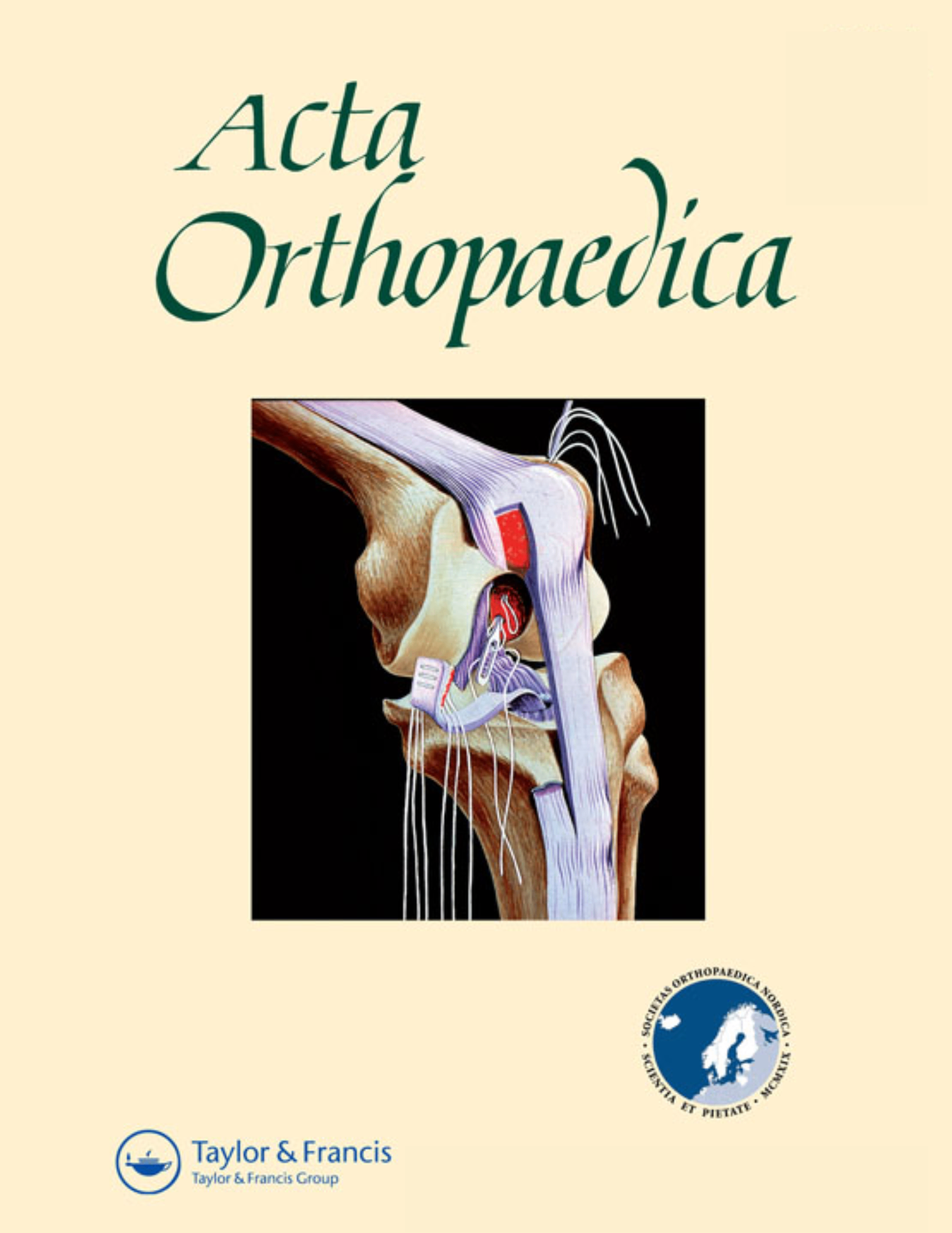
Small and similar amounts of micromotion in an anatomical stem and a customized cementless femoral stem in regular-shaped femurs. A 5-year follow-up randomized RSA study
OrthoEvidence Journal (OE Journal) - ACE Report
OE Journal. 2014;2(13):9 Acta Orthop. 2014 Apr;85(2):152-8100 patients with primary or secondary osteoarthritis were randomized to investigate any additional benefits associated with the use of the Unique customized stem compared with the conventional ABG-I stem. Patients were evaluated over 5 years using radiostereometric (RSA). The evidence presented in this study revealed no improvement in long-term mechanical stability associated with the Unique stem. It is important to note that no included patients presented with abnormal geometry of the upper femur for which the custom stems are developed.
Was the allocation sequence adequately generated?
Was allocation adequately concealed?
Blinding Treatment Providers: Was knowledge of the allocated interventions adequately prevented?
Blinding Outcome Assessors: Was knowledge of the allocated interventions adequately prevented?
Blinding Patients: Was knowledge of the allocated interventions adequately prevented?
Was loss to follow-up (missing outcome data) infrequent?
Are reports of the study free of suggestion of selective outcome reporting?
Were outcomes objective, patient-important and assessed in a manner to limit bias (ie. duplicate assessors, Independent assessors)?
Was the sample size sufficiently large to assure a balance of prognosis and sufficiently large number of outcome events?
Was investigator expertise/experience with both treatment and control techniques likely the same (ie.were criteria for surgeon participation/expertise provided)?
Ja = 1
Ungewiss = 0.5
Nicht relevant = 0
Nein = 0
Die Bewertung der Berichtskriterien bewertet die Transparenz, mit der die Autoren die methodischen und studienspezifischen Merkmale der Studie in der Veröffentlichung angeben. Die Bewertung ist in fünf Kategorien unterteilt, die im Folgenden vorgestellt werden.
3/4
Randomizzazione
3/4
Misurazioni degli esiti
4/4
Inclusione / Esclusione
4/4
Descrizione della terapia
3/4
Statistica
Detsky AS, Naylor CD, O'Rourke K, McGeer AJ, L'Abbé KA. J Clin Epidemiol. 1992;45:255-65
Der Fragilitätsindex ist ein Instrument, das bei der Interpretation signifikanter Ergebnisse hilft und ein Maß für die Stärke eines Ergebnisses liefert. Der Fragilitätsindex gibt die Anzahl der aufeinanderfolgenden Ereignisse an, die zu einem dichotomen Ergebnis hinzugefügt werden müssen, damit das Ergebnis nicht mehr signifikant ist. Eine kleine Zahl steht für ein schwächeres Ergebnis und eine große Zahl für ein stärkeres Ergebnis.
Warum wurde diese Studie jetzt benötigt?
Micromovements along the implant-bone interface are associated with loosening of uncemented femoral stem implants. Generally speaking, a 40 micrometer interfacial motion contributes to partial bone ingrowth, and those exceeding 150 micrometers completely disrupts ingrowth. Mechanical stability of the implant is influenced by patient- and implant-specific factors, and uncemented customized femoral stems are hypothesized to promote superior mechanical fixation compared to standard implants. This study was needed to conduct radiostereometric (RSA) follow-up on a 5 year RCT that evaluated the Unique customized stem (Scandinavian Customized Prosthesis [SCP]), against a conventional ABG-I stem.
Was war die wichtigste Forschungsfrage?
What is the comparative migration between the use of the Unique customized stem, and the conventional ABG-I stem, as evaluated using radiostereometric (RSA) over 5 years?
Was waren die wichtigsten Ergebnisse?
- Motion between the 2 types of stems were comparable (all p>0.05): The median subsidence was -0.03mm for the ABG-I stem compared to -0.13mm for the Unique stem (p=0.15). Mean retroversion was 0.15 degrees compared to -0.08 degrees in the ABG-I and Unique stems respectively (p=0.41).
- Time was noted as a factor that was significantly related to: translation along the y (p=0.02) and z (p<0.01) axes and rotation around the x (p=0.03) and z (p=0.01) axes.
- A single Unique stem subsided 5.3mm within the first year and then stabilized. Further analysis revealed no loosening.
- Mean preoperative Merle d’Aubigne score was 11 in the ABG-I group compared to 10 in the Unique groups. At final follow-up of 5 years, mean scores in both groups was 17.
- Preoperative pain decreased from 6.5 to 1.1 in the ABG-I group and from 6.5 to 1.0 in the Unique group. Satisfaction was 1.1 and 0.7 respectively at 5 years.
- No hips were revised over the 5 years; there were, however, 5 complications: ABG –I group had 2 instances of DVT and 2 early dislocations. The Unique group had 1 common peroneal nerve dysfunction.
Was sollte ich mir besonders merken?
Radiostereometric analysis (RSA) between the use of the Unique customized stem ((Scandinavian Customized Prosthesis (SCP)), and the conventional ABG-I stem revealed no improvement in long-term mechanical stability associated with the Unique stem.
Wie wird sich dies auf die Behandlung meiner Patienten auswirken?
The evidence presented in this study indicated no additional benefits associated with the use of the Unique customized stem ((Scandinavian Customized Prosthesis (SCP)). It is important to note that none of the included patients presented with abnormal geometry of the upper femur for which the custom stems were developed.

HAFTUNGSAUSSCHLUSS
Der Inhalt dieser Seite dient nur zu Informationszwecken und ist nicht als Ersatz für professionelle medizinische Beratung, Diagnose oder Behandlung gedacht. Wenn Sie eine medizinische Behandlung benötigen, wenden Sie sich immer an Ihren Arzt oder suchen Sie die nächstgelegene Notaufnahme auf. Die Meinungen, Überzeugungen und Standpunkte, die von den Personen auf dieser Seite geäußert werden, spiegeln nicht die Meinungen, Überzeugungen und Standpunkte von OrthoEvidence wider.
0 von 4 monatliche KOSTENLOSE Artikel freigeschaltet



