










PHYSICAL THERAPY & REHAB
Efficacy of electromyographic biofeedback and electrical stimulation following arthroscopic partial meniscectomy: a randomized controlled trial
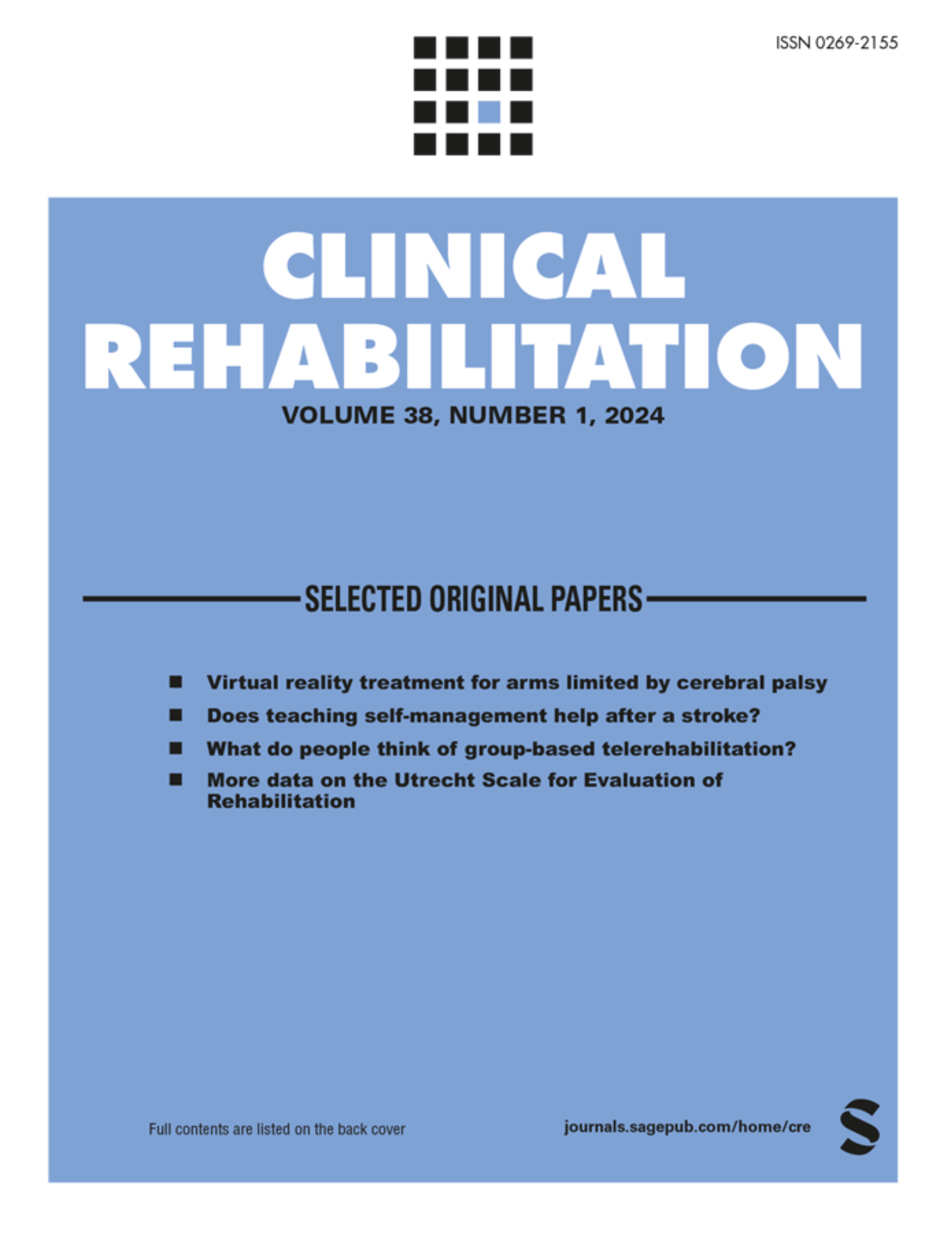
OrthoEvidence Journal (OE Journal) - ACE Report
OE Journal. 2013;1(14):6 Clin Rehabil. 2012 Mar;26(3):224-36. doi: 10.1177/0269215511419382. Epub 2011 Oct 445 patients undergoing arthroscopic partial meniscectomy were randomized into three groups following surgery. The study focused on measuring which postsurgical therapy was the most effective. The first group completed a home exercise programme, while the second group did home exercise along with receiving electromyographic biofeedback (EMG-B) training to quadriceps muscle. The third group did home exercise along with receiving electrical stimulation (ES) therapy to quadriceps muscle. Following functional assessments over a 6 week period, results indicated that home exercise combined with EMG-B training quickened rehabilitation following arthroscopic partial meniscectomy.
Was the allocation sequence adequately generated?
Was allocation adequately concealed?
Blinding Treatment Providers: Was knowledge of the allocated interventions adequately prevented?
Blinding Outcome Assessors: Was knowledge of the allocated interventions adequately prevented?
Blinding Patients: Was knowledge of the allocated interventions adequately prevented?
Was loss to follow-up (missing outcome data) infrequent?
Are reports of the study free of suggestion of selective outcome reporting?
Were outcomes objective, patient-important and assessed in a manner to limit bias (ie. duplicate assessors, Independent assessors)?
Was the sample size sufficiently large to assure a balance of prognosis and sufficiently large number of outcome events?
Was investigator expertise/experience with both treatment and control techniques likely the same (ie.were criteria for surgeon participation/expertise provided)?
Ja = 1
Ungewiss = 0.5
Nicht relevant = 0
Nein = 0
Die Bewertung der Berichtskriterien bewertet die Transparenz, mit der die Autoren die methodischen und studienspezifischen Merkmale der Studie in der Veröffentlichung angeben. Die Bewertung ist in fünf Kategorien unterteilt, die im Folgenden vorgestellt werden.
4/4
Aleatorización
3/4
Medidas de resultado
4/4
Inclusión/Exclusión
4/4
Descripción del tratamiento
3/4
Estadística
Detsky AS, Naylor CD, O'Rourke K, McGeer AJ, L'Abbé KA. J Clin Epidemiol. 1992;45:255-65
Der Fragilitätsindex ist ein Instrument, das bei der Interpretation signifikanter Ergebnisse hilft und ein Maß für die Stärke eines Ergebnisses liefert. Der Fragilitätsindex gibt die Anzahl der aufeinanderfolgenden Ereignisse an, die zu einem dichotomen Ergebnis hinzugefügt werden müssen, damit das Ergebnis nicht mehr signifikant ist. Eine kleine Zahl steht für ein schwächeres Ergebnis und eine große Zahl für ein stärkeres Ergebnis.
Warum wurde diese Studie jetzt benötigt?
The standard surgical treatment for meniscal lesions is arthroscopic partial meniscectomy. A consequence of the surgery is the weakening of quadriceps muscles. Although many rehabilitation programmes following partial meniscectomy do exist, including home exercise and observed physical therapy, it is still unclear which one is the most effective. This study aimed to focus on the efficacy of home exercise on its own, when home exercise was combined with the physical therapy technique EMG-B, and when home exercise was combined with the physical therapy method ES.
Was war die wichtigste Forschungsfrage?
Was the addition of EMG-B training and ES to a conventional home exercise programme an effective rehabilitation method following arthroscopic partial meniscectomy, when measured over a 6 week period?
Was waren die wichtigsten Ergebnisse?
- There was a significant difference in mean time using a walking aid between the Home Exercise group (8.3 +/- 8.0 days), the EMG-B group (1.5 +/- 2.5 days), and the ES group (4.5 +/- 5.5 days) (p<0.05). The mean time using a walking aid was significantly shorter in the EMG-B group (1.5 +/- 2.5 days), than in the Home Exercise group (8.3 +/- 8.0 days) (p<0.017).
- There was significant progress in knee function at 2 and 6 weeks following the surgery for all three groups (p<0.017). The mean Lysholm Knee Scoring Scale score at 2 weeks after the surgery was significantly better in the EMG-B group, than in the Home Exercise group (p<0.017).
- The mean vastus medialis obliquus, vastus lateralis maximum, and contraction values at week 2 following the operation was significantly higher in the EMG-B group than in the Home Exercise and ES groups (p<0.017).
- Although there was significant improvement in pain VAS scores, gait velocity, joint ROM, and knee circumference for all three groups (p<0.017), there was no significant difference between the groups at any point (p>0.05).
Was sollte ich mir besonders merken?
Based on the functional and muscle results, the study indicated that patients who completed home exercise combined with EMG-B training appeared to have an expedited rehabilitation over the intial few weeks, especially in terms of time needing a walking aid, compared to those who underwent different forms of therapy.
Wie wird sich dies auf die Behandlung meiner Patienten auswirken?
This study displayed that adding EMF-B training to conventional home exercise programmes following arthroscopic partial meniscectomy is effective in providing quick rehabilitation. However, few studies have evaluated this technique, and more trials on this subject are needed in order to confirm these results. Moreover, future studies should include a larger sample size.

HAFTUNGSAUSSCHLUSS
Der Inhalt dieser Seite dient nur zu Informationszwecken und ist nicht als Ersatz für professionelle medizinische Beratung, Diagnose oder Behandlung gedacht. Wenn Sie eine medizinische Behandlung benötigen, wenden Sie sich immer an Ihren Arzt oder suchen Sie die nächstgelegene Notaufnahme auf. Die Meinungen, Überzeugungen und Standpunkte, die von den Personen auf dieser Seite geäußert werden, spiegeln nicht die Meinungen, Überzeugungen und Standpunkte von OrthoEvidence wider.
0 von 4 monatliche KOSTENLOSE Artikel freigeschaltet



