










OSTEOARTHRITIS
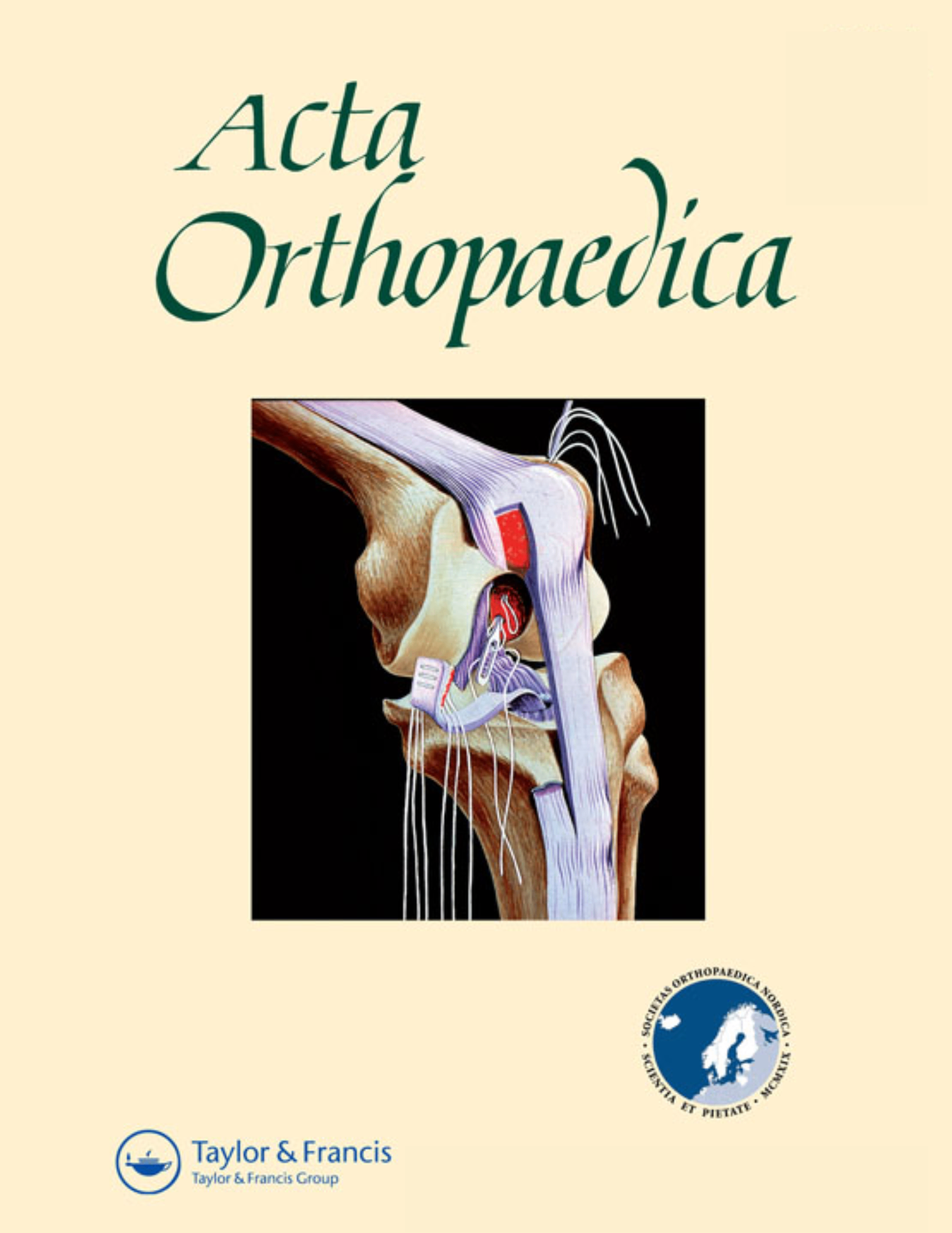
A single bisphosphonate infusion does not accelerate fracture healing in high tibial osteotomies
 Cette étude a été identifiée comme étant potentiellement à fort impact.
L'indicateur High Impact de l'ENP, basé sur l'IA, estime l'influence qu'un article est susceptible d'avoir en intégrant des signaux provenant à la fois de la revue dans laquelle il est publié et du contenu scientifique de l'article lui-même.
Développé à l'aide d'un traitement du langage naturel de pointe, le modèle High Impact de l'ENP prédit avec plus de précision les futures citations d'une étude que le seul facteur d'impact de la revue.
Cela permet d'identifier plus tôt les recherches cliniquement significatives et aide les lecteurs à se concentrer sur les articles les plus susceptibles d'influencer les pratiques futures.
Cette étude a été identifiée comme étant potentiellement à fort impact.
L'indicateur High Impact de l'ENP, basé sur l'IA, estime l'influence qu'un article est susceptible d'avoir en intégrant des signaux provenant à la fois de la revue dans laquelle il est publié et du contenu scientifique de l'article lui-même.
Développé à l'aide d'un traitement du langage naturel de pointe, le modèle High Impact de l'ENP prédit avec plus de précision les futures citations d'une étude que le seul facteur d'impact de la revue.
Cela permet d'identifier plus tôt les recherches cliniquement significatives et aide les lecteurs à se concentrer sur les articles les plus susceptibles d'influencer les pratiques futures.
OrthoEvidence Journal (OE Journal) - ACE Report
OE Journal. 2013;1(11):170 Acta Orthop. 2011 Aug;82(4):465-70. Epub 2011 Jun 2146 patients with knee osteoarthritis undergoing high tibial osteotomies were randomized 4 weeks postoperatively to receive a single bisphosphonate infusion of zoledronic acid or a sodium chloride placebo. The primary outcome was reduction in healing time. Other outcomes included hip knee ankle (HKA) angle and patient-relevant outcome measures (Knee injury and osteoarthritis outcomes score (KOOS)). Results indicated that a single bisphosphonate infusion intervention does not accelerate healing in high tibial osteotomies.
Was the allocation sequence adequately generated?
Was allocation adequately concealed?
Blinding Treatment Providers: Was knowledge of the allocated interventions adequately prevented?
Blinding Outcome Assessors: Was knowledge of the allocated interventions adequately prevented?
Blinding Patients: Was knowledge of the allocated interventions adequately prevented?
Was loss to follow-up (missing outcome data) infrequent?
Are reports of the study free of suggestion of selective outcome reporting?
Were outcomes objective, patient-important and assessed in a manner to limit bias (ie. duplicate assessors, Independent assessors)?
Was the sample size sufficiently large to assure a balance of prognosis and sufficiently large number of outcome events?
Was investigator expertise/experience with both treatment and control techniques likely the same (ie.were criteria for surgeon participation/expertise provided)?
Oui = 1
Incertain = 0,5
Non pertinent = 0
Non = 0
L'évaluation des critères de rapport permet d'évaluer la transparence avec laquelle les auteurs rapportent les caractéristiques méthodologiques et les caractéristiques de l'essai dans la publication. L'évaluation est divisée en cinq catégories qui sont présentées ci-dessous.
3/4
Aleatorización
4/4
Medidas de resultado
4/4
Inclusión/Exclusión
4/4
Descripción del tratamiento
4/4
Estadística
Detsky AS, Naylor CD, O'Rourke K, McGeer AJ, L'Abbé KA. J Clin Epidemiol. 1992;45:255-65
L'indice de fragilité est un outil qui aide à l'interprétation des résultats significatifs, en fournissant une mesure de la force d'un résultat. L'indice de fragilité représente le nombre d'événements consécutifs qui doivent être ajoutés à un résultat dichotomique pour que le résultat ne soit plus significatif. Un petit nombre représente un résultat plus faible et un grand nombre un résultat plus fort.
Pourquoi cette étude était-elle nécessaire maintenant ?
Strength of a healing fracture has been known to increase with the use of anti-catabolic drugs, such as bisphosphonates. A human pilot study examined high tibial osteotomies in knee osteoarthritis, which indicated healing time was shortened with the use of bisphosphonates. The current study examines the effect of a bisphosphonate (zoledronic acid) infusion on reducing healing time after high tibial osteotomies.
Quelle était la principale question de recherche ?
What are the outcomes in rate of fracture healing, hip-knee-ankle (HKA) angle, and patient-relevant outcome measures when a single bisphosphonate (zoledronic acid) infusion is intravenously administered, compared to a sodium chloride placebo in patients with knee osteoarthritis after undergoing a high tibial osteotomy?
Quels sont les résultats importants ?
- All osteotomies healed in both the zoledronic acid (intervention) and sodium chloride (control) groups.
- No difference was seen in the rate of healing between the intervention and control group. Zoledronic group: 77 days (95% CI: 75-80); Sodium chloride group: 77 days (95%CI: 74-81). However, pin fixation of the external frame increased with the intervention of a single zoledronic acid infusion.
- The DEXA analysis indicated similar outcomes in bone mineral density and bone mineral content between the two groups.
- Both groups showed an improvement in KOOS scores. Small but non-statistically significant differences were seen between the groups.
- For the hip, knee, ankle (HKA) angles, no change was seen between the two groups. The zoledronic group had a mean change of 0.3 (SD 3.3) degrees compared to -1.0 (SD 3.3) degrees in the control group (p=0.2)
- 13/25 patients from the zoledronic group reported muscle pain and influenza-like symptoms compared to 2/21 patients from the placebo group (RR=5, CI: 1.3-20; p=0.004).
- According to the radiographic results, both the intervention and control group retained correction when examined at the 1.5-year follow-up.
De quoi dois-je me souvenir en priorité ?
The single zoledronic acid (bisphosphonate) infusion intervention did not accelerate healing in high tibial osteotomies when compared to the sodium chloride placebo. However, there was an increase in pin fixation of the external frame in the zoledronic acid group.
Comment cela affectera-t-il les soins prodigués à mes patients ?
The use of a single dose of zoledronic acid after undergoing a knee osteotomy does not appear to provide patients with an increased rate of fracture healing. Further examination is required to identify if single dose zoledronic acid treatment provides improved healing rates or superior bone mineral density for different orthopaedic procedures.

AVIS DE NON-RESPONSABILITÉ
Le contenu de cette page est fourni à titre d'information uniquement et n'est pas destiné à remplacer un avis médical, un diagnostic ou un traitement professionnel. Si vous avez besoin d'un traitement médical, demandez toujours l'avis de votre médecin ou rendez-vous au service des urgences le plus proche. Les opinions, croyances et points de vue exprimés par les individus sur le contenu de cette page ne reflètent pas les opinions, croyances et points de vue d'OrthoEvidence.
0 de 4 articles mensuels GRATUITS débloqués



