










PHYSICAL THERAPY & REHAB
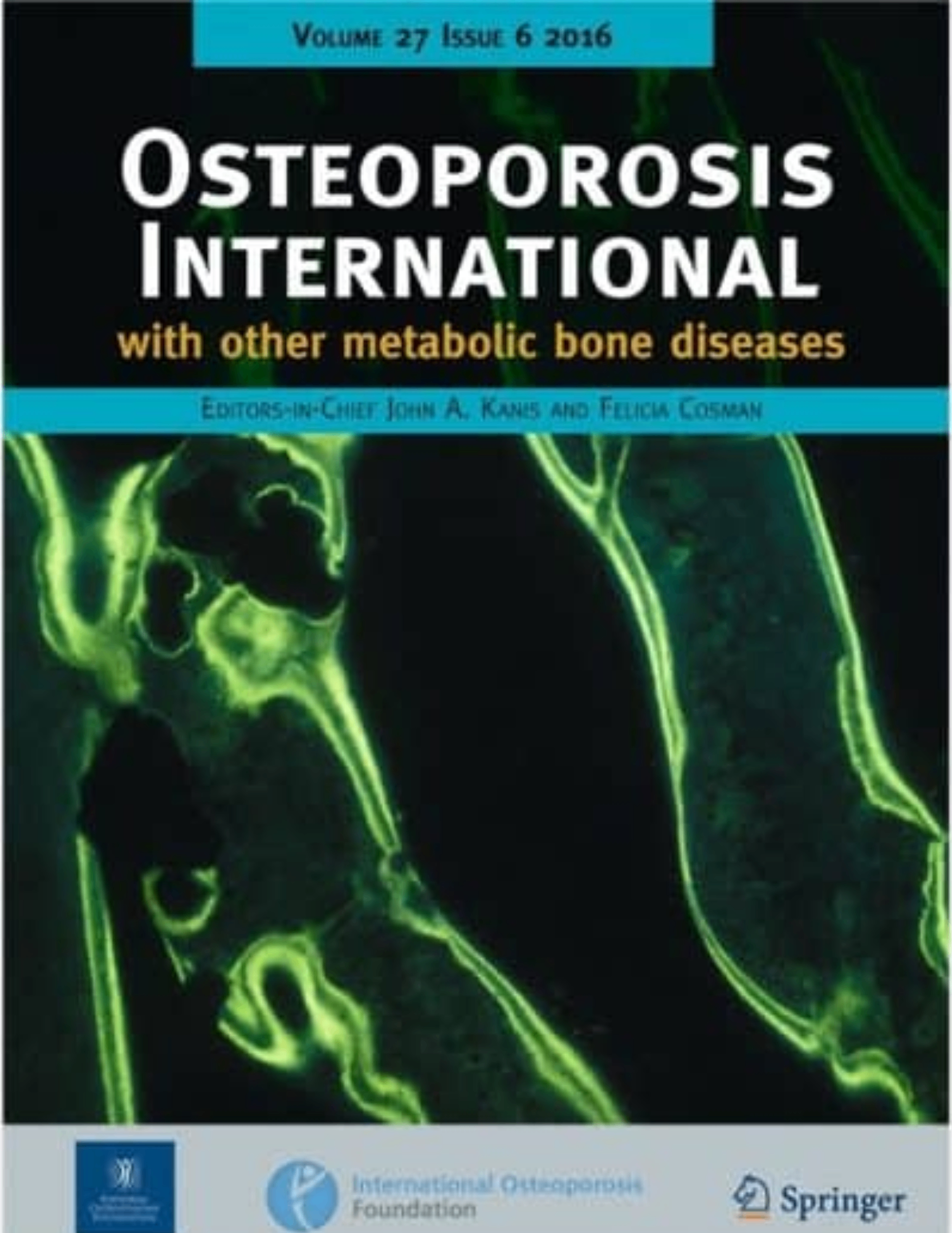
Effects of a resistance and balance exercise programme on physical fitness, health-related quality of life and fear of falling in older women with osteoporosis and vertebral fracture: a randomized controlled trial
 Este informe ha sido verificado
por uno o más autores de la
publicación original.
Este informe ha sido verificado
por uno o más autores de la
publicación original.
OrthoEvidence Journal (OE Journal) - ACE Report
OE Journal. 2021;9(7):16 Osteoporos Int. 2020 Jun;31(6): 1069-1078.Resumen del estudio
One hundred and forty-nine elderly women diagnosed with osteoporosis and vertebral fracture were randomized to receive a 12 week progressive resistance and balance group training program (n=76) or no treatment (n=73) for the improvement of physical performance and clinical outcomes. The primary outcome of interest was the 10-metre habitual walking speed. Secondary outcomes of interest included the functional reach test, four square step test, grip strength, arm curl, 30 second sit to stand test, the Timed Up and Go (TUG) test, the 6 minute walk test (6MWT), the Short Form 36 (SF-36) quality of life survey and associated sub-scores (i.e., physical function, physical role, bodily pain, general health, vitality, social function, emotional role, mental health, physical component score, and mental component score), Quality of Life for Osteoporosis (Qualeffo-41) sub-scores (i.e.,score pain, physical functioning, leisure and social activities, views about health in general, mood, and total), pain on a Numeric Rating Scale (NRS), and fear of falls via the Falls Efficacy Scale International (FES-I). Outcomes were assessed upon completion of the 3 month treatment program. Results revealed no statistical significant differences between the two groups in walking speed (p=0.132). No statistical significant differences in functional reach test, grip strength in the right limb, TUG test, or 6MWT were observed between the two groups (p>0.05 for all). However, four square step test (p=0.044), arm curl test (p=0.005), FES-I scores (p=0.018), and sit to stand test (p<0.001) results were statistically significantly in favour of the intervention group compared to the control group. No statistical significant differences were observed between the two groups in all SF-36 and the Qualeffo-41 sub-scores (p>0.05 for all).
Desbloquear el informe ACE completo
Tiene acceso a 4 más artículos GRATUITOS este mes.
Haga clic a continuación para desbloquear y ver este ACE Reports
Desbloquear ahora
Evaluaciones críticas de los últimos ensayos controlados aleatorizados de gran impacto y revisiones sistemáticas en ortopedia
Acceso al contenido del podcast OrthoEvidence, que incluye colaboraciones con el Journal of Bone and Joint Surgery, entrevistas con cirujanos reconocidos internacionalmente y mesas redondas sobre noticias y temas ortopédicos
Suscripción a The Pulse, un boletín quincenal basado en la evidencia y diseñado para ayudarle a tomar mejores decisiones clínicas
Acceso exclusivo a artículos de contenido original, incluidas revisiones sistemáticas propias, y artículos sobre métodos de investigación sanitaria y temas ortopédicos de actualidad
O actualícese hoy mismo y obtenga acceso a todo el contenido de OrthoEvidencepor tan sólo 1,99 $ a la semana.
¿Ya tiene una cuenta? Conectarse
¿Está afiliado a una de nuestras asociaciones colaboradoras?
¡Haga clic aquí para obtener acceso gratuito como parte de los beneficios de miembro de su asociación!


Suscríbase a "El Pulso"
Ortopedia basada en la evidencia directamente a su bandeja de entrada. SUSCRIBIRSE
0 de 4 artículos mensuales GRATIS desbloqueados


