






PRACTICE | Dec 07, 2023
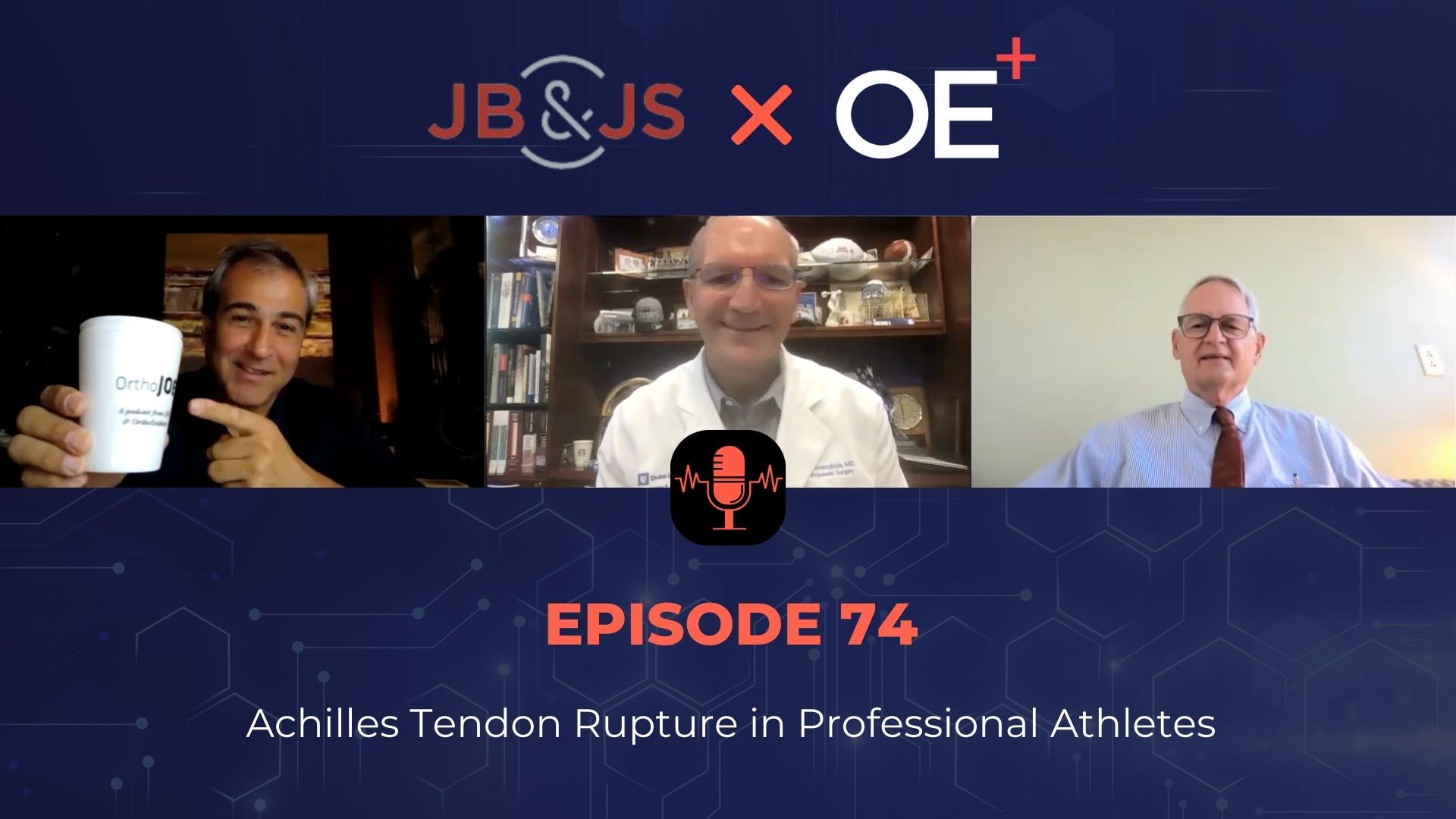
Achilles Tendon Rupture in Professional Athletes.
Unlock this Podcast
You have access to 4 more FREE articles this month.
Click below to unlock and view this Videos
Unlock Now
Critical appraisals of the latest, high-impact randomized controlled trials and systematic reviews in orthopaedics
Access to OrthoEvidence podcast content, including collaborations with the Journal of Bone and Joint Surgery, interviews with internationally recognized surgeons, and roundtable discussions on orthopaedic news and topics
Subscription to The Pulse, a twice-weekly evidence-based newsletter designed to help you make better clinical decisions
Exclusive access to original content articles, including in-house systematic reviews, and articles on health research methods and hot orthopaedic topics
Or upgrade today and gain access to all OrthoEvidencecontent for as little as $1.99 per week.
Already have an account? Log in
Are you affiliated with one of our partner associations?
Click here to gain complimentary access as part your association member benefits!

Ned Amendola
MD
Professor and Director of Sports Medicine, Duke University
View More
Achilles tendon rupture remains a challenging injury without a single superior treatment pathway. Drawing on high-profile cases like Aaron Rodgers and Kevin Durant, the discussion highlights that while surgery slightly reduces re-rupture risk, it brings higher complication rates and no clear functional advantage over well-supervised non-operative care. Rehabilitation quality, timing, and preserving tendon length are central to recovery, especially for elite athletes whose demands exceed currently available evidence. Mechanisms of injury appear influenced by modern turf-shoe traction, which may amplify eccentric loads. Overall, return to peak performance depends less on the choice of operative versus non-operative treatment and more on individualized rehab, adequate time for neuromuscular recovery, and better data on elite athletic populations.

DISCLAIMER
This content found on this page is for informational purposes only and is not intended to be a substitute for professional medical advice, diagnosis, or treatment. If you require medical treatment, always seek the advice of your physician or go to your nearest emergency department. The opinions, beliefs, and viewpoints expressed by the individuals on the content found on this page do not reflect the opinions, beliefs, and viewpoints of OrthoEvidence.
0 of 4 monthly FREE articles unlocked



