






PRACTICE | Feb 02, 2023
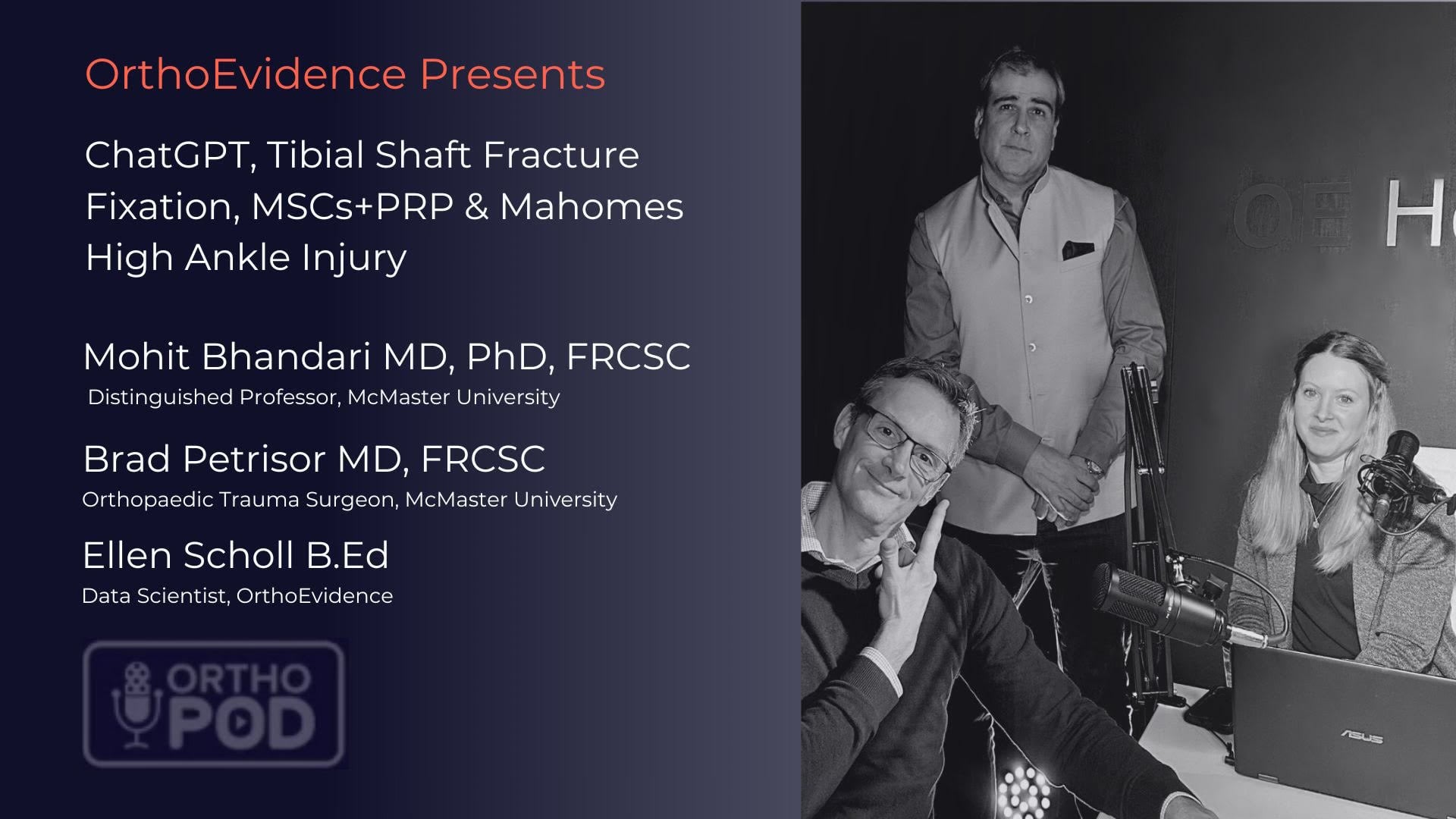
ChatGPT, Tibial Shaft Fracture Fixation, MSCs+PRP & Mahomes High Ankle Injury.
Unlock this Podcast
You have access to 4 more FREE articles this month.
Click below to unlock and view this Videos
Unlock Now
Critical appraisals of the latest, high-impact randomized controlled trials and systematic reviews in orthopaedics
Access to OrthoEvidence podcast content, including collaborations with the Journal of Bone and Joint Surgery, interviews with internationally recognized surgeons, and roundtable discussions on orthopaedic news and topics
Subscription to The Pulse, a twice-weekly evidence-based newsletter designed to help you make better clinical decisions
Exclusive access to original content articles, including in-house systematic reviews, and articles on health research methods and hot orthopaedic topics
Or upgrade today and gain access to all OrthoEvidencecontent for as little as $1.99 per week.
Already have an account? Log in
Are you affiliated with one of our partner associations?
Click here to gain complimentary access as part your association member benefits!

Joseph Silburt
PhD
Data Scientist, OrthoEvidence
View More

ChatGPT is framed as a transformative but imperfect tool, one that generates convincingly human answers without actually knowing truth. The discussion highlights how it differs from Google, how it learns patterns from vast text corpora, and why it can still “hallucinate.” The hosts explore implications for healthcare—diagnosis, documentation, patient education—and caution that AI will augment rather than replace clinicians, though some tasks may inevitably shift. Broader reflections follow on tech companies pushing tools into healthcare, the need for high-quality interoperable data, and the risk of forcing solutions onto problems rather than addressing foundational system gaps. Fast Five topics cover long-term outcomes in open tibial fractures, nail diameter debates, regenerative injectables including MSC–PRP combinations, and a sports-medicine segment on Patrick Mahomes’ high-ankle injury. The tone blends curiosity with pragmatism: AI offers real promise but demands careful, evidence-based integration.

DISCLAIMER
This content found on this page is for informational purposes only and is not intended to be a substitute for professional medical advice, diagnosis, or treatment. If you require medical treatment, always seek the advice of your physician or go to your nearest emergency department. The opinions, beliefs, and viewpoints expressed by the individuals on the content found on this page do not reflect the opinions, beliefs, and viewpoints of OrthoEvidence.
0 of 4 monthly FREE articles unlocked



