




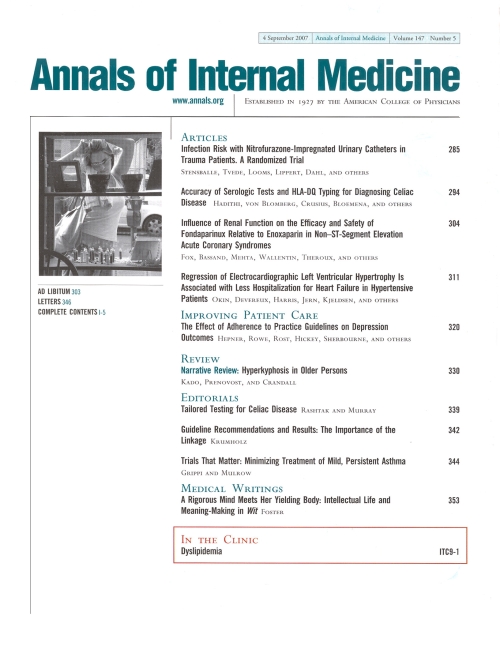







Pain, Analgesic Use, and Patient Satisfaction With Spinal Versus General Anesthesia for Hip Fracture Surgery : A Randomized Clinical Trial
 This study has been identified as potentially high impact.
OE's AI-driven High Impact metric estimates the influence a paper is likely to have by integrating signals from both the journal in which it is published and the scientific content of the article itself.
Developed using state-of-the-art natural language processing, the OE High Impact model more accurately predicts a study's future citation performance than journal impact factor alone.
This enables earlier recognition of clinically meaningful research and helps readers focus on articles most likely to shape future practice.
This study has been identified as potentially high impact.
OE's AI-driven High Impact metric estimates the influence a paper is likely to have by integrating signals from both the journal in which it is published and the scientific content of the article itself.
Developed using state-of-the-art natural language processing, the OE High Impact model more accurately predicts a study's future citation performance than journal impact factor alone.
This enables earlier recognition of clinically meaningful research and helps readers focus on articles most likely to shape future practice.
OrthoEvidence Journal (OE Journal) - ACE Report
OE Journal. 2022;10(17):14 Ann Intern Med. 2022 01-Jul;():. 10.7326/M22-0320Study Summary
One thousand six hundred patients undergoing surgery for hip fractures were randomized to receive either spinal anesthesia (n=795) or general anesthesia (n=805). Pain scores using the Numerical Rating Scale (NRS) were assessed from postoperative day 1 to 3 and again at 60, 180, and 365 days. Prescription analgesic use was measured at 60, 180, and 365 days postoperatively, and satisfaction with anesthesia care using the Bauer anesthesia satisfaction questionnaire at postoperative day 3 or discharge. Pain scores were similar between the two groups from 24 hours to 365 days postoperatively. The spinal anesthesia group presented with higher rates of analgesic use at 60 days. Satisfaction did not differ between the two groups.
Why was this study needed now?
A large proportion of adults experience a hip fracture that needs surgical treatment. Patients are either given spinal or general anesthesia for this type of surgical procedure. Currently, there is limited evidence on the effects of spinal versus general anesthesia on pain, analgesic use, and satisfaction following a hip surgery after discharge. Previous studies have outlined the effects of these two anesthetic types on outcomes till the patient is discharged but few studies assess these outcomes at later time points. Therefore, a trial was of interest.
What was the principal research question?
In adult patients undergoing surgical repair for their hip fracture, what is the effect of spinal anesthesia on postoperative pain, analgesic use, and satisfaction after 60 days, compared to general anesthesia?
What should I remember most and how will this affect the care of my patients?
In patients undergoing hip fracture surgery, severe postoperative pain was experienced by both groups. Pain scores after 24 hours postoperatively to 365 days were similar and a higher proportion of individuals reported analgesic use at 60 days in the spinal anesthetic group. The results of this trial were limited by some missing data for each study outcome. Additionally, no data was collected on non-opioid analgesic use postoperatively. Overall, both clinicians should prioritize pain management strategies following hip surgeries.

DISCLAIMER
This content found on this page is for informational purposes only and is not intended to be a substitute for professional medical advice, diagnosis, or treatment. If you require medical treatment, always seek the advice of your physician or go to your nearest emergency department. The opinions, beliefs, and viewpoints expressed by the individuals on the content found on this page do not reflect the opinions, beliefs, and viewpoints of OrthoEvidence.


